
Control of Gene Expression - Transcription Factors, Enhancers, Promotor, Acetylation vs Methylation
Explore eukaryotic gene expression control, including transcription factors, enhancers, promoters, and DNA modifications like acetylation and methylation.
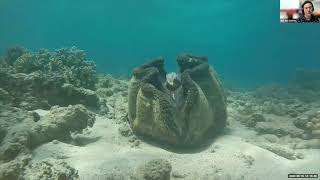
Conserving Threatened Species During Rapid Environmental Change - Giant Clams Case Study
Explore strategies for conserving giant clams amid environmental changes, using biological responses to inform effective management and protection of these threatened species.
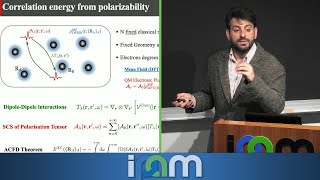
Second-Quantization of Many-Body Dispersion Formalism - Modeling of Million Atom Systems
Explore second-quantization of many-body dispersion formalism for modeling large-scale systems, enhancing computational efficiency and enabling analysis of interactions with surrounding environments.
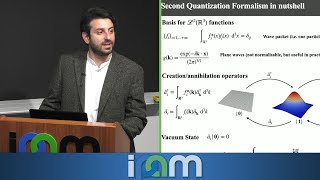
Field Theory Methods for Multiscale Description of Quantum Systems - IPAM at UCLA
Explore quantum field theory's role in multiscale phenomena, from fundamental interactions to condensed matter physics and biology. Learn about inequivalent Hilbert space representations and their applications.
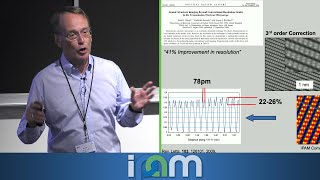
Strategies for Quantitative Imaging and Reconstruction from High Speed-Low Dose Data
Explore quantitative imaging techniques using AI/ML for analyzing large datasets of electron microscopy images, focusing on defect mapping in graphene and industrial catalyst studies.
Emergent Hypernetworks in Weakly Coupled Oscillators - IPAM at UCLA
Explores emergence of hypernetworks in weakly coupled oscillators, demonstrating through experiments and simulations how triplet interactions can arise from pairwise nonlinear coupling under specific frequency resonance conditions.
Probing the Costly Dynamics of Cognitive Effort
Explore cognitive effort through network theory, linking brain activity states, energy requirements, and entropy production. Gain insights into the biophysical nature of mental exertion and its implications for human behavior.
Reconstructed Rhythm-Generation by Neural Circuits in Two Sea Slugs
Explore biologically plausible models of swim center pattern generators in sea slugs, examining network-level bursting, stability mechanisms, and resilience to perturbations using dynamical systems and machine learning.
Ergodic Basis Pursuit Induces Robust Network Reconstruction - IPAM at UCLA
Explore robust network reconstruction using ergodic basis pursuit, with applications in neuroscience and beyond. Discover innovative techniques for analyzing complex network dynamics from data.
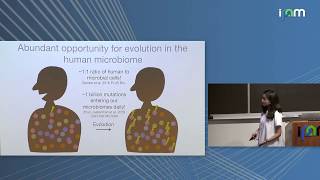
Population Genetics in the Human Microbiome
Explore microbiome evolution, ecological processes, and rapid adaptation in human-associated bacteria. Gain insights into population genetics and emerging research opportunities in this field.
Pleural Diseases - Pleural Effusion, Atelectasis, Pneumothorax, Tension Pneumothorax
Comprehensive exploration of pleural diseases including effusion, atelectasis, and pneumothorax. Covers pathophysiology, diagnosis, and treatment, with practice cases for applied learning.
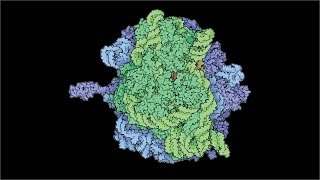
Origins of Life: Selection Theory - Quasispecies and Error Catastrophe
Explores quasispecies and error catastrophe in selection theory for origins of life research. Examines how early replicators evolved and the limits of mutation rates in maintaining genetic information.
Origins of Life: Chemical Origins - Environments for Studying Origins of Life - Cuatro Ciénegas
Explora los ambientes únicos de Cuatro Ciénegas y su relevancia para el estudio del origen de la vida, examinando las condiciones químicas y geológicas que podrían haber facilitado la aparición de los primeros organismos vivos.
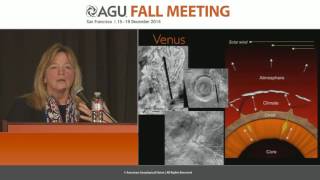
Searching for Earth-like Planets in Our Solar System and Beyond
Explore Earth-like planets in our solar system and beyond, comparing climates of Mars, Venus, and Titan to Earth's. Learn about exoplanet detection and future space missions.
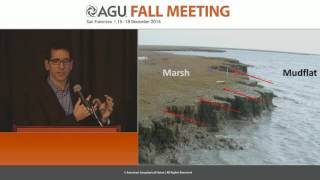
Living Landscapes: Present and Past Interactions Between Coastal Sediments and Biota - Sharp Lecture 2014
Exploring interactions between coastal sediments and biota, from modern wetland erosion to early life evidence in rocks, using models and experiments at the intersection of geomorphology, ecology, and paleontology.
Responding to Evolution Doubt, Distortion, and Denial - Understanding Why People Reject Scientific Information
Strategies for addressing evolution skepticism, exploring cultural, religious, and scientific aspects to effectively communicate and defend evolutionary theory.
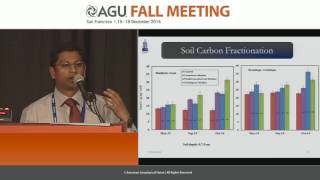
Influence of Biochar on Carbon and Nitrogen Transformation in Soil and Greenhouse Gas Emissions
Explore biochar's impact on soil carbon and nitrogen transformations, and its effects on greenhouse gas emissions in agricultural systems.
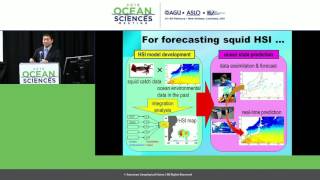
Forecasting Fisheries: Ocean Science Data for Sustainable Management
Experts discuss innovative ocean science data applications for sustainable fisheries management, exploring climate impacts and new forecasting methods to improve efficiency and conservation efforts.
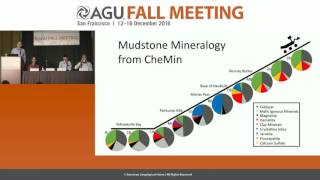
Recent Findings from NASA's Curiosity Mars Rover in Gale Crater
Discover Curiosity rover's latest findings on Mars' ancient water-rich environments, geological formations, and potential conditions for life in Gale Crater through expert analysis and mission updates.
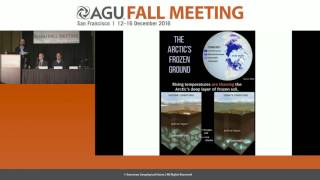
Arctic Report Card 2016 - Key Findings and Environmental Changes
Scientists present findings on rapid Arctic warming, discussing impacts on environment, wildlife, and global climate. Key measures include temperature, sea ice, snow cover, and Greenland ice sheet changes.
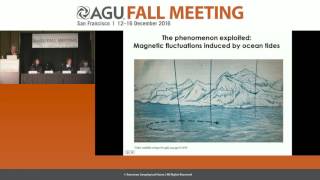
Ocean Heat Content Measurement and Impact - New Satellite Methods and Research Findings
Novel satellite method to measure ocean heat content, revealing impacts on ice melt and marine ecosystems. Explores magnetic field fluctuations, seafloor temperatures, and chlorophyll patterns to enhance climate change understanding and prediction.