
Metabolism - Nucleotide Synthesis - Purine & Pyrimidine Synthesis
Comprehensive exploration of purine and pyrimidine synthesis, providing the chemical foundation for RNA and DNA construction. Ideal for understanding nucleotide metabolism.
Pathophysiology of Congestive Heart Failure
Comprehensive exploration of congestive heart failure pathophysiology, covering systolic and right-sided heart failure, contractility, preload, afterload, and compensatory mechanisms.
GI Motility of the Large Intestine
Explore the physiology of large intestine motility, including strong contractions, mass movements, stretch receptors, and the defecation reflex in this comprehensive lecture.
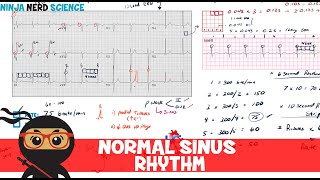
Rate and Rhythm - Normal Sinus Rhythm
Learn to interpret Normal Sinus Rhythm on a 12-lead ECG. Master this fundamental skill for confident ECG reading, an essential diagnostic tool for medical professionals in hospital settings.
Embryology - Development of the Placenta
Comprehensive exploration of placental development, detailing formation processes and crucial metabolic and hormonal functions essential for fetal growth and maternal health.
Embryology - Gastrulation
Comprehensive exploration of gastrulation in embryology, covering implantation, bilaminar and trilaminar disc formation, and notochord development during the second week of gestation.
Gastrointestinal - Digestion and Absorption of Proteins
Comprehensive exploration of protein digestion and absorption in the gastrointestinal system, covering enzymatic processes, breakdown mechanisms, and nutrient uptake pathways.
Gastrointestinal - Liver Metabolism, Protein Synthesis & Storage
Comprehensive exploration of liver metabolism, focusing on protein synthesis and storage processes. Gain in-depth understanding of crucial gastrointestinal functions and their impact on overall health.

Gastrointestinal - Liver Histology
Comprehensive exploration of liver histology, detailing the liver lobule, hepatocytes, bile flow, and blood supply. Provides in-depth understanding of the liver's functional and structural components.

Gastrointestinal - Digestion and Absorption of Lipids
Comprehensive exploration of lipid digestion and absorption in the gastrointestinal tract, covering key processes and mechanisms for a deeper understanding of nutritional biochemistry.

Gastrointestinal - Digestion & Absorption of Carbohydrates
Comprehensive exploration of carbohydrate digestion and absorption in the gastrointestinal tract, covering key processes and mechanisms involved in breaking down and utilizing these essential nutrients.

Gastrointestinal - Deglutition (Swallowing)
Comprehensive exploration of swallowing physiology, covering oral, pharyngeal, and esophageal phases. Detailed examination of muscle function, bolus formation, and peristalsis in the digestive process.

Gastrointestinal - Gastric Secretion: The Cephalic & Gastric Phase
Comprehensive exploration of gastric secretion, focusing on cephalic and gastric phases. Detailed examination of parietal and chief cells, and the process of HCl acid production in the stomach.

Gastrointestinal - Gastric Secretion: The Intestinal Phase
Explore the intestinal phase of gastric secretion, focusing on key hormones, cell types, and physiological processes involved in regulating digestive functions.

Neurology - Adrenergic Receptors
Comprehensive exploration of adrenergic receptors, their types, and effects on various organs when stimulated by norepinephrine and epinephrine, building on concepts from the sympathetic nervous system.

Gastrointestinal - Salivation: Parotid, Submandibular, & Sublingual Glands
Comprehensive exploration of salivary glands, their stimulation, and nervous system involvement. Covers parotid, submandibular, and sublingual glands, with focus on saliva production and physiological functions.
Ascending Tracts - Pain Modulation: Gate Control Theory
Explore the Gate Control Theory of pain modulation, understanding key concepts and mechanisms behind pain perception and its regulation in the nervous system.

Ascending Tracts - Spinocerebellar Tract
Comprehensive exploration of spinocerebellar tract anatomy, including ventral, lateral, and cuneocerebellar components. Covers stimuli, pathways, and functional differences between tract types.

Ascending Tracts - Spinothalamic Tract
Detailed exploration of the spinothalamic tract, covering pain and temperature sensation pathways from skin receptors to the thalamus. Ideal for neuroscience and medical students seeking in-depth understanding of sensory processing.

Cell Biology - Cell Cycle Regulation
Explore cell cycle regulation, including key phases, genes, growth factors, and mechanisms controlling cell division and apoptosis. Gain insights into the intricate processes governing cellular reproduction.

Cell Biology - Cell Cycle: Interphase & Mitosis
Comprehensive exploration of cell cycle phases, focusing on interphase and mitosis. Learn about cellular processes, DNA replication, and cell division mechanisms in this detailed biology lecture.