The Sparse Manifold Transform
Explore computational theories of the brain through the Sparse Manifold Transform, examining its applications in understanding neural processing and information representation in the visual system.

Networks of Spiking Neurons Learn to Learn and Remember
Explore how spiking neural networks acquire learning and memory capabilities, bridging computational neuroscience and artificial intelligence research.

An Algorithmic Theory of Brain Networks
Explore an algorithmic approach to understanding brain networks, examining computational theories and their implications for neuroscience and cognitive science.
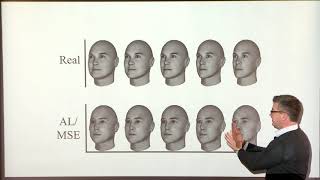
Predictive Coding Models of Perception
Explore cutting-edge theories on how the brain processes sensory information, focusing on predictive coding models and their implications for understanding perception.
Can the Brain's Structure Reveal its Function, Theoretically Speaking?
Explore the relationship between brain structure and function with Harvard's Jeff Lichtman, delving into cutting-edge neuroscience research and theoretical perspectives.
Inferring Single-Trial Neural Population Dynamics Using Sequential Auto-Encoders
Explore cutting-edge techniques for analyzing neural population dynamics using sequential auto-encoders, with insights from Google researcher David Sussillo.

Cortical Areas Interact through a Communication Subspace
Explore how cortical areas communicate through subspaces, examining neural population dynamics and inter-area interactions in visual processing using advanced data analysis techniques.
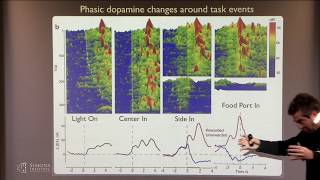
Basal Ganglia Architecture for Reinforcement Learning
Explore the neural circuitry of basal ganglia and its role in reinforcement learning, focusing on representation, coding, and computation in neural networks.
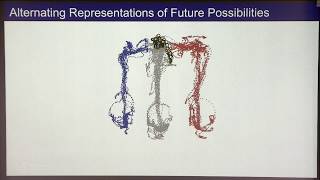
Continuous 8 Hz Alternation between Divergent Representations in the Hippocampus
Explore hippocampal theta sequences and their role in memory, planning, and decision-making. Discover how neural activity alternates between representations of current and future possibilities.
Place-Cell Sequences in the Hippocampus
Explore hippocampal place-cell sequences and their role in neural circuits, focusing on representation, coding, and computation in the brain's spatial navigation system.
Neural Mechanisms of Vision
Explore the intricate workings of visual perception, delving into neural processes and computational models that shape our understanding of how the brain interprets visual information.

Computation in Networks of Neurons in the Brain I
Explore neural network computation in the brain, focusing on advanced concepts and recent research findings in computational neuroscience.
Mapping Neural Connections and Their Development II
Explore neural connectivity mapping and developmental processes in the brain, focusing on advanced techniques and recent findings in neuroscience research.
Mapping Neural Connections and Their Development I
Explore neural connectivity mapping and developmental processes in the brain, focusing on cutting-edge techniques and insights from Harvard research.
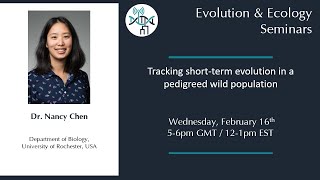
Tracking Short-Term Evolution in a Pedigreed Wild Population
Explore short-term evolution in wild populations through pedigree analysis, examining genetic contributions, selection processes, and life-cycle stages to uncover evolutionary dynamics in nature.
Ant Capitalism - How the Social Circulatory System Rewires Metabolism and Ageing in Superorganismal Colonies
Explore how ant colonies' social circulatory systems impact metabolism and aging, revealing insights into evolutionary transitions and collective decision-making in superorganisms.
Ecology and Evolution of Microbial Social Lives
Explore microbial social dynamics, cooperation, and adaptation in diverse environments. Discover evolutionary strategies and ecological impacts of microbial interactions.
The Dynamics of Adaptive Radiation in African Cichlid Fishes
Explore the fascinating world of African cichlid fishes, their adaptive radiation, and the dynamics of their evolution in Lake Tanganyika. Discover genetic timelines, phenotype-environment correlations, and key morphological differences.
Fitness Maps to a Large-Effect Locus in Introduced Stickleback
Explore the role of large-effect loci in stickleback adaptation, focusing on fitness mapping and evolutionary dynamics in introduced populations.
Caroline Dean - Adapting to Different Winters: Non-Coding Transcripts and Epigenetic Switches at FLC
Explore plant adaptation to winter through FLC regulation, epigenetic switches, and non-coding transcripts. Discover temperature sensing and natural variation in vernalization across populations.
Phenotypic Evolution in Water Striders - An EvoDevo Perspective
Explore phenotypic evolution in water striders through an EvoDevo lens, examining leg length modulation, niche specialization, and evolutionary innovations like the propelling fan.