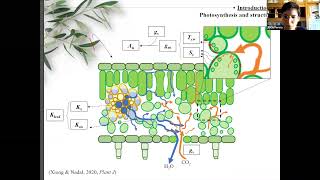
What Drives Photosynthesis During Desiccation - Mosses and Other Outliers
Explore photosynthesis in mosses during desiccation, examining trade-offs, water content, and tolerance mechanisms. Gain insights into unique plant adaptations and research methods.
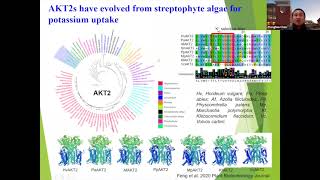
Overexpression of HvAKT1 Improves Drought Tolerance in Barley by Regulating Root
Explore how overexpressing HvAKT1 enhances drought tolerance in barley through root regulation, featuring molecular analysis, electrophysiology, and plant physiology insights.
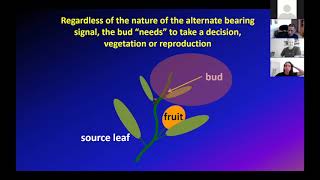
Polar Auxin Transport and Alternate Bearing in Fruit Trees by Avi Sadka
Explore polar auxin transport in fruit trees, focusing on alternate bearing patterns in citrus and olive. Uncover the role of fruit presence in stem auxin transport and bud IAA release.
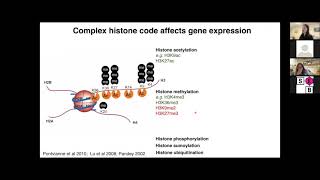
Dynamic Histone Acetylation in Floral Volatile Synthesis and Emission in Petunia
Explore dynamic histone acetylation's role in petunia floral volatile synthesis and emission, uncovering chromatin modifications' impact on plant biochemistry and fragrance production.

Can We Learn From Insect Societies? by Raghavendra Gadagkar
Explore insect societies' efficient organization, sustainable practices, and potential lessons for human society, from communication to collective decision-making and democracy.
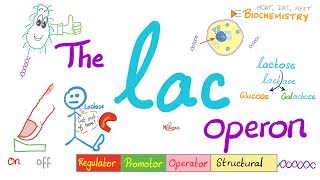
Lac Operon and Trp Operon - Regulator, Promotor, Operator - A Comprehensive Explanation from A to Z
Comprehensive explanation of Lac and Trp operons, covering gene expression control in prokaryotes. Explores regulatory mechanisms, structural components, and metabolic adaptations in bacteria.
How Do Insects Fly?
Explore insect flight biomechanics, neurobiology, and collective behavior. Discover how insects' unique adaptations contribute to their evolutionary success and environmental impact.

Workshop for Children - Hands-on Science Activities Demo
Engaging hands-on science activities for children, featuring colorful reactions, spinning toys, and microscopic observations. Empowers kids to enjoy and innovate with science through fun, curriculum-aligned experiments.
What's in a Diet? by Anura Kurpad
Explore the science behind dietary recommendations, nutrient requirements, and their impact on health policies. Learn how nutritional concepts influence agriculture and food safety in India.
The Logistics of Shaping a Vertebrate Embryo in Developmental Space and Time by Sreelaja Nair
Explore how cell size impacts embryonic development in zebrafish, revealing the crucial role of optimal cell dimensions in shaping vertebrate embryos through migration and membrane dynamics.

Statistical Physics of Biological Evolution by Joachim Krug
Explore stochastic models of population dynamics, including Wright-Fisher and Moran models, fixation, and diffusion theory. Delve into natural selection, experimental evolution, and genetic drift in biological systems.
Basics of Drift and Migration - Sampling and Allele Frequency; Fst and Wahlund Effect by Uma Ramakrishnan
Explore genetic drift, migration, and population structure through concepts like allele frequency, FST, and the Wahlund effect. Gain insights into fundamental population genetics principles.
Process of Model Building - Discrete-Time Population
Explore discrete-time population modeling with Vishwesha Guttal. Learn the process of building ecological models and gain insights into population dynamics.

How Fish Swim by Jaywant H Arakeri
Explore the fascinating world of aquatic locomotion, from sharks to eels. Discover the efficiency, flexibility, and unique adaptations of marine creatures compared to man-made underwater vehicles.
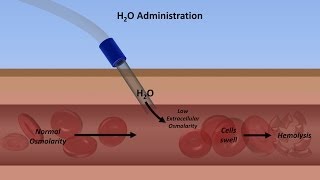
Hypernatremia
Comprehensive review of hypernatremia covering causes, diagnosis, and treatment, with emphasis on diabetes insipidus and practical clinical management strategies.

Sodium and Potassium Metabolism - Renin, Angiotensin, Aldosterone, and ADH
Comprehensive overview of sodium, potassium, and water homeostasis, exploring key hormonal systems and their roles in regulating intravascular volume and blood pressure.
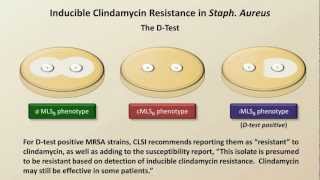
Antibiotic Resistance - Antibiotics
Explore mechanisms of antibiotic resistance, susceptibility testing, and global factors contributing to increasing resistance. Learn to interpret reports and understand the importance of proper antibiotic use.
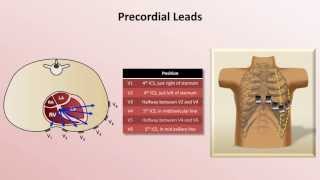
Intro to EKG Interpretation - EKG Leads
Learn the fundamentals of EKG leads, including principles, spatial orientation, anatomical correlations, and proper electrode placement. Understand standard and augmented limb leads, precordial leads, and the hexaxial system.
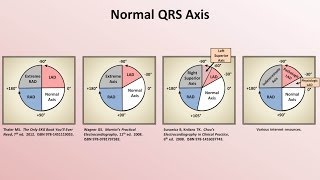
Intro to EKG Interpretation - Rate and Axis
Learn to interpret EKG/ECG, focusing on heart rate calculation and QRS axis determination. Master essential techniques for accurate cardiac assessment and diagnosis.
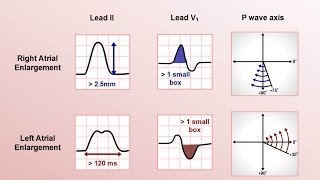
Intro to EKG Interpretation - Chamber Enlargement
Learn to identify atrial enlargement and ventricular hypertrophy on EKGs. Covers diagnostic criteria, test characteristics, and factors affecting diagnosis for improved clinical interpretation skills.
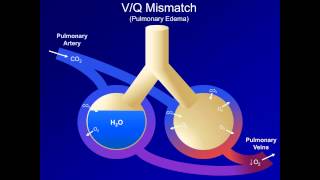
Hypoxia and Hypoxemia: Mechanisms and Etiologies - ABG Interpretation
Comprehensive review of hypoxemia mechanisms, including diffusion impairment, V/Q mismatch, and shunting. Explores etiologies and radiographic patterns for enhanced understanding of gas exchange abnormalities.