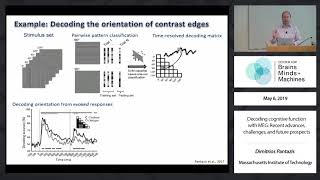
Decoding Cognitive Function with MEG - Recent Advances, Challenges, and Future Prospects
Explore recent advances in decoding cognitive function using MEG, including time-resolved decoding, representational similarity analysis, and temporal generalization, with insights on challenges and future prospects.
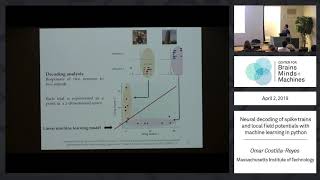
Neural Decoding of Spike Trains and Local Field Potentials with Machine Learning in Python
Learn Python-based machine learning techniques for neural decoding, focusing on preprocessing, model selection, and optimization for spike trains and local field potentials from macaque cortical areas.
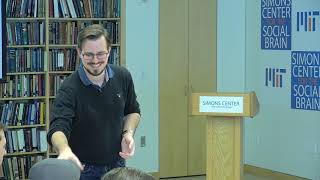
Memory Training with a World Record Holder
Learn memory techniques from world record holder Boris Konrad. Discover the "Method of Loci" and build mental infrastructure to memorize 50 random items in this interactive workshop led by a neuroscientist and memory expert.
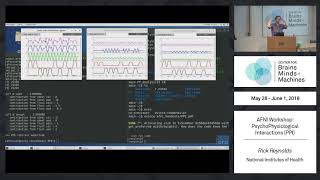
Psychophysiological Interactions
Explore psychophysiological interactions in neuroimaging, covering terminal time series, beta weights, and processing techniques for advanced brain connectivity analysis.
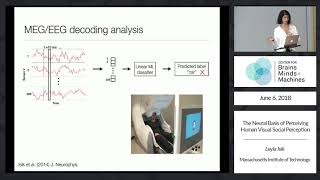
The Neural Basis of Perceiving Human Visual Social Perception
Explore neural mechanisms of visual object recognition and social perception using MEG, fMRI, and computational modeling. Discover how the brain processes visual scenes, objects, and social interactions over time.
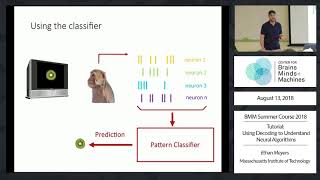
Using Decoding to Understand Neural Algorithms
Explore neural decoding techniques to uncover algorithms in the brain's visual processing, focusing on information representation, invariance, and attention in neural networks.
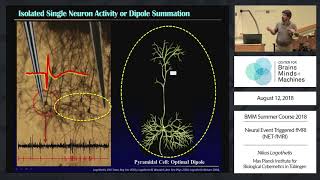
Neural Event Triggered fMRI - NET-fMRI
Explore neural event-triggered fMRI with Nikos K. Logothetis, covering multiunit activity, bandlimited power signals, and memory systems in this advanced neuroscience presentation.
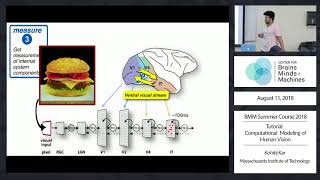
Computational Models of Human Vision - Part 2
Explore computational approaches to human vision, focusing on encoding, decoding, and behavioral metrics in the ventral stream and identity manifold.
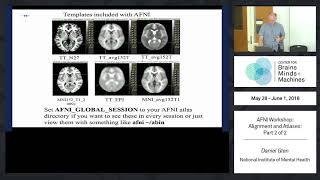
Alignment and Atlases - Part 2 of 2
Explore advanced neuroimaging techniques including motion correction, template spaces, atlases, and nonlinear warping for improved brain mapping and analysis.
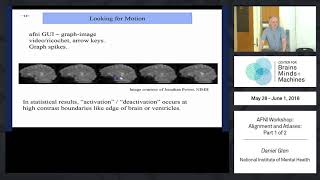
Alignment and Atlases - Part 1 of 2
Learn techniques for aligning brain imaging data and using atlases, covering motion correction, affine transformations, and specialized alignment tools for neuroimaging analysis.
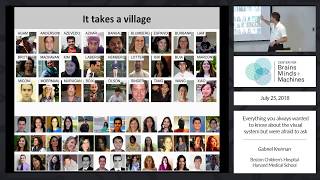
Everything You Always Wanted to Know About the Visual System but Were Afraid to Ask
Explore the intricacies of visual perception, from anatomy to cognitive processes, with insights on recognition, scenes, and eye movements in this comprehensive overview.
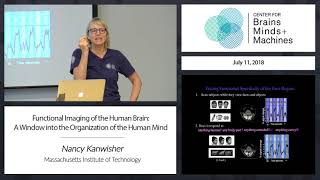
Functional Imaging of the Human Brain - A Window into the Organization of the Human Mind
Explore the organization of the human mind through functional brain imaging, covering topics from face recognition to music processing and evolutionary perspectives.
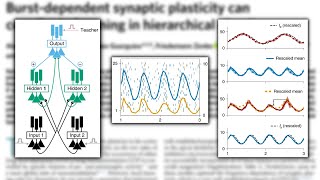
A New Theory for How the Brain Learns
Explore a novel theory on brain learning, focusing on neuronal burst firing for feedback signaling and solving the credit assignment problem in hierarchical circuits.
Liquid Time Constant Networks
Explore time-continuous neural networks, focusing on Liquid Time Constant Networks and their stable state, expressivity, and performance in dynamic causal modeling.

Mitochondria Structure & Function
Comprehensive exploration of mitochondrial structure, functions, and metabolic processes, featuring detailed explanations and animations to enhance understanding of this crucial cellular organelle.
Genomic Selection - Introduction to Genomics Theory
Explore genomic selection theory, from traditional breeding values to modern techniques, enhancing genetic gain in populations. Learn methodologies for standard and single-step genomic selection.
Genomic Inbreeding - Introduction to Genomics Theory
Explore genomic inbreeding, runs of homozygosity, and their applications in detecting selection signatures and recessive disorders. Learn key concepts like identity-by-descent and inbreeding coefficients.
Selection Signatures - Introduction to Genomics Theory - Genomics 101
Learn about selection signatures in genomics, including genetic hitchhiking, types, detection methods, and analysis across populations. Ideal for beginners interested in SNP data and genomic concepts.
Genomic Admixture - Introduction to Genomics Theory
Explore genomic admixture in crossbreeding populations, covering definitions, interpretation, and practical considerations like ancestry informative SNPs. Ideal for beginners in genomics and SNP data analysis.
Genome-Wide Association Studies - Introduction to Genomics Theory
Explore genome-wide association studies (GWAS) in genomics, covering key concepts, applications, statistical challenges, and population structure considerations for pinpointing trait-influencing genomic regions.
Linkage Disequilibrium - Introduction to Genomics Theory
Explore linkage disequilibrium in genomics, its importance, metrics, and applications. Learn about LD block structure, genetic distance, and how it reveals population history and selection pressures.