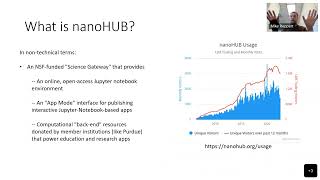
Hands-on Teaching with Jupyter Notebooks on nanoHUB
Explore hands-on teaching using Jupyter Notebooks on nanoHUB for chemistry courses. Learn to create interactive simulations, visualizations, and programming projects for enhanced student engagement and learning.

Chemical Defense in Poison Frogs
Explore the fascinating world of poison frogs' chemical defenses, their unique ability to sequester toxins from their diet, and how this impacts their survival in challenging environments.
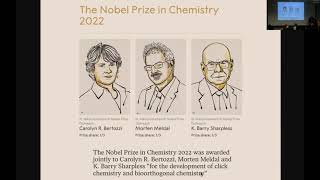
The 2022 Nobel Prize in Chemistry: Click and Bioorthogonal Chemistry
Explore click and bioorthogonal chemistry with Nobel Prize winner M.G. Finn, delving into groundbreaking developments and their impact on scientific research.
Modeling Genotype to Phenotype: A Search for Natural Objects of Selection
Explore evolutionary dynamics through metabolism as a genotype-phenotype map, examining how collective modes in phenotype space serve as natural selection objects rather than individual genes.

Practical Approaches to Navigating Statin-Associated Side Effects and Intolerance
Gain insights into managing statin-associated side effects and intolerance through evidence-based strategies and clinical approaches for healthcare professionals.
Particle Number and Characteristics of Lipoprotein(a), LDL, and ApoB - Perspectives on Contributions
Delve into the complex relationships between lipoproteins, exploring particle characteristics of Lp(a), LDL, and apoB to understand their roles in cardiovascular health and disease management.
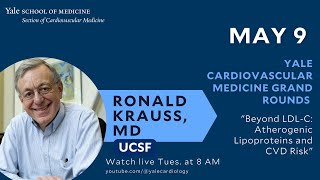
Beyond LDL-C - Atherogenic Lipoproteins and Cardiovascular Disease Risk
Delve into plasma lipoprotein metabolism and its crucial role in coronary artery disease risk, exploring advanced concepts beyond traditional LDL cholesterol measurements.
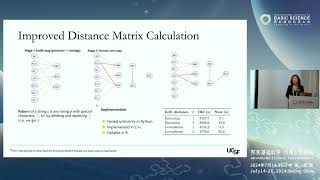
Prediction of Multi-Class Peptides by T-Cell Receptor Sequences with Deep Learning
Explore deep learning techniques for predicting multi-class peptides using T-cell receptor sequences, enhancing immune system understanding and potential disease treatments.

Amino Acid Decyl Esters as Membrane Forming Amphiphiles for Abiogenesis
Explore the formation of early membranes using amino acid decyl esters, a novel approach to understanding abiogenesis and the origins of life on Earth and beyond.

Does Life Compute? Understanding Protein Folding and Biomolecular Assembly
Explore the mathematical structures behind protein folding and biomolecular assembly, examining computational approaches and theoretical models that illuminate life's fundamental processes.
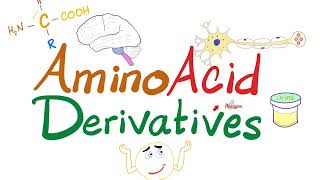
Amino Acid Derivatives: From Histamine to Epinephrine - A Biochemical Overview
Explore the biochemical pathways of amino acid derivatives, from histamine to epinephrine, understanding their crucial roles in neurotransmission and physiological functions.
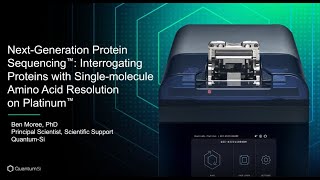
Next-Generation Protein Sequencing: Interrogating Proteins with Single-molecule Amino Acid Resolution on Platinum
Discover how next-generation protein sequencing technology enables single-molecule amino acid analysis, offering insights into protein biology and disease through innovative semiconductor chip and fluorescent labeling methods.
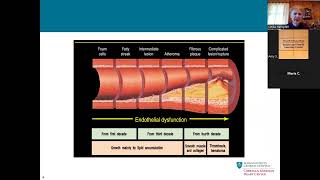
Managing High Cholesterol: Prevention of Heart Attacks and Strokes
Discover essential strategies for managing cholesterol levels, understanding its role in cardiovascular health, and implementing preventive measures against heart attacks and strokes.

How Not Sleeping Actually Kills You - The Science of Sleep Deprivation
Discover the surprising biological mechanisms behind sleep deprivation's lethal effects and learn about a groundbreaking technique that could potentially eliminate the need for sleep.
Pyruvate Kinase Deficiency and Hemolytic Anemia - Biochemistry and Hematology
Delve into the biochemical mechanisms of Pyruvate Kinase Deficiency and its connection to hemolytic anemia, exploring glycolysis pathway disruptions and clinical manifestations.
Pyruvate Kinase Enzyme and Glycolysis in Clinical Biochemistry
Delve into the biochemical mechanisms of pyruvate kinase enzyme and its crucial role in glycolysis, understanding enzyme deficiencies and their clinical manifestations like hemolytic anemia.

Why Your Blood Should Flow Like Ketchup | Sean Farrington | TED
Chemical engineer Sean Farrington demonstrates how blood viscosity (thickness) could be used as a medical diagnostic tool, similar to blood pressure. He shows the flow properties of everyday products like shampoo and ketchup to explain rheology, the study of flow, and argues this little-known field could save lives if taken more seriously in medicine.

Why Building New Proteins from Scratch Is Our New Superpower | David Baker | TED
Biochemist David Baker discusses his Nobel Prize-winning work using AI to design new proteins with novel functions never seen in nature, exploring how protein design can solve major global problems like blocking viruses, breaking down pollutants, and creating new materials.

The Link Between Evolution and Language | Richard Dawkins | TED
Evolutionary biologist Richard Dawkins and linguist John McWhorter explore the parallels between biological evolution and language evolution, discussing how both genes and words change through random mutations and cultural selection, revealing deep patterns that shape life and language.