Converting BERT to ONNX and Inference with BERTTokenizer for C# - Machine Learning and Data Science
Convert Bert model to ONNX format and create a C# app using BERTTokenizer for inference with ONNX transformer models.

Text Summary Model with BERT
Explore BERT-based text summarization: task overview, algorithm implementation, and model weight importing for effective summary generation.
Vector Search at Uber - Implementing and Scaling KNN Search with Apache Lucene
Explore Uber's implementation of Vector Search using Apache Lucene, enabling semantic search and Gen AI support. Learn about HNSW algorithm integration, live vector updates, and scalability optimizations.
The Pattern - Machine Learning Natural Language Processing Meets VR/AR
Explore open-source NLP tools and techniques through three ML pipelines using Redis modules. Learn to build knowledge graphs, deploy BERT Q&A models, and implement text summarization with Google's T5.
From Paper to Product - How We Implemented BERT
Explore the journey of implementing BERT in a natural language generation product, from initial research to production deployment. Learn about challenges, successes, and valuable lessons for NLP practitioners.
An Introduction to Natural Language Generation
Explore natural language generation through real-world examples, deep learning techniques, and transformer models. Learn about word embeddings, BERT, GPT, and practical applications in various domains.

Training With BertForPretraining
Explore BERT training techniques, focusing on NSP and MLM logic, with practical implementation steps and code examples for effective model fine-tuning.
Training BERT - Train With Masked-Language Modeling
Learn to fine-tune BERT models using masked language modeling in PyTorch for domain-specific NLP tasks, enhancing performance beyond out-of-the-box capabilities.
Sentence Similarity With Transformers and PyTorch
Learn to measure semantic similarity between sentences using BERT and PyTorch. Explore tokenization, vector creation, and cosine similarity calculation for powerful NLP applications.
AugSBERT: Domain Transfer for Sentence Transformers
Learn to transfer knowledge from out-of-domain datasets to your target domain using AugSBERT. Optimize language models with efficient data selection and domain-transfer training strategies for improved performance.
BuzzWords - How Bumble Does Multilingual Topic Modelling at Scale
Explore Bumble's innovative GPU-powered solution for multilingual topic modeling, enabling faster analysis of millions of data points using BERT-based models.

Compressing Large Language Models (LLMs) with Python Code - 3 Techniques
Explore three LLM compression techniques: quantization, pruning, and knowledge distillation. Learn to implement these methods with Python code examples for efficient model optimization.

LLM Fine-Tuning - Explained
Explore parameter efficient fine-tuning techniques for large language models, including adapters, prefix-tuning, and LoRA. Learn their importance, implementation details, and performance evaluation.

Transformer Models and BERT Model: Overview
Explore Transformer architecture and BERT model, understanding key components and applications in text classification, question answering, and natural language inference.
BLEURT - Learning Robust Metrics for Text Generation
Explora BLEURT, una métrica de evaluación basada en BERT para generación de texto, su preentrenamiento con datos sintéticos y su capacidad de modelar juicios humanos con pocos ejemplos.
BERTology Meets Biology - Interpreting Attention in Protein Language Models
Explores how BERT models trained on protein sequences learn biological properties, revealing insights into protein structure, binding sites, and biophysical characteristics through attention mechanism analysis.

Multi-Class Language Classification With BERT in TensorFlow
Learn to build a multi-class language classification model using BERT and TensorFlow. Covers data preprocessing, model architecture, training, and prediction with transformers for NLP tasks.
Word Embeddings from Deep Space Nine using Machine Learning
Explore word embedding techniques using Star Trek Deep Space Nine scripts, from Bag of Words to BERT, with practical insights for production environments.

BERTopic Explained
Explore BERTopic, an advanced topic modeling technique using transformers, UMAP, and HDBSCAN. Learn its components, implementation, and customization for organizing unstructured text data effectively.
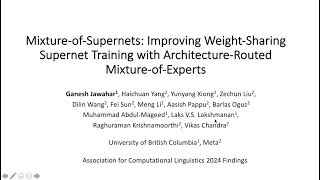
Mixture-of-Supernets - Improving Weight-Sharing Supernet Training with Architecture-Routed MoE
Explore cutting-edge research on Mixture-of-Supernets architecture that enhances neural architecture search efficiency and improves BERT and MT model performance through innovative weight-sharing techniques.
How Far is the Empire State Building from the Eiffel Tower? Semantic Vectors in Travel Discovery - Haystack US 2023
Explore semantic vector applications in travel marketplaces for improved recommendations, ranking, and ad optimization. Learn about evolving algorithms and practical advice for implementation.