
Reverse Engineering the Wetware - Understanding Human Behavior to Improve Information Security
Explore behavioral sciences to enhance information security by understanding human behavior, overconfidence, and cognitive biases. Learn to design better systems and improve communication.

Why Most Parenting Advice is Wrong
Discover how scientific research challenges common parenting advice and offers a new perspective on child development, potentially reshaping our understanding of parent-child relationships.
How I Learned to Be Secure - A Census-Representative Survey of Security Advice Sources and Behavior
Explore findings from a census-representative survey on security advice sources and behavior, revealing insights into how people learn and implement digital safety practices.

Securing the System - A Deep Dive into Reversing Android Pre-Installed Apps
Explore techniques for analyzing pre-installed Android apps, including emulator challenges, component collusion detection, and privileged context behavior changes.
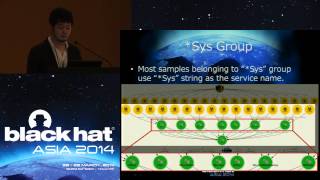
I Know You Want Me - Unplugging PlugX
Comprehensive analysis of PlugX malware, exploring its evolution, detection techniques, and countermeasures. Gain insights into advanced threat intelligence and cybersecurity strategies.
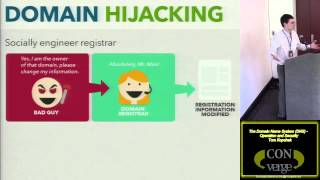
The Domain Name System - DNS Operation and Security
Learn DNS operation, security, and advanced concepts like open resolvers, domain hijacking, and DNSSEC in this comprehensive overview of the Domain Name System.
Break Me20 Stretching the Sandbox with Malware Feature Vectors
Explore malware analysis techniques using feature vectors and sandbox environments to enhance threat detection and classification capabilities.

State of Security and 2016 Predictions
Explore cybersecurity trends, threats, and predictions for 2016, covering topics like cyber crime, threat intelligence, phishing, and government responses to security challenges.
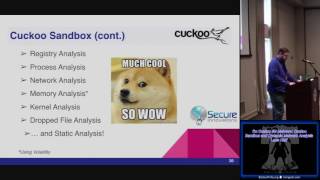
Cuckoo for Malware - Cuckoo Sandbox and Dynamic Malware Analysis
Explore dynamic malware analysis using Cuckoo Sandbox, covering setup, features, and practical applications for effective threat detection and analysis.

Mad Men to Math Men
Explore how data science and programmatic advertising revolutionized political campaigns, focusing on the 2016 U.S. election and its implications for modern communication strategies.

The Art of Being Different - Learn, Unlearn and Relearn
Explore workplace diversity challenges and strategies for success with Lin Yue, a senior executive who shares insights on navigating cultural divides and overcoming unfair expectations in professional settings.
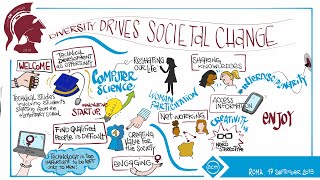
How Will We Teach Machines to Empathize?
Exploring the intersection of architecture, AI, and human-centered design to create empathetic, responsive urban environments that enhance well-being and foster conscious cities.
Social Cybersecurity - Reshaping Security Through Human Social Behavior
Exploring how social influences impact cybersecurity behaviors and designing systems that leverage social dynamics to encourage better security practices among users.

What Are Animals Thinking and Feeling
Explore animal cognition and emotions through ecology, biology, and behavioral science. Discover similarities between humans and other species in thinking, feeling, and tool use.
Is Addiction a Disease? Understanding the Medical and Scientific Perspective
Explore the scientific evidence and expert insights on addiction as a disease through Stanford psychiatrist Keith Humphreys' analysis of neuroscience, policy implications, and current research findings.
Computation, Consciousness, and Teleology - Models of Consciousness
Explore the relationship between consciousness, computation, and teleology through the lens of physical systems implementation and mortal computation theory in neural processing.

Your Brain is Lying to You - Exploring Neural Deception
Explore how our brains may deceive us and the concept of "deaf-blindness" in neural processing. Discover groundbreaking research on decoding the brain's language of touch.

Inside the Mind of a Sociopath
Explore sociopathy as an emotional learning disability, its characteristics, and potential for treatment. Gain insights into the complex personality type and understand the science behind it.

Mechanical Intelligence: Origins and Evolution of Complex Behavior
Explore the origins and evolution of complex behavior in mechanical intelligence, delving into groundbreaking research and theoretical frameworks.

Computational Principles Underlying the Learning of Sensorimotor Repertoires
Explore the computational principles behind human motor learning and memory formation, focusing on contextual inference's role in developing movement skills and behavioral adaptations.
Beyond Fear and Frustration - Towards a Holistic Understanding of Emotions in Cybersecurity
Explore groundbreaking research on the emotional dimensions of cybersecurity, examining how diverse emotions impact security behaviors and organizational outcomes through qualitative studies and interviews.