
Exploiting Bluetooth Vulnerabilities: From Vehicle Systems to Bank Account Access
Discover how to identify and exploit Bluetooth vulnerabilities in modern vehicle systems using BlueToolkit, exploring real-world security implications and practical attack vectors in automotive and aviation contexts.
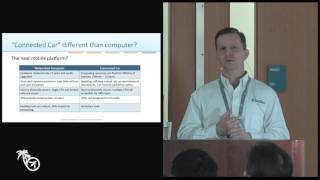
Connected Cars: Security Risks and Challenges
Explore the security challenges of connected cars, including risks, government involvement, and lessons from IT. Learn about safety-security-convenience trade-offs and steps for automotive manufacturers.
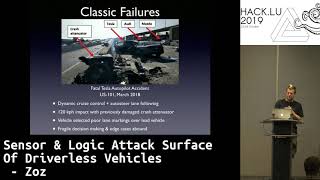
Sensor and Logic Attack Surface of Driverless Vehicles
Explore vulnerabilities in autonomous vehicle systems, focusing on sensor and logic attack surfaces. Learn about potential security risks and mitigation strategies.

The Tragedy of Bluetooth Low Energy - Security Risks and Attacks
Exploring Bluetooth Low Energy vulnerabilities: QR code payment risks, smart device unlocking flaws, and car hacking demonstrations. Introduces a BLE security detection tool for researchers and manufacturers.
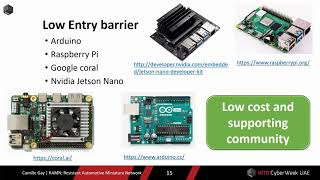
RAMN - Resistant Automotive Miniature Network
RAMN: An open-source, credit card-sized automotive security testbed simulating CAN/CAN-FD networks. Resistant to harsh conditions, it integrates with CARLA simulator and various tools for research and education.
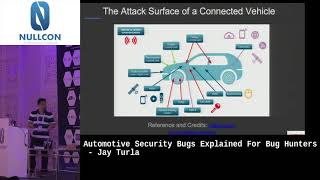
Automotive Security Bugs Explained for Bug Hunters
Explore common automotive security vulnerabilities and learn bug hunting techniques for car systems, from IoT security to CAN bus hacking. Gain insights into PoCs, attacks, and bug prioritization in the automotive industry.
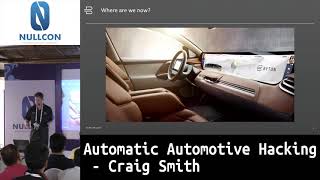
Automatic Automotive Hacking
Explore automotive security vulnerabilities and hacking techniques with Craig Smith, founder of Open Garages and author of the Car Hacker's Handbook, in this insightful presentation.

Securing the Road to Autonomy
Expert panel discusses challenges and strategies for securing autonomous vehicles, addressing cybersecurity risks and safety concerns in the evolving automotive industry.

Vehicle Immobilization Revisited
Uncovering vulnerabilities in modern vehicle immobilization systems through analysis of ECM-BCM authentication protocols, revealing potential security risks in various car models.

Modern Automotive Security: History, Disclosure, and Consequences - USENIX Enigma 2016
Explore automotive cybersecurity evolution, vulnerabilities in modern vehicles, and the impact of research disclosure on industry and government responses to these critical issues.

Mercedes-Benz and 360 Group - Defending a Luxury Fleet with the Community
Explore Mercedes-Benz's approach to cybersecurity for connected cars, including fleet defense strategies and research by 360 Group on vehicle vulnerabilities and attack surfaces.
Car Hacking - Practical Guide to Automotive Security
Practical guide to automotive security, focusing on CAN bus hacking. Learn to reverse-engineer packets, identify arbitration IDs, perform replay attacks, and explore hardware tools for vehicle network security.

PASTA - Portable Automotive Security Testbed with Adaptability
Explore PASTA, a portable testbed for automotive security analysis, enabling research, development, and education in vehicle cybersecurity without ECU restrictions.

Remote Exploitation of an Unaltered Passenger Vehicle
Comprehensive exploration of remote vehicle hacking, demonstrating real-world attacks on unaltered cars and pivoting through hardware to send CAN bus messages affecting critical systems.
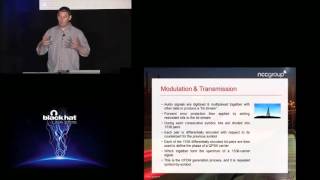
Broadcasting Your Attack - Security Testing DAB Radio in Cars
Explore vulnerabilities in DAB radio systems in cars, potential security risks, and implications for automotive cybersecurity using Software Defined Radio and custom testing tools.
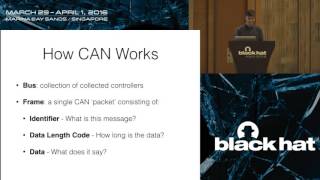
Cantact - An Open Tool for Automotive Exploitation
Explore CANtact, an open-source tool for automotive network analysis. Learn to view, decode, and manipulate CAN bus traffic for reverse engineering and security testing of vehicle systems.

Stable 10 - Getting Dirty on the CANBUS
Explore CANBUS technology and its applications in automotive systems, focusing on security implications and potential vulnerabilities in modern vehicles.

Advanced Mutation Fuzzing Method for Wireless Protocols
Explore advanced mutation fuzzing techniques for wireless protocols, covering basics, new fuzzer development, and smart payload mutation. Includes demos on mobile, IoT, and automotive vulnerabilities.

Upgrading Rollback Agnostic Replay Attacks
Explore car hacking techniques, focusing on radio frequencies and BLE. Learn about Rolling Codes analysis and practical steps to conduct research on vehicle security vulnerabilities.
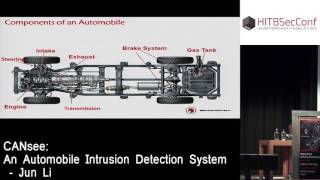
CANsee - An Automobile Intrusion Detection System
Introducing CANsee: A machine learning-based intrusion detection system for automobiles. Detects abnormal CANBUS traffic using a low-cost device to capture and transmit data wirelessly. Open-source project with potential for enhancing vehicle security.

Testing Vehicles with CANToolz
Explore CANToolz framework for CAN bus analysis, featuring black-box testing of automotive networks and ECUs. Learn practical use-cases for vehicle security research and penetration testing.