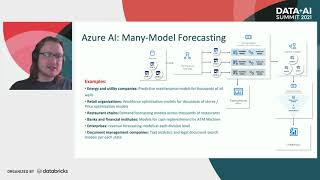
Auto-Train a Time-Series Forecast Model with Azure Machine Learning and Azure Databricks
Discover how to efficiently build accurate forecasting models at scale using Azure Machine Learning and Azure Databricks, enhancing enterprise AI/ML capabilities for various industries.
Machine Learning with TensorFlow in JavaScript - Learn With Jason
Explore the exciting possibilities of machine learning using TensorFlow.js. Learn to implement object detection, image classification, and other ML techniques in web applications.
Creating Instruction Datasets for LLM Fine-tuning - A Beginner's Guide
Discover comprehensive strategies for creating instruction datasets and fine-tuning LLMs, from basic concepts to advanced techniques for both coders and non-coders in AI model development.
Efficient AutoML with Ludwig, Ray, and Nodeless Kubernetes
Explore efficient AutoML using Ludwig and Ray, leveraging heuristics for model production. Learn how Nodeless Kubernetes optimizes GPU resource management, reducing costs in cloud environments.
Managing Thousands of Automatic Machine Learning Experiments with Argo and Katib
Explore best practices for managing large-scale AutoML experiments using Argo and Katib in cloud-native environments, focusing on hyperparameter tuning and workflow orchestration.
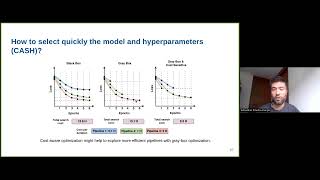
Quick-Tune: Quickly Learning Which Pretrained Model to Finetune and How
Discover a methodology for efficiently selecting and fine-tuning pretrained models through meta-learning, optimizing model selection and hyperparameter configurations for new datasets.
LLMs for Automated Data Science - Introducing CAAFE for Context-Aware Automated Feature Engineering
Discover how CAAFE leverages large language models to enhance automated feature engineering in data science, improving model performance through context-aware feature generation and semantic understanding.
Challenges in Hyperparameter Optimization for Reinforcement Learning - Understanding AutoRL Through AutoML
Explore the complexities of hyperparameter optimization in Reinforcement Learning, examining AutoML tools and methods to better understand and tune RL algorithms for improved performance.
Multi-objective Bayesian Optimization with Heuristic Objectives for Biomedical and Molecular Data Analysis Workflows
Discover advanced Bayesian optimization techniques for biomedical data analysis, focusing on multi-objective approaches with heuristic objectives in unsupervised bioinformatics workflows.
Hyperparameter Optimization and Algorithm Configuration from a Black-Box Optimization Perspective
Explore dynamic algorithm configuration and hyperparameter optimization approaches, comparing AutoML and black-box optimization methods for efficient, adaptive parameter tuning.
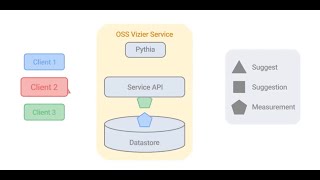
Open Source Vizier: Distributed Infrastructure for Blackbox Optimization and Hyperparameter Tuning
Explore Google's Vizier system for blackbox optimization and hyperparameter tuning, covering its distributed infrastructure, Python implementation, and integration with AutoML ecosystem.
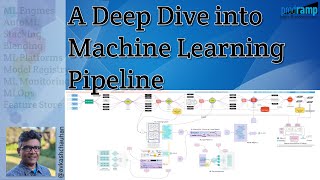
A Deep Dive into Machine Learning and MLOps Pipeline with Model Registry and Feature Store
Explore key components of modern ML pipelines: AutoML, observability, model registry, transformation, and feature store. Learn to build scalable, reliable MLOps systems for enterprise-level machine learning.

Agile Data Science - Achieving Salesforce-Scale Machine Learning in Production
Explore Salesforce's approach to Agile Data Science, from AutoML and experimentation to deployment and monitoring. Learn how to scale machine learning in production and adopt truly Agile methodologies.
Building and Deploying a Model Using AutoML in Azure ML - Azure Tutorial for Beginners
Learn to streamline machine learning model development with Azure AutoML. Explore algorithm selection, hyperparameter tuning, and evaluation metrics for efficient model creation and deployment.
Intelligent Model Deployment and Consumer Pipeline With DataRobot AI Cloud Platform
Explore DataRobot AI Cloud's MLOps capabilities, including model deployment, registry, and inference. Learn to deploy models from leaderboards and consume them via API, stream, local mode, and job workflows.
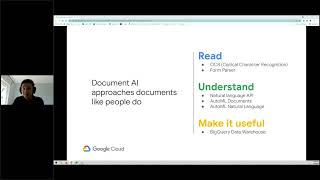
Accelerating the Journey to Document Understanding AI
Unlock document value with AI: transform unstructured data into actionable insights using Vision and NLP. Learn possibilities, capabilities, and implementation strategies for Document AI technology.
Scalable AutoML for Time Series Forecasting Using Ray
Explore scalable AutoML for time series forecasting using Ray, covering feature generation, model selection, and hyper-parameter tuning. Learn from real-world applications and experiences in various industries.
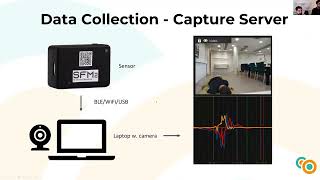
TinyML AutoML Tutorial: Building Production-ready Models with Imagimob AI
Explore Imagimob AI platform for creating production-ready ANN models for time-series data on resource-constrained devices. Learn data visualization, preprocessing, model training, and evaluation techniques.
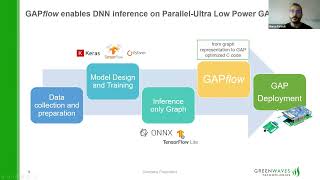
TinyML Auto ML Deep Dive: GAPflow - From TFLite and ONNX to Optimized C Code
Explore GAPflow: transform neural networks into optimized C code for ultra-low-power GAP processors. Learn quantization, validation, and memory allocation for efficient AI deployment on energy-constrained devices.
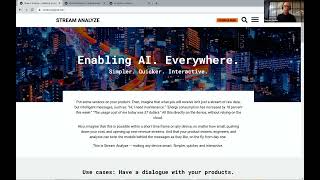
TinyML Auto ML Deep Dive: Streaming Analytics for Edge Devices
Explore streaming analytics for edge devices with Stream Analyze's platform. Learn to develop, deploy, and monitor edge AI solutions using real-time data processing and on-device intelligence.
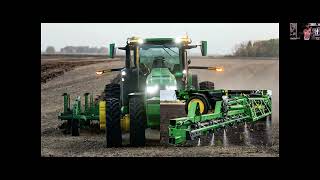
State of the TinyAutoML Market - Keynote
Explore the emerging tinyAutoML market, its challenges, opportunities, and potential impact on IoT and edge computing. Gain insights from industry experts on automating tiny machine learning applications.