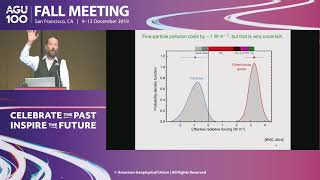
Jule Gregory Charney Lecture - Advances in Atmospheric Science
Prominent scientist delivers lecture honoring Jule G Charney's legacy in atmospheric science, highlighting advancements in meteorology and climate research since World War II.
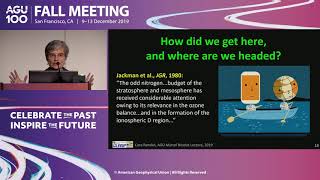
The Marcel Nicolet Lecture
Honoring physicist Marcel Nicolet's legacy, this prestigious lecture explores advancements in physics and meteorology, offering insights into cutting-edge research and scientific breakthroughs.
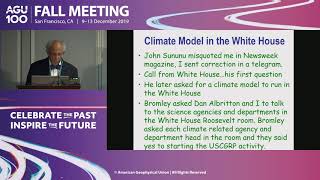
WCRP: Progress in Earth System Climate Science and Predictions
Showcases USGCRP contributions to Earth system climate science, highlighting research milestones, predictability advancements, and model development. Includes agency presentations and community discussions on priorities.
Arctic Report Card 2019 - Environmental Observations and Analysis
Experts present findings on Arctic climate change, focusing on disruptions in the Bering Sea, fisheries shifts, and impacts on indigenous communities. Key environmental observations and analysis are discussed.
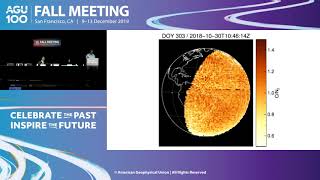
New Images from Earth's Ionosphere - Discoveries from ICON and GOLD Missions
New images from Earth's ionosphere reveal colorful processes with implications for near-Earth space. Featuring first captures from NASA's ICON spacecraft, discoveries from GOLD mission, and observations of a novel aurora type.
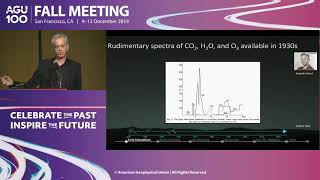
Tyndall History of Global Environmental Change Lecture
Explore the historical perspective on global environmental change, honoring John Tyndall's groundbreaking work on the greenhouse effect in this annual lecture by AGU.

Engine Earth - Christmas Lectures 2020 - Lecture 1
Geologist Chris Jackson explores Earth's climate history, revealing how ancient rocks and fossils tell a story of radical changes and how volcanoes have controlled atmospheric carbon dioxide levels throughout time.
How to Build a Climate Laboratory
Explore climate modeling with Met Office Chief Scientist Julia Slingo. Learn about processes controlling the climate system and their incorporation into models to understand and navigate future challenges.

John Tyndall - The Physicist Who Proved the Greenhouse Effect
Explore John Tyndall's diverse scientific contributions, from diamagnetism to the greenhouse effect, and his impact on modern environmental concerns and communication technology.
The Ocean as a Climate Superhero - Understanding Marine Ecosystems' Role in Climate Change Mitigation
Explore the ocean's vital role in climate regulation, oxygen production, and carbon sequestration. Learn how marine ecosystems can help mitigate climate change impacts and why ocean conservation is crucial.

Earth and Mars - One Wet, One Dry - Why the Difference?
Explore the divergent paths of Earth and Mars, from their similar beginnings to their vastly different present states, uncovering the factors behind their contrasting evolutions.
Hurricanes - Rainfall Patterns and Geospatial Analysis
Explore hurricane rainfall patterns and geospatial analyses with UF expert Corene Matyas in this engaging discussion at a local brewery, blending science and socializing.
Latest Look at X-Rays and Gamma Rays in Thunderstorms
Explore the fascinating world of high-energy radiation in thunderstorms, uncovering new insights into X-rays and gamma rays produced during lightning events.
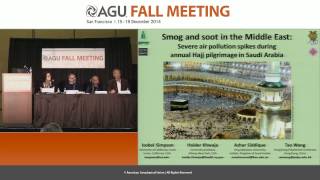
Smog and Soot in the Middle East
Explore the pressing issue of air pollution in the Middle East, examining the causes, impacts, and potential solutions for smog and soot in the region.
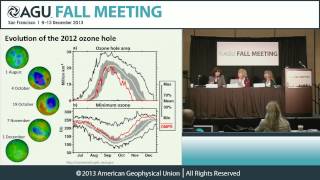
New Results From Inside the Ozone Hole
Explore new observations and analyses of the Antarctic ozone hole, its recovery status, and projected trends. Scientists discuss recent variations and internal workings of this annual phenomenon.
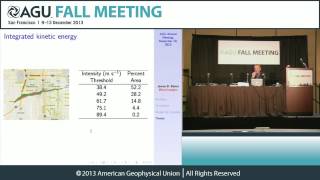
Are Tornadoes Getting Stronger - New Analysis Techniques
New analysis technique examines tornado strength trends by assessing damage paths. Research explores long-term patterns in tornado intensity, offering insights into potential changes in severe weather phenomena.
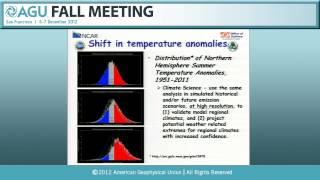
The Transformation of Climate Models to Earth System Models - Schneider Lecture 2012
Evolution of climate models to Earth system models, incorporating interactive cycles and components. Discusses future research challenges and Steve Schneider's vision for interdisciplinary collaboration in global change science.
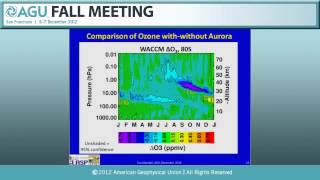
New Atmospheric Sciences Fellows Presentations - Session II
Presentations by new Atmospheric Sciences Fellows on climate change, Earth system models, particle precipitation, stratospheric aerosols, and precipitation processes in climate models.
Lightning and Atmospheric Electricity in Thunderstorms - 2012
Explore cutting-edge research on lightning and atmospheric electricity in thunderstorms, covering topics like chemistry interactions, fractal analysis, forest fire impacts, and storm microphysics.
Using Technology to Mitigate the Dangers of Airborne Volcanic Ash
Explore volcanic ash hazards and mitigation strategies using Earth science data and technology. Learn about volcano types, eruption indicators, and advanced modeling techniques for ash cloud prediction.
The Importance of Studying Clouds - NASA Cloud Science and Classroom Inquiry
Explore cloud science with NASA experts, covering topics like the water cycle, phase changes, and radiant energy. Engage in hands-on activities and learn to use NASA data for classroom projects.