Machine Learning Methods for Climate Science - Lecture 3
Explore machine learning applications in climate science, focusing on advanced techniques for analyzing and predicting complex atmospheric and oceanic processes.
Perturbation Methods for Nonlinear PDEs - Lecture 1
Explore perturbation methods for nonlinear PDEs, focusing on adapting linear equation techniques. Learn unified approaches through examples from cold atoms, water waves, and atmospheric science.
Explainable AI for the Geosciences
Explore machine learning interpretation techniques in geoscience, focusing on climate science applications and their potential for scientific discovery and increased trust in AI outputs.
Recent Advances in Deep Learning and Data Analytics in Earth Sciences - 2017
Explore cutting-edge deep learning applications in geosciences, featuring talks from NASA, MIT, and other leading institutions on solving complex Earth and planetary challenges.
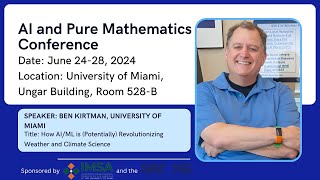
How AI/ML is Revolutionizing Weather and Climate Science
Explore how AI and machine learning are transforming weather and climate science, revolutionizing predictions and enhancing our understanding of complex atmospheric systems.
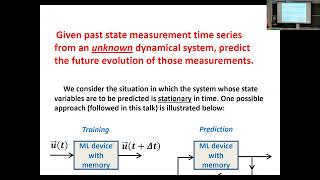
Machine Learning for Prediction of Earth Climate and Weather
Explore cutting-edge applications of machine learning in predicting Earth's climate and weather patterns, enhancing our understanding of complex atmospheric dynamics.
Advancing Weather and Climate Prediction with Data-Driven Methods
Exploring machine learning's transformative role in weather and climate prediction, enhancing forecast accuracy, facilitating scientific discovery, and revolutionizing atmospheric science methodologies.
Data Assimilation - Variational Methods - Lecture 8
Explore variational methods in data assimilation for weather and climate modeling. Learn theoretical foundations and practical applications to enhance atmospheric state estimation and forecasting accuracy.
How We Are Building Trustworthy AI for Weather and Climate in AI2ES
Explore innovative approaches to developing reliable AI systems for weather and climate prediction, enhancing forecasting accuracy and environmental understanding.

Conversations About Career Paths for Atmospheric Scientists in the Private Sector
Explore diverse private sector careers for atmospheric scientists, featuring insights from industry professionals on work environments, responsibilities, and transitioning from academia.
Convergence of Ideas and Communities
Explore global ocean policy perspectives with experts from Europe and the US, discussing research initiatives, funding, and international collaborations for marine sciences advancement.
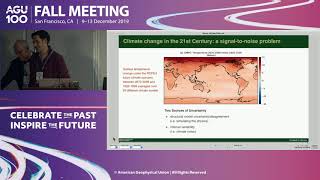
Data Analytics and Machine Learning Innovation for Climate and Earth Surface Processes
Explore innovative data analytics and machine learning techniques for climate and Earth surface processes, focusing on big data challenges and opportunities in Earth system modeling and predictability.
The Apollo 12 Lightning Incident - Fifty Years of Advancing the State of the Art
Exploring the Apollo 12 lightning incident, its impact on space missions, and advancements in launch safety protocols over 50 years. Discusses lessons learned and ongoing research in atmospheric electricity.
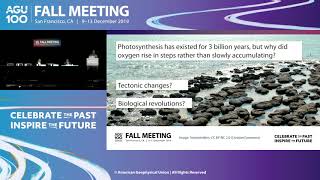
What Controlled the Rise of Oxygen on Earth?
Explore new findings challenging theories on Earth's oxygenation events, their sources, and implications for understanding oxygen history on Earth and other planets.

An Overview of Carbon Removal: From the Sky Down
Explore the science of carbon dioxide removal, from temporary fast-cycle methods to permanent slow-cycle solutions, with insights into natural and technological approaches to combat climate change.
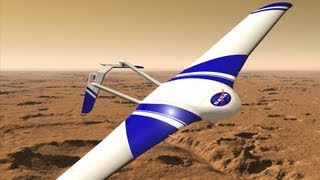
Why We Need to Go Back to Mars
Explore Mars' intriguing features, from ice-filled craters to ancient oceans, and discover compelling evidence of past life. Learn why returning to the Red Planet is crucial for unraveling its mysteries.

The Kilimanjaro Temperature Experiment
Explore the fascinating temperature changes during a Kilimanjaro climb through scientific experiments and breathtaking footage. Gain insights into high-altitude physics and mountaineering challenges.
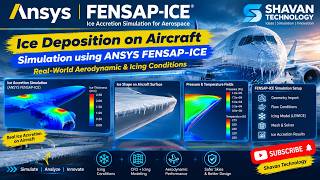
Ice Deposition on Aerodynamic Surfaces Using Ansys Icing - Subcooled Water and Freezing
Explore ice formation on aerodynamic surfaces at high altitudes using Ansys Icing, focusing on flow, water deposition, and freezing processes with subcooled water droplets.
The Climates of G1514 b - AbGradCon 2023
Explore the climates of exoplanet G1514 b through cutting-edge astrobiology research presented by Héctor Delgado Díaz at AbGradCon 2023, fostering interdisciplinary collaboration in planetary science.
Differences in Climates and Transit Spectra of Habitable Planets
Explore differences in climates and transit spectra of habitable planets, focusing on key factors influencing planetary habitability and detection methods for exoplanets.
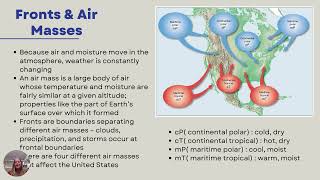
Earth's Atmosphere - Introduction to Weather and Extreme Storm Systems
Explore extreme weather systems and their impact on Earth's atmosphere, gaining insights into powerful storm formations and atmospheric phenomena.