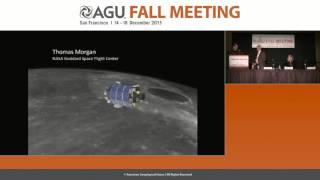
Fluctuations Within the Lunar Dust Cloud - LADEE Mission Findings
NASA researchers discuss observations from the LADEE mission, exploring the moon's exosphere and its interactions with the lunar surface, solar rays, and asteroids, providing insights for future planetary exploration.
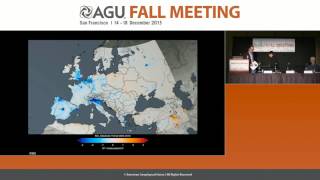
Global Air Quality - The Impacts of People and Cities
NASA scientists discuss a high-resolution global map of air quality, revealing how industrialization, economic activity, and civil unrest impact air pollution levels and their effects on human health and the environment from 2005 to 2014.
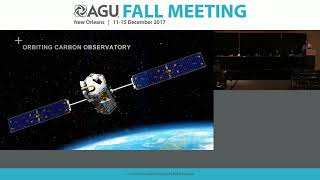
Emerging Sources of Scientific Data: Drones, CubeSats, and Citizen Science - 2017 Fall Meeting
Explore emerging scientific data sources like drones, CubeSats, and citizen science in this panel discussion on innovative data collection methods and their impact on Earth science research.
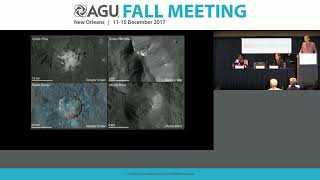
New Dawn Findings at Ceres - Bright Regions and Occator Crater
Explore NASA's Dawn mission findings on Ceres, including the discovery of over 300 bright patches and the intriguing Occator crater. Learn about the formation of surface features and their implications.
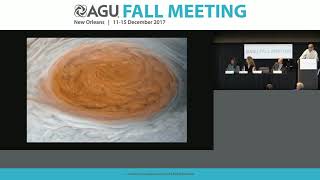
NASA's Juno Mission to Jupiter - Latest Findings and Discoveries
Latest findings from NASA's Juno mission to Jupiter, including insights on the Great Red Spot, radiation fields, and atmospheric dynamics. Experts discuss key discoveries from the spacecraft's first eight science passes.

Eclipse 2017 - Scientific Data Collection and Initial Results
Scientists share initial results from diverse studies conducted during the 2017 North American eclipse, covering solar physics, Earth science, and space biology using ground-based telescopes, high-altitude balloons, aircraft, and satellites.
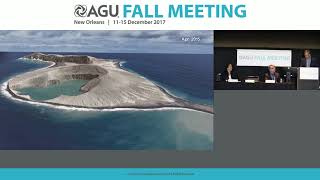
Evolution of a New Pacific Island - Satellite Observations and Insights
Satellite observations of a new Tongan island offer insights into island formation, longevity, and potential analogues for Mars features, providing unprecedented views of early island evolution.
Disaster Resilience and Cosmic Exploration - Keynote Lectures
Renowned scientists Lucy Jones and Takaaki Kajita discuss disaster resilience, science communication, and cosmic exploration through neutrinos, gravitational waves, and gamma rays.
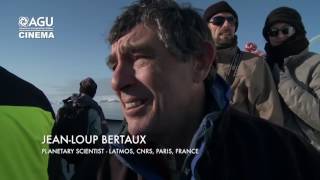
The Venus Twilight Experience - Transit of Venus 2012
Explore the rare 2012 Transit of Venus through the eyes of scientists worldwide, uncovering atmospheric insights and continuing a centuries-old astronomical tradition.
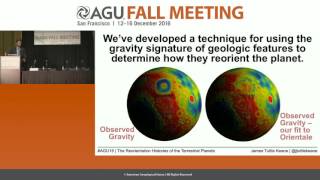
Tracking the Reorientation of Terrestrial Planets - True Polar Wander
Explore how major geological events can cause True Polar Wander on terrestrial planets, affecting their orientation and geological history over time.
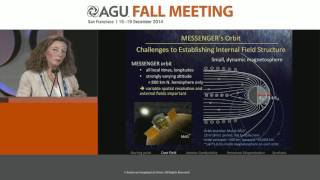
Mercury's Magnetic Field - Geomagnetism and Paleomagnetism
Explore Mercury's unique magnetic field, its origins, and implications for planetary formation in this comprehensive lecture by C. L. Johnson from the University of British Columbia.
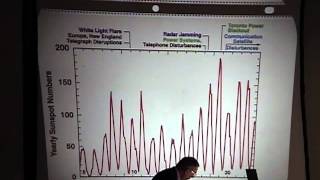
Union Education Tutorials - Space Weather and Its Impacts
Explore space weather's impact on technology with Louis J. Lanzerotti's tutorial from AGU Spring Meeting 2002, offering insights into this critical field despite the video's age.
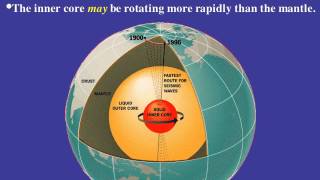
Dynamics of Planetary Interiors - Birch Lecture
Explore geophysical insights with Gerald Schubert's Birch Lecture at the AGU Fall Meeting 2002, offering valuable perspectives despite potential video quality limitations due to age.
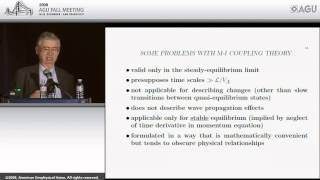
Understanding the Magnetosphere: The Counter-intuitive Simplicity of Cosmic Electrodynamics
Explore cosmic electrodynamics and the magnetosphere's counter-intuitive simplicity. Gain insights into energy transfer, coupling theory, and the interplay between classical and quantum physics in space.
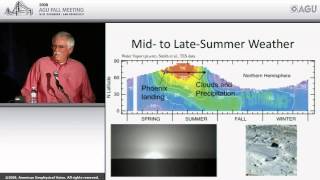
The Phoenix Mission Explores the Martian Arctic
Explore the groundbreaking Phoenix Mission to Mars' Arctic region, uncovering insights into the Red Planet's geology, climate, and potential for supporting life.
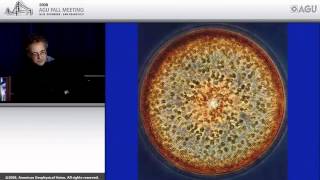
The Story of O: Evolution of Earth's Oxygen Cycle and Its Relevance to Extraterrestrial Life
Explore Earth's oxygen cycle evolution and its implications for extraterrestrial life in this captivating lecture by Paul Falkowski, delving into planetary sciences and astrobiology.
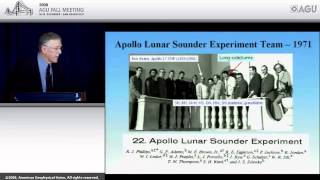
Terrestrial Planet Geophysics - Whipple Lecture
Explore terrestrial planet geophysics with expert Roger Phillips, delving into cutting-edge research and insights on planetary structures and processes.
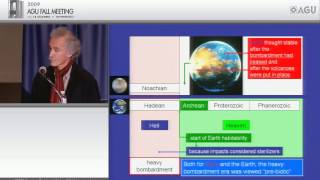
Mars Exploration: Bridging Our Past and Future
Explore Mars's geological history and its potential for hosting life through cutting-edge space missions and scientific discoveries, bridging our understanding of the Red Planet's past and future.
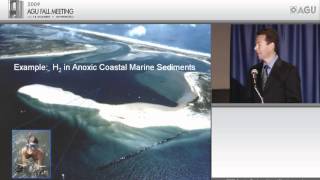
Life at the Common Denominator: Mechanistic and Quantitative Biology for Earth and Space Sciences
Explore life's fundamental requirements and potential across Earth and space through mechanistic and quantitative biology, examining energy, habitability, and environmental factors.
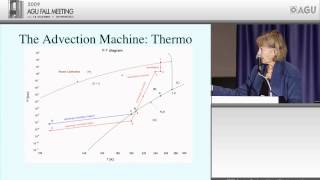
Enceladus: Oasis or Ice Ball? - Exploring Saturn's Enigmatic Moon
Explore Enceladus's intriguing features, from its size and chemistry to its unique terrains and geysers, drawing parallels with Earth's geothermal phenomena like Old Faithful.
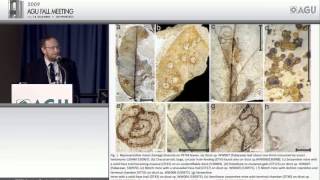
The Biggest Control Knob: Carbon Dioxide in Earth's Climate History
Explore Earth's climate history and CO2's pivotal role as the primary climate regulator, from ancient ice ages to modern global changes, with insights from geological evidence and ice cores.