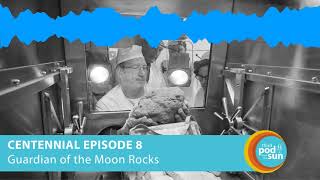
Guardian of the Moon Rocks - Apollo Lunar Samples Podcast
Explore the legacy of Apollo lunar samples with curator Ryan Zeigler. Learn about their collection, storage, scientific impact, and ongoing research potential in planetary science.
Mars 2020 Mission: Jezero Crater Landing Site and Sample Return Plans
Explore Jezero Crater, the Mars 2020 mission landing site, and its potential for uncovering evidence of past microbial life. Learn about the crater's geological history and its significance in understanding Martian evolution.
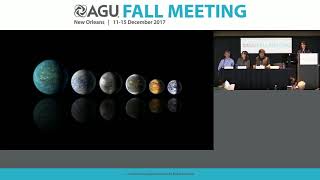
Spanning Disciplines to Search for Life Beyond Earth
Explore cross-disciplinary approaches in Earth science, astrophysics, heliophysics, and planetary science to identify exoplanets suitable for life and advance the search for extraterrestrial life.

Where Did Earth's Water Come From and How Do We Know?
Explore Earth's water origins through geological evidence and isotope tracking, uncovering its cosmic journey and significance for planetary formation and potential extraterrestrial life.

The Search for Alien Life in the Universe - Ri Science Podcast
Explore the search for extraterrestrial life with comedian Ben Miller and physicist Jim Al-Khalili, discussing scientific advancements and the possibility of alien intelligence in the universe.
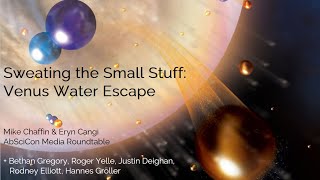
How Venus Lost Its Water - AbSciCon24 Press Roundtable
Researchers discuss new findings on Venus's water loss, exploring the planet's history and implications for understanding planetary evolution across the galaxy.
The Role of Sedimentology in the Characterization of Planetary Field Analogues
Explore how sedimentology aids in understanding planetary environments through terrestrial analogues, enhancing mission planning and extremophile research.
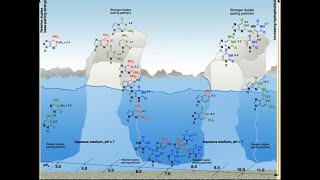
The Why behind Nature's Choice of Biomolecules
Explore the chemical origins of life through synthetic organic chemistry, uncovering nature's biomolecule choices and their emergence in early Earth environments.
Europa Clipper Mission Preview - NASA's Search for Life on Jupiter's Moon
NASA's Europa Clipper mission: Exploring Jupiter's icy moon to determine its potential for supporting life. Experts discuss the mission's goals, technology, and significance for understanding icy worlds beyond Earth.
Planet Hunting in the Cosmos
Explore the search for extraterrestrial life with Lisa Kaltenegger as she unveils cutting-edge techniques to detect habitable exoplanets and decode their potential for hosting life using Earth as a model.
Early Mars Sedimentary Systems at Gale and Jezero Craters and Their Paleoclimate Implications
Explore ancient Martian landscapes and climate through sedimentary evidence from Gale and Jezero craters, as revealed by recent rover missions and geological analysis.
Exploring Other Worlds Through Earth's Geology - Comparative Planetary Science
Discover how Earth's geological features and processes inform our understanding of other planets and moons, exploring physical, chemical, and biological aspects of extraterrestrial worlds.
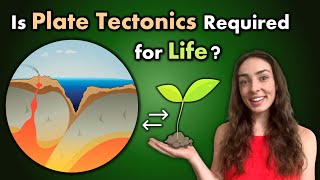
Earth's Unique Relationship Between Plate Tectonics and Life
Explore the intriguing connection between plate tectonics and life on Earth, examining their origins, mutual influences, and potential implications for extraterrestrial life.

How Life Drives Mountain Building on Earth and Its Implications for Space Exploration
Explore the intriguing connection between life and mountain formation on Earth, and its implications for detecting alien life during space exploration. Learn how carbon deposits influence tectonic processes.

Asteroids and the Origins of Life - NASA's Osiris-Rex Mission to Bennu
Explore NASA's Osiris-Rex mission to asteroid Bennu with experts, discussing sample collection, potential origins of life, and future space exploration in this engaging scientific conversation.
Why is All Life Carbon-Based, Not Silicon? Three Startling Reasons
Explore why carbon, not silicon, forms life's foundation through complexity, abundance, and stability. Uncover the unique properties that make carbon essential for biological structures and processes.

Are We Alone Out There? - The Search for Extraterrestrial Life
Explore the latest scientific advancements and ongoing quest to find extraterrestrial life. Experts discuss current research, military involvement, and the implications of potential discoveries beyond Earth.

Planets Beyond Our Sun - Exploring Extraterrestrial Solar Systems
Explore the possibility of planets beyond our solar system and the potential for extraterrestrial life in this thought-provoking lecture by renowned astronomer Carl Sagan.

Is There Life on Mars? - Carl Sagan's 1977 Christmas Lectures - Lecture 5
Carl Sagan explores Viking mission's findings on Mars, discussing soil analysis, microbiology experiments, and the ongoing search for extraterrestrial life in this engaging 1977 Christmas Lecture.

Mars before Viking - Lecture 4
Explore Mars through Mariner 9's groundbreaking discoveries, revealing unexpected features like craters, volcanoes, and valleys. Sagan discusses climate change evidence and potential for past life on the Red Planet.

The History of Mars - Lecture 3
Explore Mars' mysteries with Carl Sagan: geology, chemistry, moons, and the search for life. Discover early observations, NASA missions, and evolving theories about the Red Planet's potential for extraterrestrial life.