Learn 6502 Assembly - Addressing Modes - Lesson 2
Explore 6502 assembly addressing modes through examples, covering relative, special, absolute, offset, indirect, and more. Enhance your understanding of this CPU's unique memory access methods.
Simulating Z80 Functionality for the GBZ80 - Lesson A3
Simulate Z80 functionality on GBZ80 using macros to port code easily. Learn stack swapping, register manipulation, and command simulation techniques.
Learn 6502 Assembly Programming - Lesson 1: For Absolute Beginners
Learn 6502 assembly programming from scratch with multiplatform examples. Covers basic concepts, program structure, registers, and memory operations for game development on various retro systems.
Z80 Assembly Programming: Settings Data and Player Management - Lesson 6
Explore Z80 Assembly programming by learning about settings data, player positions, lives, scores, and controls in game development.

Data Representation in Assembly Programming - Lesson 4
Explore number representations in Assembly programming, covering binary, decimal, and their importance for hardware interaction and documentation comprehension.
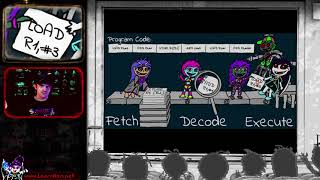
Retro Programming Basics - CPU Details and Technical Concepts - Lesson 3
Explore advanced CPU concepts like resets, traps, zero page, segment registers, and instruction pipeline for retro programming enthusiasts.
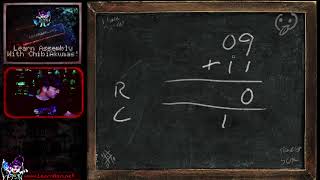
The Mysteries of the CPU - Retro Programming Basics in Assembly - Lesson 2
Explore CPU fundamentals for retro assembly programming, covering registers, calculations, memory, flags, and more. Essential concepts for ASM coding across various processors.
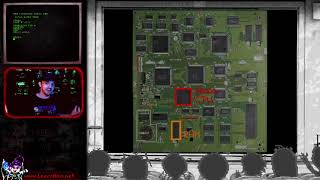
Getting Started with Retro Programming in Assembly - Introduction to Computing Concepts
Explore retro programming basics, assembly language concepts, and their applications in vintage computing systems. Learn fundamental computing principles and assembly's capabilities.
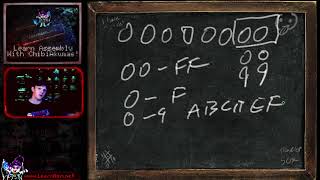
Binary Coded Decimal in 8086 Assembly - Lesson M2
Learn to convert hexadecimal to decimal for display in 8086 assembly using Binary Coded Decimal. Master efficient techniques for showing multi-digit numbers in your programs.
eZ80 Assembly - 24-Bit ADL Mode and New Commands - Lesson 1
Explore eZ80's enhanced features: 24-bit ADL mode, expanded address space, and new commands. Learn how ADL affects existing instructions and discover added functionalities.
Splitscreen Scrolling and Sprite 0 Hit on the NES - Lesson P43
Explore splitscreen scrolling and Sprite 0 Hit techniques for NES game development, including line IRQ interrupts and midscreen scroll changes for advanced visual effects.
65816 Assembly - New Addressing Modes - Lesson 2
Explore new addressing modes in 65816 assembly, including 65c02 and 65816-exclusive modes. Learn direct page, indirect, indexed, stack relative, and absolute long addressing.
NES Assembly - PSET and POINT for Pixel Plotting in Photon - Lesson 10
Porting PHOTON to NES: Overcoming limited tile patterns and VRAM constraints using ASM techniques for efficient pixel plotting and display management.

Graphics Terminology for Retro Hardware Programming - Lesson 9
Explore graphics terminology for retro hardware programming, covering bitmaps, color attributes, palettes, graphics chips, memory, and screen buffers.
Even More Assembler Terminology - Lesson 7
Explore assembler terminology, including direction pointers, indirection, jumps, subroutines, and logical operations, to enhance your understanding of low-level programming concepts.
Assembler Terminology - Programming Basics Lesson 5
Explore assembler terminology and the process of converting source code to executable programs. Learn key concepts for programming in assembly language.
Antique SNAP-ON MT665 Automotive Analyzer Repair - Harness and Assembly
Repairing and calibrating a SNAP-ON MT665 automotive analyzer, including harness repair, component inspection, and assembly process demonstration.

Closing Keynote: Lessons from Pokémon's MissingNo Glitch - RustConf 2020
Explore Pokémon glitches and their implications for software development in this engaging keynote, drawing parallels between game quirks and modern programming challenges.
Inline Assembly in Rust - Design and Stabilization
Explore Rust's unstable inline assembly support, comparing it with other languages and discussing potential designs for stabilization.

OS Development - One Year with Rust
Reflections on developing an operating system from scratch using Rust, exploring challenges, benefits, and lessons learned in modern OS design and implementation.
(x86-64) GNU Assembler Crash Course
Comprehensive crash-course on x86-64 GNU Assembler, covering essential concepts and techniques for low-level programming and operating system development.