Running .NET on the NES
Dive into the fascinating process of running C# programs on the Nintendo Entertainment System, exploring reverse engineering, opcodes, MSIL, and binary formats for retro game development.
Demystifying Thread Call Stack Spoofing - Advanced Techniques for Stack Manipulation
Dive into advanced thread stack spoofing techniques, combining stack frames forging with ROP and JOP to achieve stealthy module execution and call stack manipulation.
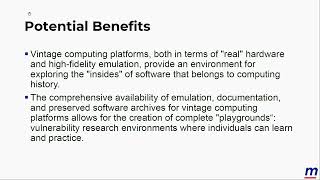
Retro Exploitation - Vintage Computing as a Vulnerability Research Playground
Explore vulnerability research and exploit development through vintage computing, focusing on the Commodore Amiga platform and practical demonstrations of retro software exploitation techniques.
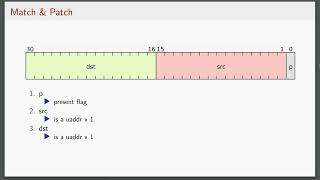
Backdoor in the Core - Altering Intel x86 Instruction Set at Runtime
Dive into groundbreaking research on Intel CPU microcode manipulation, exploring techniques for persistent modifications and potential security implications through microcode backdoors in x86 instruction sets.

Advanced ROP Framework - Pushing Return-Oriented Programming to Its Limits
Discover advanced return-oriented programming techniques with ROP ROCKET framework, featuring syscall bypassing, cross-architecture exploitation, and innovative bad byte handling for enhanced security testing.
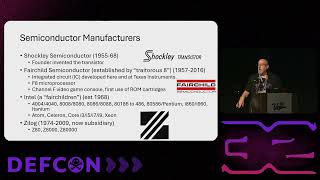
Early Microprocessors and the 6502: A Historical and Technical Introduction
Explore the fascinating history of early microprocessors, focusing on the 6502 chip, its programming, and impact on vintage computing systems, with hands-on demonstrations and resources.
Creating Trampolines and Re-Obfuscating Function Pointers in Runtime Linking - Part 7
Delve into advanced runtime linking techniques, focusing on trampoline creation, function pointer resolution, and memory debugging in reverse engineering and malware analysis.
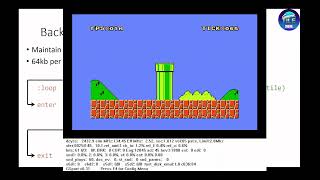
Generic Tile Engine (GTE) - A Graphic Engine for the Apple IIgs - Lecture 25
Explore the Generic Tile Engine for Apple IIgs, featuring fast full-screen multi-plane parallax scrolling. Learn design goals, technical details, and see demos showcasing capabilities.
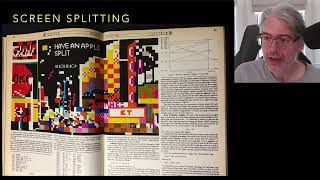
Writing an Apple /// Arcade Game
Explore creating an Apple /// arcade game in assembly, leveraging unique system capabilities. Dive into screen regions, interrupts, custom fonts, and audio integration for retro game development.
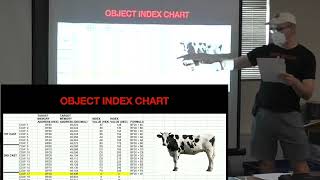
Nox Archaist - Analysis of Lord British Cow Bug
Explore the assembly code behind Nox Archaist's Lord British Cow Bug, learn its cause and fix, and discover potential new 6502 Workshop projects.
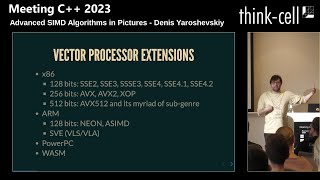
Advanced SIMD Algorithms in Pictures
Explore non-trivial SIMD algorithms like strcmp, set_intersect, and sort through visual explanations. Demystify vectorized algorithms for those with basic CS knowledge.
The Beauty of Assembly: Comparing x86_64 and ARM Architectures
Explore assembly differences between x86_64 and ARM architectures, covering fundamentals, examples, and compiler optimization techniques.
Nobody Can Program Correctly - Lessons From 20 Years of Debugging C++ Code
Explore debugging techniques and tools for C++ through real-world examples. Learn to reproduce, locate, understand, and fix complex bugs, enhancing your programming skills.
Is C++23 std::mdspan a Zero-overhead Abstraction? - Lecture
Explore C++23 std::mdspan's efficiency as a zero-overhead abstraction for multi-dimensional arrays through matrix and image operations, comparing assembly output to low-level implementations.
Understanding the Go Runtime
Explore the Go runtime's inner workings, from initialization to execution. Gain insights into garbage collection, scheduling, and core language features for optimized Go programming.
Going Down the Compilation Rabbit Hole - Understanding Go's Compiler
Explore the inner workings of Go's compiler, from parsing to assembly generation. Gain insights into how Go achieves simplicity and speed through compiler optimizations.
Micro-Optimizations for Android Development - Android Developers Backstage
Explorez les micro-optimisations Android avec Tor et Romain : allocations d'objets, inefficacités de code, compilateurs, outils personnalisés et bonnes pratiques pour améliorer les performances de vos applications.
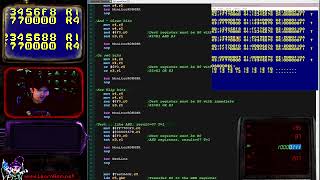
SuperH Assembly: Logical Operations, Signs, and Shifts - Lesson 4
Explore logical operations, bit shifting, and signed number commands in SuperH assembly programming, enhancing your low-level coding skills for efficient hardware manipulation.

Functional Error Handling in Python - Strategies for Composable Functions
Explore functional error handling in Python, moving beyond exceptions to improve function composability and code reliability. Learn strategies and tools for better error management.
From Bulb to C# - How Does Computer Work
Explore computer architecture from basic components to modern systems, understanding how hardware and software interact to create powerful computing devices.
Back to Basics: Functions in C++ - Lecture
Explore C++ functions from basics to advanced concepts, including anatomy, recursion, modular design, composition, and higher-order functions. Gain comprehensive understanding of function usage in C++.