Collision Course: Artificial Intelligence Meets Fundamental Interactions
Explore the synergy between machine learning and fundamental physics, focusing on particle physics at the Large Hadron Collider and its potential to advance AI research.
Logical Neural Networks: Unifying Statistical and Symbolic AI
Explore unifying statistical and symbolic AI through Logical Neural Networks, a framework combining neural networks with logical inference for improved knowledge representation and reasoning.
A Semantic Web Approach to Fault-Tolerant Autonomous Manufacturing
Explore a semantic web approach for fault-tolerant autonomous manufacturing in this thesis defense, focusing on innovative solutions for industry challenges.
The Challenge of Orbital Debris
Explore the growing concerns of space debris with NASA expert Dr. Matney as he examines current challenges, risks, and potential solutions for managing orbital waste around Earth.
MRI Brain Scan Classification Using FastSurfer, XGBoost and 3D CNNs
Master medical image classification techniques using FastSurfer pipeline, XGBoost, and 3D CNNs for MRI brain scan analysis. Learn preprocessing steps and implement neural networks in PyTorch for advanced medical data analysis.
Observing Objects - Revisiting Second-Order Cybernetics
Explore the philosophical intersection of object-oriented and process-oriented ontologies through Glanville's Theory of Objects, examining how observation shapes our understanding of objects and observers.
Efficiency in the Age of Large Scale Models - Designing and Optimizing Deep Learning Systems
Explore the challenges and solutions of large-scale AI models, from theoretical foundations to practical efficiency improvements, with insights on reducing computational costs while maintaining performance in modern machine learning.
Towards Reverse Algorithmic Engineering of Neural Networks
Explore the algorithmic decision-making process of neural networks through NeuroSAT case study, examining how ML models learn and apply combinatorial features and confidence-based variable selection in SAT solving.
Implications of Implicit Bias in ReLU Networks - Understanding Generalization and Robustness
Explore the implications of implicit bias in ReLU networks, covering generalization in shallow networks, vulnerability to adversarial examples, and privacy concerns in neural network training parameters.
Empirical Challenges to Theories of Deep Learning
Explore empirical challenges in deep learning theory, examining network representations, non-monotonic training patterns, and complex learning processes through cutting-edge research findings and real-world examples.
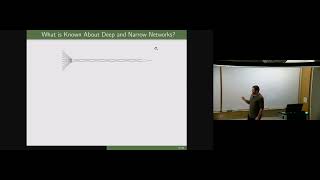
Benefits of Deep and Narrow Neural Networks for Approximation and Memorization
Explore groundbreaking research on neural networks' architecture, revealing why depth trumps width in function approximation and how deep, narrow networks can efficiently memorize data using minimal parameters.
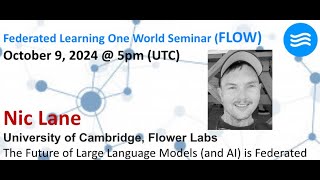
The Future of Large Language Models is Federated - Seminar 120
Explore cutting-edge developments in federated learning and its transformative role in the future of Large Language Models through insights from Cambridge researcher Nic Lane.
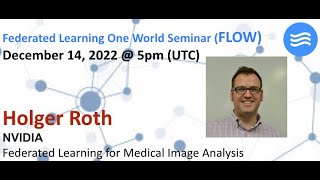
Federated Learning for Medical Image Analysis - Seminar 89
Explore cutting-edge federated learning applications in medical imaging with NVIDIA expert Holger Roth, focusing on collaborative AI development while maintaining data privacy and security.
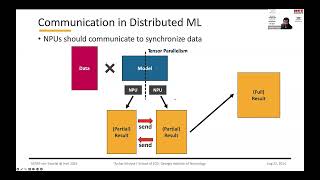
ASTRA-sim and Chakra - Co-design Exploration for Distributed Machine Learning Platforms
Explore co-design methodologies for distributed ML platforms using ASTRA-sim and Chakra frameworks, focusing on system optimization and performance analysis.

Challenges in Making Large Language Models Safe and Robust
Explore root causes of safety concerns and attacks on LLMs, evaluate defense strategies, and examine broader implications for machine learning safety and robustness.

AI in the Battle Against Fakes
Explore how AI combats counterfeit products using Azure services. Learn to build, manage, and deploy AI solutions for identifying fakes with just a smartphone picture.
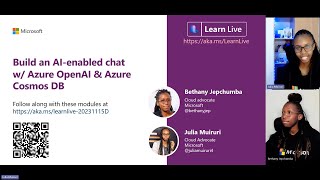
Build an AI-Enabled Chat with Azure OpenAI and Azure Cosmos DB - BRK404LL
Integrate Azure OpenAI and Cosmos DB into ASP.NET Core Blazor app for AI-enabled chat functionality. Hands-on session with expert guidance and live Q&A.
Small Language Models for Application Security - Beyond ChatGPT
Explore how small, open-source language models like LLaMa and Alpaca can revolutionize application security workflows, enabling earlier and more efficient security integration in software development.
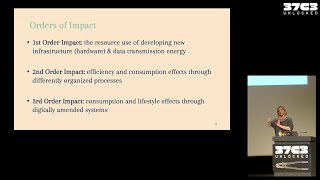
Digitalisation, Sustainability, and Climate Justice - Critical Analysis and Future Directions
Kritische Analyse der Digitalisierung im Kontext globaler ökologischer Ungerechtigkeit. Diskutiert Herausforderungen, sinnvolle digitale Werkzeuge und Wege zu einer nachhaltigen, gerechten digitalen Zukunft.
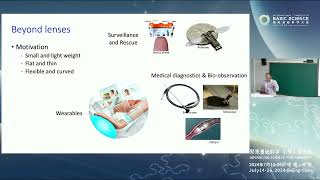
Lensless Imaging: Overview, Opportunities, and Challenges
Explore lensless imaging advancements, principles, and applications in 3D reconstruction, discussing challenges and future opportunities in camera design and computational algorithms.
AI Hallucinations and Manipulation - How to Use AI Coding Tools Securely - DevSecCon
Explore AI coding tools' security implications, challenging their ability to produce secure software and learning strategies for safe implementation in development workflows.