The Continuous Language of Protein Structure
Explore a novel approach to protein structure generation using continuous autoregressive language models. Learn about innovative techniques for in silico protein design and their potential applications.
Integrating -omic Data Across Datasets and Layers
Explore techniques for integrating -omic data across datasets and layers, focusing on redundancy, neural networks, and genetic associations in cancer research.
Large Language Models for Computational Biology - A Primer
Explore large language models in computational biology, covering transformers, pretraining, and applications in genomics and single-cell analysis.

What's New in Wolfram Video: Advanced Editing and Generation Capabilities
Explore latest Wolfram Language video functions: subtitle support, editing, and programmatic generation. Discover advanced capabilities for video manipulation and creation.

From Rock-Paper-Scissors to BabyAGI - Harnessing LLMs with the Wolfram Language
Explore LLMs through rock-paper-scissors, then implement BabyAGI in Wolfram Language. Discover AI's decision-making and autonomous agent capabilities.

Advanced Chat Notebook Use in Wolfram - Lecture 1
Explore advanced techniques for utilizing Chat Notebooks, including custom functions and behavior modifications, to enhance your interactive computing experience.
DevOps for AI: Running LLMs in Production with Kubernetes and KubeFlow
Explore production deployment of LLMs using Kubernetes and KubeFlow, mastering DevOps practices for AI systems.
The Future of Application Development - Cloud Native Summit
Explore Kappa architecture, stream processing, and LLM integration for innovative application development. Learn to build scalable systems leveraging real-time data and AI capabilities.
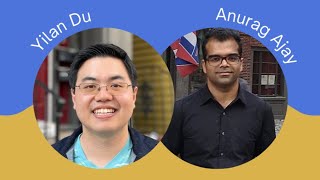
Generative Artificial Intelligence for Decision Making in Robotics
Explore generative AI's potential in robotics, leveraging video foundation models and internet-trained models to solve complex, long-horizon manipulation tasks efficiently.

Multi-Time Scale World Models
Explore multi-time scale world models for intelligent agents, focusing on probabilistic formalism, computational aspects, and action-conditional future predictions in complex environments.

Robots Learning Like Humans: Leveraging Human-Inspired Techniques in Machine Learning
Explore how robots can learn from human-like methods, including video observation, natural language instructions, and curiosity-driven exploration.
Learning In-the-Wild Sensor Simulation for Autonomous Driving
Explore cutting-edge sensor simulation techniques for autonomous driving. Learn to create digital twins, manipulate scenarios, and generate realistic multi-sensor simulations to enhance self-driving vehicle development.
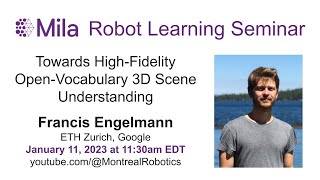
Towards High-Fidelity Open-Vocabulary 3D Scene Understanding
Explore open-vocabulary 3D scene understanding using Transformer-based networks and foundation models. Learn about object segmentation, human body part segmentation, and vectorized floorplan reconstruction.
Ubisoft La Forge Game Bot Team - Building ML-Based Game Actors
Explore Ubisoft La Forge's ML-based game actors, challenges in AAA games, and innovative approaches to simulating player behavior through concrete in-game examples.
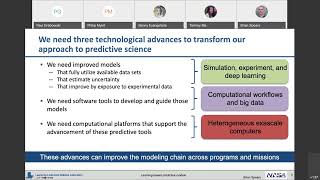
Cognitive Simulation: Combining Simulation and Experiment with Artificial Intelligence
Explore cognitive simulation techniques merging AI with experimental and simulation data for advanced scientific insights and predictive capabilities.
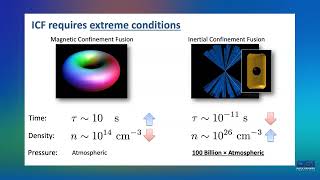
Calling the Shot: How AI Predicted Fusion Ignition Before It Happened
Explore how AI predicted fusion ignition at the National Ignition Facility, revolutionizing clean energy research and bringing us closer to harnessing the power of the stars.
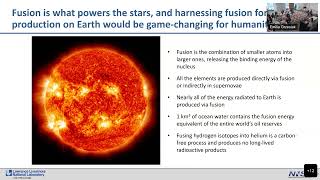
Machine Learning Applications in Scientific Problems with Sparse Data - Afternoon Address
Explore Dr. Kelli Humbird's career in data science, focusing on inertial confinement fusion and machine learning applications in scientific problems with sparse data.

ML for Solving PDEs: Neural Operators on Function Spaces
Explore AI advancements in scientific applications, including neural operators for weather and climate modeling, offering significant speedups and zero-shot generalization across function spaces.

Power in the Age of Artificial Intelligence - Global Security Implications
Explore the global impact of AI on power dynamics, focusing on the U.S.-China rivalry and the race for AI dominance. Gain insights from a former Pentagon official on the future of warfare and international relations.
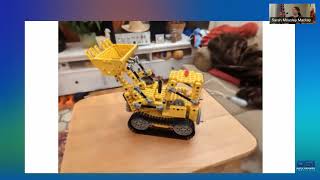
Photorealistic Reconstruction from First Principles
Explore photorealistic reconstruction techniques combining compressed sensing and deep learning for computational imaging, focusing on recovering optical density and view-dependent color from calibrated photographs.
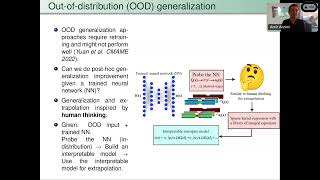
DDPS - A Flexible and Generalizable XAI Framework for Scientific Deep Learning
Explore a flexible XAI framework for scientific deep learning, enhancing interpretability and generalization in physics-based modeling through integral equations and sparse regression techniques.