How to Fine-Tune Mamba for Question Answering
Dive into practical Mamba language model fine-tuning for question-answering tasks, from basic prompt engineering to complete model training implementation.
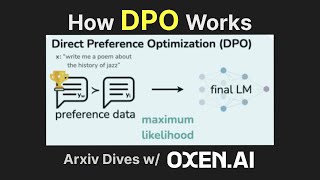
Direct Preference Optimization (DPO) vs RLHF - Understanding Language Model Training
Delve into Direct Preference Optimization (DPO) and discover how it eliminates the need for separate reward models in language model training, offering a more efficient alternative to RLHF.
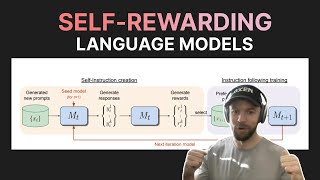
Deep Dive Into Self-Rewarding Language Models - Training Models as Their Own Judges
Explore how language models can be trained to evaluate and improve themselves, eliminating the need for human-labeled data while achieving superior performance in AI development and training.
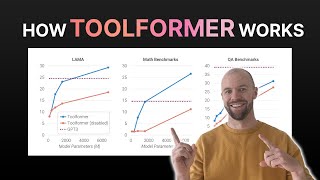
Teaching Language Models to Use Tools - Deep Dive into Toolformer
Explore how language models can self-learn to utilize tools through API calls, covering architecture, training data generation, filtering mechanisms, and experimental results from Meta's Toolformer paper.
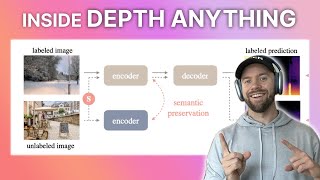
Depth Anything: Single Image Depth Map Generation Using Neural Networks
Explore neural network techniques for generating accurate depth maps from single images, covering architecture, evaluation methods, and real-world applications of the Depth Anything model.
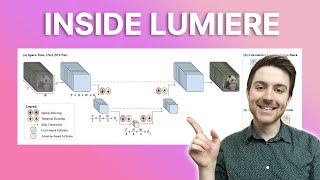
Understanding Lumiere: A Space-Time Diffusion Model for Video Generation
Explore Lumiere's innovative space-time diffusion model for video generation, covering its architecture, solutions to common problems, and practical applications in coherent motion synthesis.
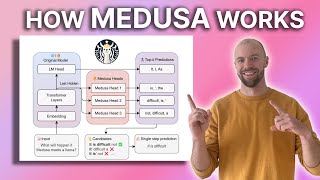
Understanding Medusa: A Framework for LLM Inference Acceleration with Multiple Decoding Heads
Dive into the mechanics of Medusa, a framework that accelerates LLM inference through parallel token prediction and tree-based attention, enhancing AI model performance and efficiency.

Understanding Diffusion Transformers and the Technology Behind Sora
Dive into the technical foundations behind OpenAI's Sora, exploring diffusion transformers, U-Nets, and latent diffusion models that power this groundbreaking video generation technology.
Fine-Tuning Self-Rewarding Language Models with Mistral 7B
Dive into implementing Meta's Self-Rewarding Language Model with Mistral 7B, covering fine-tuning techniques, data preparation, prompt generation, and practical demonstrations.
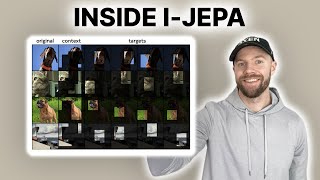
Understanding I-JEPA: A Non-Generative Approach to Self-Supervised Learning from Images
Dive into Meta AI's I-JEPA framework for self-supervised image learning, exploring its architecture, methodology, and advantages over traditional approaches in computer vision and neural networks.
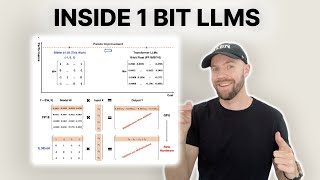
Understanding 1-Bit Large Language Models - From Theory to Implementation
Dive into the revolutionary concept of 1-bit Large Language Models, exploring how weights can be represented with simple integers (0, 1, -1) instead of complex floating-point numbers.
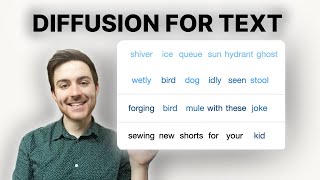
Understanding Text Generation Through Diffusion Models - From Theory to Implementation
Dive into discrete diffusion modeling for text generation, exploring probability distributions, score-based modeling, and practical applications in generative AI that rival GPT-2's capabilities.
Training LLMs with Diffusion Techniques - From Theory to Implementation
Dive into implementing text generation using discrete diffusion modeling, covering implementation details from basic concepts to training scripts for creating GPT-2 competitive models.
Efficient Text-to-Image Generation with PixART-α DiT Fine-Tuning
Dive into efficient text-to-image generation using PixART-α, exploring fine-tuning techniques, design principles, and practical implementation steps for diffusion transformers.
Understanding How Llama 3.1 Works - A Technical Deep Dive
Dive into Meta's groundbreaking Llama 3 architecture, exploring pre-training techniques, model capabilities, synthetic data quality, and implementation strategies for advanced AI development.

Inside the Rectified Flow Transformer Model - Understanding Advanced Image Generation
Dive into the technical architecture and methodology behind Flux, exploring rectified flow transformers, latent diffusion models, and the innovative approaches that led to superior image generation results.
The Prompt Report: Understanding Prompting Techniques and Taxonomy - Part 1
Explore systematic prompting techniques through an in-depth analysis of template structures, zero-shot methods, emotion prompting, and thought generation approaches for enhanced AI interactions.
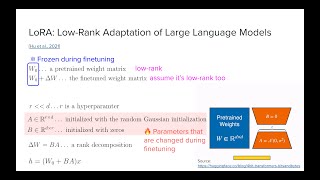
Parameter-Efficient Finetuning - QLoRA and LoRA Methods
Explore parameter-efficient fine-tuning techniques with LoRA and QLoRA, learning how to optimize large language models while maintaining performance and reducing computational costs.
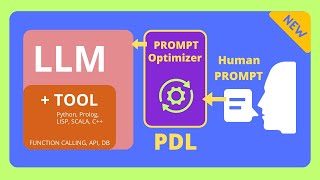
PDL: A Declarative Language for Smarter and Faster LLM Programming
Discover how PDL revolutionizes prompt programming with a declarative YAML-based approach, enabling modular, reusable patterns for enhanced LLM interactions and sophisticated application development.
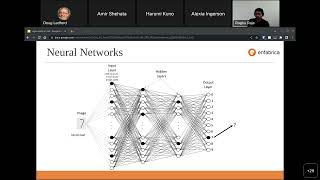
Designing Networking Stacks for Machine Learning Frameworks
Dive into networking stack design for machine learning frameworks, exploring challenges, solutions, and real-world applications through NCCL case studies and prototype implementations.
Infrastructure Software for Hyperscale AI and GPU Clusters
Explore cutting-edge infrastructure software solutions powering large-scale AI operations and GPU cluster management for hyperscale computing environments.