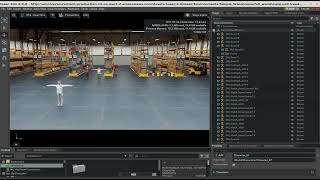
Explore NVIDIA Metropolis AI-Powered Multi-Camera Tracking on AWS
Discover AI-powered multi-camera tracking with NVIDIA Metropolis on AWS. Step-by-step guide for deploying advanced video analytics and real-time location systems using synthetic data and microservices.
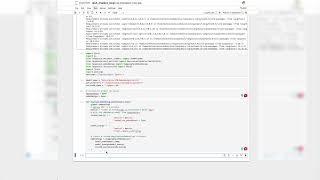
Developing Local AI Copilots with LangChain, NVIDIA NIM, and FAISS - LLM App Development
Learn to build a local AI copilot using LangChain, NVIDIA NIM, and FAISS. Covers document processing, vector storage, inference with Llama 3, and LangChain orchestration for responsive LLM applications.

Spotting and Debunking Tech Propaganda - Critical Thinking in Technology
Learn to identify and critically analyze common forms of tech propaganda, from FOMO to irrational exceptionalism, enhancing your ability to evaluate technological claims and trends objectively.

Create Stunning OpenCV Apps - 5 Best Python GUI Frameworks
Discover top Python GUI frameworks for building impressive OpenCV applications, enhancing your computer vision projects with user-friendly interfaces.

Creating Custom Flux AI Photos Without LoRA Using PuLID Technique
Learn to generate personalized Flux AI photos quickly using PuLID technique, without fine-tuning or LoRA. Create custom AI images efficiently with this innovative method.

A Rising AI Generation? No, Not for Languages - The Importance of Human Language Learning
Explore the enduring value of language learning in the AI era, uncovering hidden beauties in linguistics and cultural connections beyond machine translation capabilities.

Lindy 2.0 - AI-First Automation Platform Tutorial and Comparison
Discover Lindy 2.0, an advanced AI automation platform for custom tasks. Learn to create AI agents, build versatile tools, and integrate with various apps to enhance productivity.

Deploying LLM Workloads on Kubernetes with WasmEdge and Kuasar
Explore efficient LLM deployment on Kubernetes using WasmEdge and Kuasar. Learn how these tools enhance speed, scalability, and security for AI applications in cloud-native environments.

Observability Supercharger: Building Traffic Topology Maps for Millions of Containers with Zero Code
Leveraging eBPF to build universal traffic topology maps for millions of containers, enabling distributed tracing and optimizing performance with minimal impact on production environments.
Model Openness Framework: The Path to Openness, Transparency and Collaboration in Machine Learning Models
Explore the Model Openness Framework, a system for rating machine learning models based on openness and completeness, promoting transparency and collaboration in AI development.
Unlocking Heterogeneous AI Infrastructure in Kubernetes Clusters - Leveraging HAMi
Explore HAMi for managing diverse AI devices in Kubernetes clusters. Learn about unified scheduling, GPU sharing, QoS, flexible strategies, and real-world applications for optimized resource utilization.
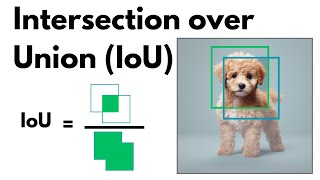
Intersection over Union (IoU) Explained with PyTorch
Learn to implement Intersection over Union (IoU) for object recognition using PyTorch. Covers theory, formulas, and practical code for bounding boxes and segmentation masks.
Juliet&Romeo: Making Julia a Hard Real-Time Robot Language
Explore Juliet&Romeo: a groundbreaking real-time robot programming language combining safety, dynamism, and low-latency multitasking with Julia compatibility for advanced machine control and AI integration.
Solving Difficult Reachability Problems in JuMP.jl
Explore advanced reachability analysis techniques for complex control systems using JuMP.jl, including temporal refinement and tools for nonlinear systems with neural network controllers.
Differentiable Point Cloud Rasterisation in Julia
Explore differentiable point cloud rasterization in Julia, focusing on volumetric 3D data rendering to voxel grids or 2D images, with fast CPU/GPU implementations and integration into ChainRules.jl ecosystem.

Oceananigans - An Ocean-Flavoured Fluid Dynamics Library
Explore Oceananigans, a Julia-based fluid dynamics library for oceanic modeling, featuring flexibility, GPU performance, and easy integration of custom components like sea-ice and biogeochemistry.

What's the Plan? Task Planning for Robots - JuliaCon 2024
Explore task planning for robots using Julia's features to efficiently handle complex knowledge bases and action sequences in goal-oriented scenarios.
RxEnvironments - Reactive Multi-Agent Environments
Explore reactive programming for multi-agent environments in Julia. Learn to model complex agent-environment interactions using RxEnvironments.jl, overcoming limitations of traditional reinforcement learning frameworks.

Interpretable Hierarchical Calibration of Agent-Based Models
Explore scientific machine learning's fusion of traditional modeling and ML, focusing on neural network surrogates for agent-based models in epidemiology and automated hierarchical calibration.
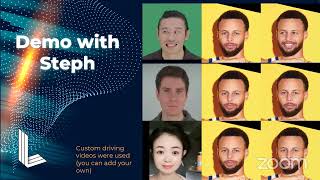
LivePortrait - Efficient Portrait Animation with Stitching and Retargeting Control
Innovative framework for video-driven portrait animation, balancing efficiency and control. Utilizes implicit keypoints, large-scale training, and advanced modules for superior performance and speed.
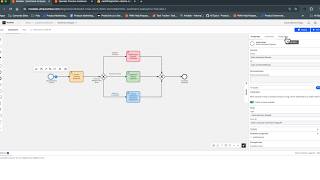
Configuring and Using the Camunda Hugging Face Connector for Customer Sentiment Analysis
Learn to configure and use Camunda Hugging Face Connector for analyzing customer sentiment in BPMN processes. Integrate machine learning to improve customer interactions and automate decision-making based on sentiment analysis.