Will ChatGPT Replace Chegg for Physics Solutions?
Explore ChatGPT's potential to revolutionize physics problem-solving, comparing its capabilities to Chegg's solutions in this insightful analysis.
Can ChatGPT Create Physics Course Materials? - Centripetal Acceleration
Explore AI-generated physics questions and Python programs on centripetal acceleration for classroom use.
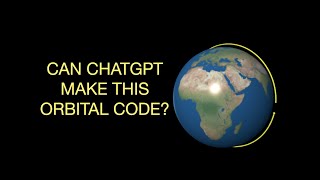
Can ChatGPT Make a VPython Program for Orbital Motion?
Explore ChatGPT's ability to create a VPython program simulating ISS orbital motion, examining code output and discussing limitations.
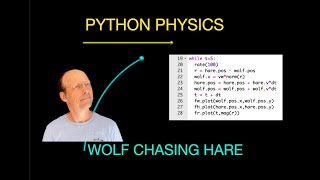
Python Physics: Modeling the Wolf and Hare Problem
Model wolf-hare chase dynamics using Python, exploring predator-prey motion patterns and computational problem-solving in physics simulations.

Llama 3.2 - Multimodal and Edge Computing Advancements
Explore Llama 3.2's multimodal capabilities, edge computing potential, and performance benchmarks. Learn about its vision-tuned models, lightweight versions, and integration with Ollama.
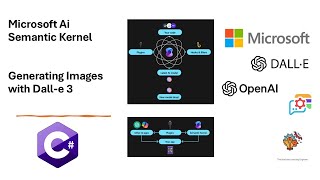
Microsoft AI: Semantic Kernel C# SDK - Generating Images with DALL-E 3
Develop AI-powered image generation using Semantic Kernel, Azure OpenAI, and DALL-E 3 in C#. Learn to create applications that transform text descriptions into visuals.
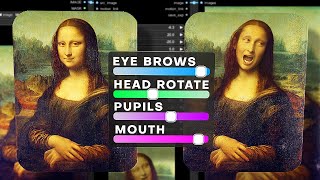
Animate Any Image or Video - Advanced LivePortrait ComfyUI Tutorial
Master facial expression animation in photos and videos using AI-powered LivePortrait in ComfyUI. Learn advanced techniques for realistic and controllable animations.
Entailment and Proof in Artificial Intelligence - Lecture 2.5
Explore entailment and proof concepts in artificial intelligence, focusing on knowledge representation and reasoning techniques.
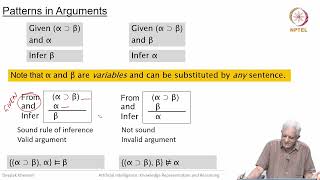
Patterns in Arguments - Lecture 2.7
Explore patterns in arguments to enhance reasoning skills and improve logical analysis in artificial intelligence.
A Syntactic Machine - Artificial Intelligence: Knowledge Representation and Reasoning - Lecture 2.4
Explore the concept of a syntactic machine in artificial intelligence, focusing on knowledge representation and reasoning techniques.
Truth, Logic, and Provability in Artificial Intelligence - Lecture 2.3
Explore truth, logic, and provability in artificial intelligence, focusing on knowledge representation and reasoning concepts.
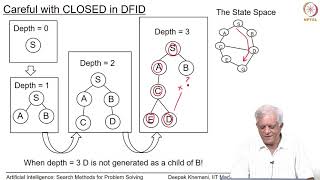
Depth First Iterative Deepening
Explore depth-first iterative deepening algorithm, combining benefits of depth-first and breadth-first searches for efficient problem-solving in artificial intelligence.
Deep Learning: Some Examples
Explore practical examples of deep learning applications and techniques with Prof. Deepak Khemani from IIT Madras.
Physics Informed Neural Networks - BC Incorporation
Explore Physics Informed Neural Networks and learn techniques for incorporating boundary conditions in these advanced machine learning models.
Camera Intrinsics and Extrinsics - Rotational Homography and Perspective Projection - Lecture 1
Explore camera intrinsics, extrinsics, rotational homography, and perspective projection in computer vision applications.
Dense 3D Reconstruction - Plane Sweep Stereo
Explore dense 3D reconstruction techniques and plane sweep stereo methods for creating detailed three-dimensional models from multiple images.
Structure from Motion - Depth by Triangulation - Lecture 3
Explore depth estimation through triangulation in Structure from Motion techniques, enhancing 3D reconstruction skills.
Factorization Methods in Structure from Motion (SFM)
Explore factorization techniques in Structure from Motion (SFM) to enhance 3D reconstruction and computer vision skills.
Two-View Stereo: Algebraic Representation of Epipolar Geometry - Lecture 3
Explore algebraic representation of epipolar geometry and homogeneous representation of points and lines in two-view stereo.
Mid-Level Vision - Lecture 2
Explore advanced concepts in mid-level computer vision, building on foundational knowledge to enhance understanding of visual perception and processing techniques.
Deepnets for Stereo and Structure from Motion - Part 2
Explore semi-supervised depth prediction, wide context learning networks, and unsupervised monocular depth estimation techniques for advanced computer vision applications.