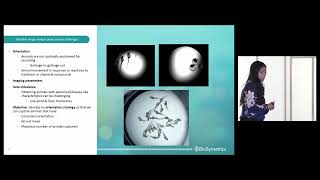
Machine Learning-Driven Phenotyping Platform for Rapid In Vivo Target Validation and Precision Medicine
Develop a zebrafish phenotyping platform using 3D-printed mounts and computer vision for drug discovery, enabling rapid gene-to-phenotype analysis and accelerating clinical translation.
Demystifying Large Language Models - ChatGPT, GPT-4, and the Future of AI Communication
Explore the inner workings of ChatGPT and GPT-4, their practical applications, and societal implications. Gain insights into how these AI models are shaping the future of communication and problem-solving.

Managing AI and Associated Risks in a Regulatory Environment
Explore AI's evolution, regulatory trends, and risk management practices in high-stakes industries with expert insights on navigating the complex AI landscape.
Deep Learning-Based Lung Ultrasound Video Classification to Predict COVID-19
Explore deep learning methods for COVID-19 detection using lung ultrasound videos, focusing on results, methodology, and explainability of the approach.
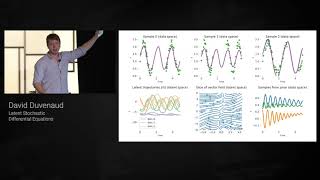
Neural ODEs: Continuous-Time Models for Machine Learning - TMLS 2019
Explore neural networks as implicit models and their applications in scientific computing with David Duvenaud at TMLS2019.
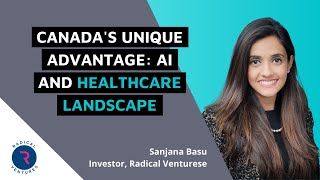
Canada's Unique Advantage: AI and Healthcare Landscape
Explore Canada's AI and healthcare landscape, focusing on its unique advantages in data, research, and startups. Discover how AI drives innovation in the healthcare sector.
Risk - The Toughest Barrier to Autonomous Cars
Explore the unexpected challenges in commercializing self-driving technology, focusing on mindset and legal hurdles rather than technical aspects.
Moore's Law is Dead - Now What? The Future of AI Processing
Explore the future of AI processing beyond traditional CPUs and GPUs, focusing on innovative architectures designed for demanding ML workloads in retail and beyond.
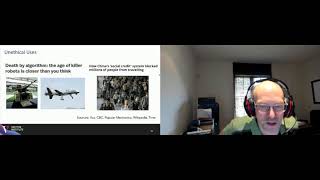
Responsible AI: Challenges and Emerging Practices - Keynote
Explore challenges and emerging practices in responsible AI, including unintended consequences, model interpretability, fairness, and engineering objectives.
Utterance Generator Fast Tracks Chatbot Training
Explore an utterance generator tool for efficient chatbot training, enhancing natural language understanding and streamlining development processes.
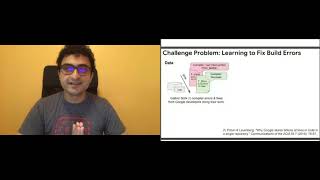
Deep Learning for Program Repair
Explore Google's ML4SE research on training deep learning models to fix software build errors, enhancing developer productivity and reducing project delays.
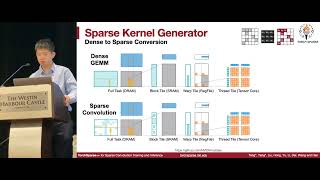
TorchSparse++ - Efficient Training and Inference Framework for Sparse Convolution on GPUs
Explore efficient GPU-based sparse convolution with TorchSparse++, an advanced framework for training and inference in deep learning applications.
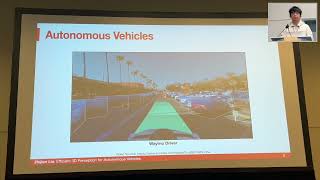
Efficient 3D Perception for Autonomous Vehicles
Explore efficient 3D perception techniques for autonomous vehicles, including multi-sensor fusion, accelerated view transformation, and optimized backbones for real-time performance on edge devices.
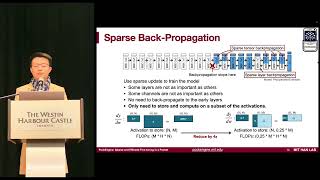
PockEngine: Sparse and Efficient Fine-tuning in a Pocket
Explore sparse and efficient fine-tuning techniques for AI models with PockEngine, enhancing performance while reducing computational demands.

Dimensionality Reduction and Segmentation with Decision Trees - Python Code
Explore advanced decision tree applications for dimensionality reduction and predictor segmentation, with Python code examples for breast cancer detection and sepsis risk analysis.

The Hugging Face Transformers Library - Beginner's Guide and Chatbot UI with Gradio
Explore the Hugging Face Transformers library for easy, cost-free use of open-source language models. Learn sentiment analysis, summarization, and build a chatbot UI with Gradio.

Fine-tuning Large Language Models (LLMs) with Example Code
Learn to fine-tune large language models with practical Python examples. Explore techniques like LoRA for efficient parameter tuning and implement a text classification model using distilBERT.

AI for Business: A Non-Technical Introduction
Explore AI's business value through a non-technical lens. Learn key concepts, practical applications, and five essential rules for leveraging AI effectively in your organization.

How to Improve LLMs with RAG - Overview and Python Code
Learn to enhance LLMs using Retrieval Augmented Generation (RAG). Explore its principles, implementation, and practical application in improving a fine-tuned model for YouTube comment responses.

Text Embeddings, Classification, and Semantic Search with Python Code
Explore text embeddings for classification and semantic search with Python. Learn to transform text into computable vectors for powerful NLP applications.
Local LLM Fine-tuning on Mac (M1 16GB) Using QLoRA and MLX
Fine-tune a local LLM on M1 Mac using MLX and QLoRA. Adapt Mistral 7b to respond like you to YouTube comments, with step-by-step guidance and code examples.