
Generative AI DevTools for Automated Unit Testing
Discover how AI-powered development tools can revolutionize unit testing workflows, automate test creation, and enhance code quality through practical demonstrations and real-world applications.

Integrated Information in the Active Inference Framework
Explore how active inference agents integrate information and consciousness through unified perception and action selection, with insights into information-theoretic measures and agent-environment interactions.

Building Conscious Artificial Intelligence - Understanding Requirements and Implications
Explore the intersection of AI and consciousness through philosophical and engineering perspectives, examining key concepts like self-modeling, perception, and the functional role of consciousness in cognitive systems.

Machine Consciousness, Meta-Causation, and Mimicry
Explore the MetaDyn theory of consciousness and its implications for AI, examining how meta-causation at the physical level relates to phenomenal consciousness and computational processing.
Space of Possible Minds - The Landscape of Consciousness
Explore the vast landscape of consciousness across biological species, artificial minds, and theoretical entities through mathematical frameworks and philosophical perspectives.
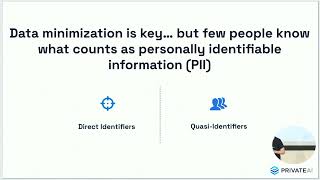
Building Customer Trust in the Generative AI Era
Explore ethical challenges and practical strategies for building trust in generative AI, focusing on privacy, bias, and compliance in the evolving technological landscape.
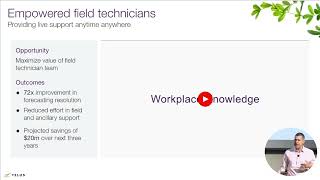
How Generative AI is Reshaping Business: Applications, Efficiency, and Innovation
Discover how Generative AI transforms industries through real-world applications, enhancing efficiency and innovation while revolutionizing traditional business approaches and problem-solving methods.
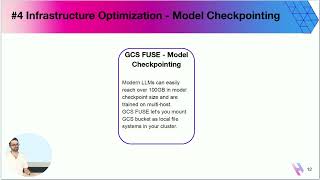
Compute Strategies for Generative AI - Resource Optimization and ML Platform Development
Discover strategic approaches to distribute computing resources for large-scale AI models, focusing on optimization techniques and efficient resource management in production environments.

Building and Evaluating Prompts on Production Grade Datasets for Conversational AI
Master techniques for building and evaluating LLM prompts using production datasets, with practical insights for conversational AI applications and real-world implementation strategies.
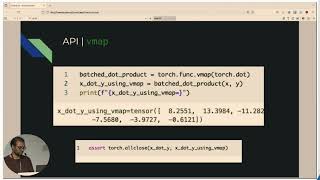
Functional Transforms in PyTorch Using Torch.func
Master functional transforms in PyTorch with torch.func module, covering per-sample-gradients, function vectorization, and model ensembles. Learn practical applications and avoid common pitfalls.

Deploying and Evaluating RAG Pipelines with Lightning Studios
Discover how to rapidly deploy AI agents and optimize RAG pipeline evaluations using Lightning Studios' powerful toolset for enhanced development efficiency.

GenAI: A New Renaissance in Product Development
Explore how GenAI revolutionizes product development through enhanced global collaboration, user research, and innovative processes, while understanding potential challenges and opportunities.
Spectral Analysis of LoRA vs Full Fine-Tuning in Language Models
Delve into the technical comparison between LoRA and full fine-tuning methods for language models, exploring their structural differences, spectral properties, and impact on model performance.

Understanding Task Vectors in Vision-Language Models - Cross-Modal Representations
Explore how Vision-Language Models create task vectors - internal representations enabling cross-modal performance through text and images, revolutionizing AI's ability to understand and execute diverse tasks.
Layer Increasing Network Scaling (LiNeS) - Preventing Catastrophic Forgetting in Language Models
Explore LiNeS, a novel post-training layer scaling technique that prevents catastrophic forgetting in large language models while enhancing multi-task performance and model merging capabilities.

Gling AI Video Editor Tutorial - Features and Workflow Guide 2024
Discover how to streamline video editing with Gling AI's automated features - from removing filler words and generating captions to creating titles and chapters, all while maintaining professional quality output.
Trojan Model Hubs: Hacking the ML Supply Chain and Defending Against Model Serialization Attacks
Discover essential strategies for protecting ML systems from supply chain attacks, focusing on model scanning and cryptographic signing to defend against Model Serialization Attacks in public model hubs.
AI Risk Management Framework: Understanding NIST Standards and Implementation
Explore NIST's AI Risk Management Framework, understanding key regulatory approaches, potential impacts, and effectiveness in managing artificial intelligence risks and capabilities.

Phantom Dependencies in AI and ML Projects - Managing Hidden Software Dependencies
Discover how phantom dependencies impact AI/ML projects and learn effective strategies for identifying, managing, and securing these hidden software dependencies in your applications.

Detail Daemon - Adding Fine Details to ComfyUI Generations
Master ComfyUI's Detail Daemon nodes to enhance image generation with intricate details and refined textures, focusing on skin details and subtle features through 4 specialized nodes.

Stable Diffusion 3.5 Medium - A Review of the New Text-to-Image AI Model
Explore Stable Diffusion 3.5 Medium's capabilities, comparing its performance against SDXL and other models while learning about its advantages for users with lower-end GPUs.