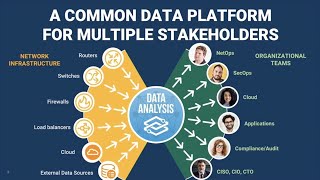
The Power of AI in a Forward Networks Digital Twin
Discover how generative AI enhances network digital twin technology, enabling natural language queries for instant access to critical network insights and data analysis capabilities.
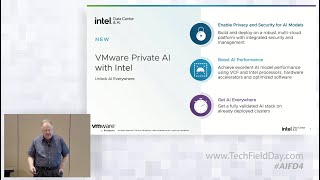
Using Intel AMX CPUs for AI and LLMs on VMware vSphere
Discover how to deploy private AI models using Intel AMX CPUs and VMware vSphere, enabling secure, cost-effective LLM implementations without dedicated GPUs in your existing data center infrastructure.
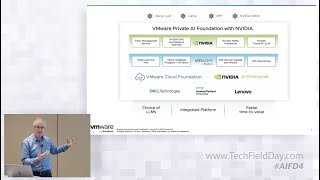
VMware Private AI Foundation with NVIDIA - Enterprise Generative AI Platform Overview
Discover how to deploy and manage enterprise-level generative AI applications with VMware's integrated solution, featuring NVIDIA NeMo for customization, enhanced security, and seamless data privacy controls.
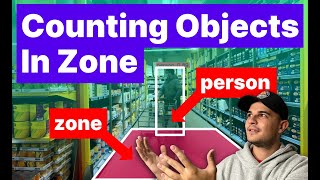
Count People in Zone - Using YOLOv5, YOLOv8, and Detectron2 - Computer Vision
Learn to detect and count objects in polygon zones using YOLOv5, YOLOv8, and Detectron2. Explore real-world examples and leverage the Supervision library for advanced computer vision analytics.

Track & Count Objects Using YOLOv8, ByteTrack & Supervision
Build an application to track and count objects using YOLOv8 for detection, ByteTrack for tracking, and Supervision for counting. Learn to set up the environment, create custom pipelines, and train models on custom datasets.
Building a Mobile AI Platform at Facebook - F8 2019
Explore Facebook's approach to mobile AI, covering NLP, video, ASR, and content understanding. Learn about challenges, techniques, and optimizations for edge deployment.
Recognize Handwriting with Core ML - Days of Swift Tutorials
Implement handwriting recognition on iOS using Core ML, Vision Framework, and MNIST model. Learn to process touch drawings for real-time digit classification.
OpenCV Python Tutorial - Corner Detection
Learn corner detection in OpenCV using Python. Discover efficient algorithms to find and visualize corners in images with just a few lines of code. Enhance your computer vision skills.
OpenCV Python Tutorial - Template Matching - Object Detection
Learn template matching for object detection in OpenCV using Python. Detect a soccer ball in an image, understand matching methods, and visualize results in this hands-on tutorial.

AI for Everyone - Face Recognition with OpenCV
Learn to implement face recognition using OpenCV and Python. Covers model training, face detection in images, and practical demonstrations with a webcam.
AI for Everyone - Faster Launch of Webcam and Smoother Video in OpenCV on Windows
Learn to optimize webcam performance in OpenCV on Windows, including faster launch and smoother video capture, with practical coding examples and hardware recommendations.
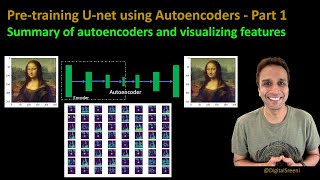
Pre-Training U-Net Using Autoencoders - Autoencoders and Visualizing Features
Explore autoencoders, image reconstruction, and feature visualization in deep learning models through hands-on coding examples and practical demonstrations.
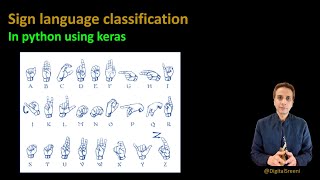
Classification of MNIST Sign Language Alphabets Using Deep Learning
Learn to classify hand sign language alphabets using deep learning, covering data preparation, model creation, and result analysis for 25 classes.

Skin Cancer Lesion Classification Using the HAM10000 Dataset
Learn to classify skin cancer lesions using HAM10000 dataset. Covers data preparation, model building with Auto Keras, and result analysis for 7 types of skin lesions.
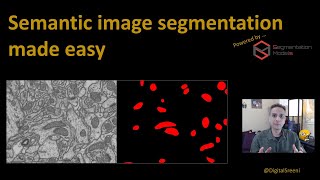
Semantic Segmentation Made Easy - Using Segmentation Models Library
Learn to implement semantic segmentation using the Segmentation Models library, covering model types, backbones, data augmentation, preprocessing, and training on electron microscopy datasets.
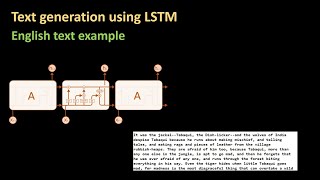
Text Prediction Using LSTM
Learn to train LSTM networks for English text prediction, covering data preparation, model architecture, and character-level forecasting techniques.
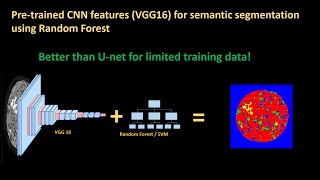
Pretrained CNN Features for Semantic Segmentation Using Random Forest
Explore semantic segmentation using VGG16 features and Random Forest, offering improved results for limited training data compared to U-net.
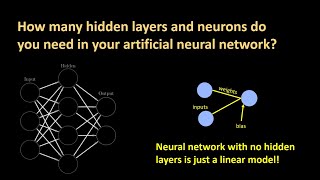
How Many Hidden Layers and Neurons Do You Need in Your Artificial Neural Network?
Explore the process of determining optimal hidden layers and neurons in neural networks through practical examples and code demonstrations.
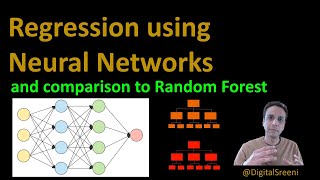
Regression Using Neural Networks and Comparison to Other Models
Explore neural network regression, compare with other models, and learn practical implementation using Python for data analysis and prediction.
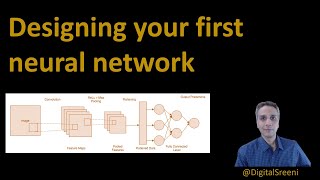
The Topology of Deep Neural Networks - Designing Your Model
Explore deep neural network topology and model design techniques for effective machine learning implementations.

Inking Techniques for Digital Artists - Shiny Surfaces
Learn digital inking techniques for shiny surfaces, focusing on line weight, tapered lines, and Gaussian blur effects in this fan art demonstration of Scarlet Witch.