
Machine Learning Failures - For Art
Explore hilarious machine learning failures in art, from cookie recipes to pony classification, and learn how to deliberately create amusing AI mistakes.
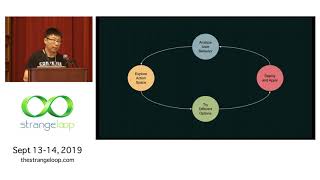
Realtime Hybrid Reinforcement Learning at Scale
Explore hybrid reinforcement learning for next best action recommendations, addressing challenges in incomplete feedback, dynamic actions, complex objectives, and real-time decision-making at scale.
Explainable AI - The Apex of Human and Machine Learning
Explore the emerging field of Explainable AI, its importance in high-risk domains, and how it bridges the gap between human cognition and machine learning for more intuitive and understandable AI systems.
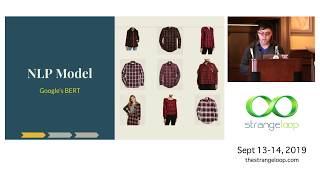
Computer Vision and NLP for Multi-Task Fashion Modeling
Explore multi-task learning for e-commerce attribute modeling using CNNs for images and BERT for text, with insights on ensemble architectures and training protocols.
Can Androids Conceive of Electric Sheep
Explore the journey of creating an android artist, delving into biomechanics, cognition, creativity, and insight simulation. Discover novel applications and thought-provoking questions about artificial artistic expression.
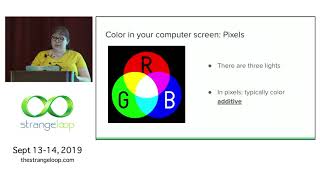
Complexities of Color in Computing
Explore color's impact on computing, from ADA compliance to AI challenges. Uncover hidden complexities in color perception, implementation, and its historical significance in technology.
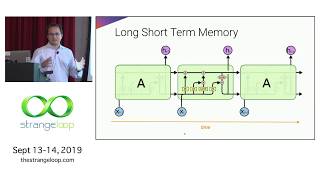
Assistive Augmentation - Lip Reading with AI
Explore AI-powered lip reading technology as an assistive solution for the deaf and hard of hearing, addressing challenges and showcasing implementation for improved accessibility in various settings.
Narrated Reality
Explore neural networks for creative language applications, from expressive image captioning to AI-generated screenplays, with insights on new interfaces and forms for written expression.
Just-So Stories for AI - Explaining Black-Box Predictions
Explore state-of-the-art strategies for explaining black-box AI predictions, discussing interpretability challenges and insights into human decision-making and ethical implications.
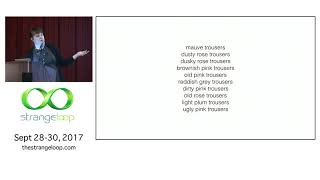
Experimental Creative Writing with the Vectorized Word
Explore experimental creative writing using vector representations of language, blending computational techniques with poetic expression for unique semantic and phonological effects.
PyTorch - Fast Differentiable Dynamic Graphs in Python
Explore PyTorch's dynamic deep learning framework, its high-performance design, and tensor compiler for faster AI research and development using GPUs and CPUs.
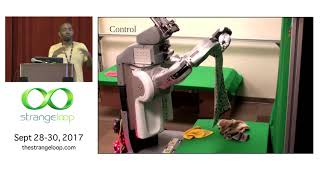
Running Programs in Reverse for Deeper A.I.
Explore inverse simulation for AI advancement, covering mental simulation, animation, and a novel approach using ReverseFlow to compile programs into their inverses, enhancing vision and planning capabilities.
Poetry - Teaching Versification to a Neural Network
Explore poetry generation using neural networks, balancing constraints and expression. Learn techniques to spot and create poetry with minimal assumptions, touching on classical rules and deep learning models.
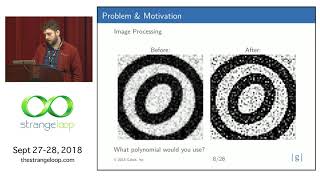
Your Secrets Are Safe with Julia - A Compiler for Secure Computation
Explore Ramparts, a compiler translating Julia code for homomorphic encryption, enabling secure computation on encrypted data without cryptography expertise.
Democratizing AI - Back-Fitting End-to-End Machine Learning
Explore LinkedIn's journey in democratizing AI, enhancing modeler efficiency, and scaling machine learning across engineering teams through innovative infrastructure and practices.

Learning from Machines
Explore cognitive models inspired by machine learning, offering insights into perception, expertise, and trauma. Gain a new perspective on human cognition and self-awareness.
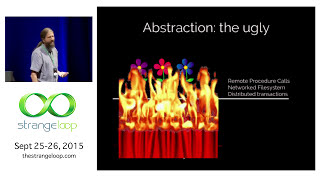
I See What You Mean
Exploring query languages for distributed systems programming, focusing on Dedalus and its ability to reason about correctness, consistency, and fault-tolerance in distributed environments.
What You Always Wanted to Know About Deep Learning, but Were Afraid to Ask
Demystifying deep learning concepts like back-propagation, gradient descent, and neural networks. Practical guide to training a model for object recognition using TensorFlow and Keras.
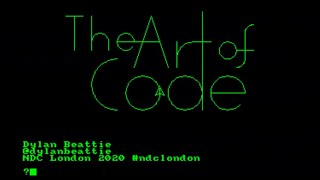
The Art of Code
Explore the intersection of coding and creativity, from esoteric languages to live performances, in this entertaining journey through programming as an art form.
Natural Language Processing with Deep Learning and TensorFlow
Explore deep learning for NLP using TensorFlow. Learn to create embeddings, build neural networks, and apply them to classification tasks with hands-on labs and interactive learning.

Why Do Keynote Speakers Keep Suggesting That Improving Security Is Possible
Humorous critique of tech industry's approach to security, highlighting flaws in machine learning, AI, and IoT while advocating for ethical computing and thoughtful development.