Censorship of Online Encyclopedias - Implications for NLP Models
Explore how censorship of online encyclopedias impacts NLP models, examining political effects and implications for AI development and information access.
Bridging Machine Learning and Mechanism Design towards Algorithmic Fairness
Explore the intersection of machine learning and mechanism design to address algorithmic fairness challenges in AI systems, focusing on innovative approaches and ethical considerations.
This Whole Thing Smacks of Gender - Algorithmic Exclusion in Bioimpedance-based Body Composition Analysis
Explore algorithmic exclusion in bioimpedance-based body composition analysis, focusing on gender-related issues and their implications for fairness in health technology.

Re-imagining Algorithmic Fairness in India and Beyond
Explore algorithmic fairness challenges in India, examining cultural contexts and proposing new frameworks for equitable AI development in diverse global settings.
Leave-One-Out Unfairness
Explore the concept of leave-one-out unfairness in machine learning, its implications for algorithmic bias, and potential strategies for mitigating this issue in AI systems.
Documenting Computer Vision Datasets - An Invitation to Reflexive Data Practices
Explore reflexive data practices in computer vision datasets, emphasizing documentation's role in addressing ethical concerns and promoting transparency in AI development.

Profiling and Representation
Explores bias in semantic representations, fair crowdsourced recommendations, profiling potential of computer vision, and rich subgroup fairness in machine learning. Discusses ethical implications in AI and data science.
Quantifying and Reducing Gender Stereotypes in Word Embeddings
Hands-on exploration of gender biases in word embeddings, quantifying stereotypes, and implementing techniques to reduce bias in natural language processing applications.
Auditing Black-box Models
Learn techniques to audit and interpret complex machine learning models, focusing on detecting unintended dependencies and biases using a specialized software library through hands-on examples.
21 Definitions of Fairness and Their Politics
Explore 21 mathematical definitions of fairness in machine learning, their embedded values, and implications for ethics and policy. Gain insights into the complexities of algorithmic fairness and its connection to theories of justice.
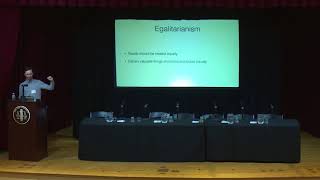
Fairness in Machine Learning - Lessons from Political Philosophy
Explore the intersection of machine learning fairness and political philosophy, drawing insights to address ethical challenges in AI decision-making systems.
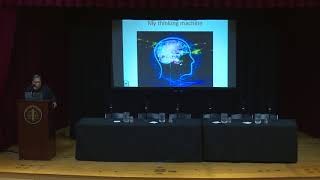
Saving Humanity
Explore the impact of AI and technology on society, policy, and human values with Harvard's Latanya Sweeney. Examine unforeseen consequences and discuss how to shape our technological future responsibly.
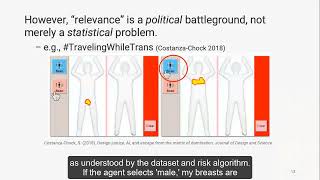
Are "Intersectionally Fair" AI Algorithms Really Fair to Women of Color? - A Philosophical Analysis
Philosophical examination of AI algorithms' fairness towards women of color, challenging the concept of "intersectional fairness" in artificial intelligence.

Human-Centered AI
Explore Human-Centered AI: combining AI algorithms with user experience design to enhance human performance, emphasizing meaningful control and ethical considerations.
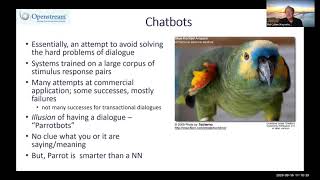
Conversational Systems
Explore the future of AI dialogue systems, their limitations, and potential advancements in multiparty collaboration, as well as the need for defensive measures against manipulative AI.
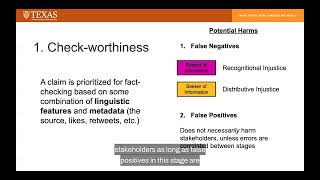
Justice in Misinformation Detection Systems - An Analysis of Algorithms, Stakeholders, and Potential Harms
Explore the ethical implications and potential harms of misinformation detection algorithms, analyzing stakeholder impacts and justice considerations in AI-driven content moderation.
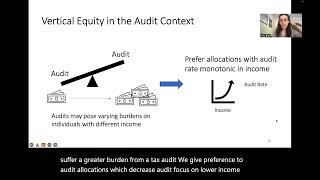
Algorithmic Fairness and Vertical Equity - Income Fairness with Tax Audit Models
Explore income fairness in tax audit models, examining algorithmic fairness and vertical equity principles to enhance equitable tax enforcement strategies.
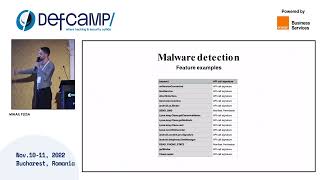
Augment Cybersecurity Through A.I.
Explore AI's role in enhancing cybersecurity with insights from a Security Software Engineer. Learn about cutting-edge applications and future trends in this rapidly evolving field.
How Doctors Can Help AI to Revolutionize Medicine
AI's potential to enhance medical decision-making and expand doctors' healing capabilities, with insights from neuroscience and machine learning for the future of healthcare.

Where's Google Going Next?
Larry Page discusses Google's ambitious future plans, including aerial bikeways, internet balloons, and AI advancements, offering insights into the company's innovative vision and recent acquisitions.
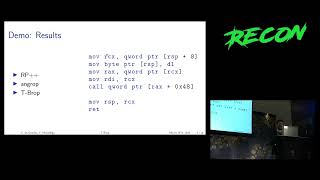
Taint-Based Return Oriented Programming
Explore an intermediate approach to return oriented programming using taint-based analysis, balancing speed and query expressiveness for efficient gadget discovery and chaining.