The Open Source AI Dilemma: Crafting a Clear Definition for Open Source AI
Explore the challenges of defining Open-Source AI, balancing innovation with fundamental freedoms. Discuss unique AI aspects, open frameworks, and community-driven solutions for shaping the future of AI development.
ML Data Version Control and Reproducibility at Scale
Explore data version control techniques for efficient ML model development, addressing reproducibility challenges and enabling scalable cloud-based training using open-source tools like Langchain and TensorFlow.

Toward AI Democratization with Digital Public Goods
Explore open-source AI systems as digital public goods, their impact in global majority countries, and case studies from Rwanda and Kenya. Learn about AI democratization challenges and opportunities.
A Hopeful View of Truly Open Source AI
Exploring the potential societal benefits of transparent, open-source AI systems, emphasizing democratization and improved intelligent systems beyond current expectations.
Meet DBRX - The New Standard for High-Quality LLMs and Custom LLM Deployment
Explore DBRX, a high-quality open-source LLM, and learn to build custom models using MosaicAI. Discover how to overcome challenges in GenAI applications and create efficient, tailored solutions.
Fireside Chat on PyTorch and Machine Learning
Insightful discussion on PyTorch's development, AI trends, and the future of machine learning with industry experts Soumith Chintala and Merve Noyan.
Optimizing Kubernetes Cluster Scaling for Advanced Generative Models
Explore advanced techniques for scaling Kubernetes clusters to support complex generative models, leveraging tools like Flyte, MLflow, and Kubeflow for efficient deployment and management.
Navigating Turbulent Waters of AI - Building a Secure and Safe Foundation
Explore the challenges of integrating generative AI in software development while maintaining security. Learn strategies for building a secure foundation and safeguarding against emerging threats in this rapidly evolving landscape.
Common Corpus - Opening Data for Building Open Source LLMs
Explore the creation of Common Corpus, a groundbreaking open data collection for training LLMs, addressing legal challenges and emphasizing data quality to empower open-source AI development.

The Collingridge Dilemma in AI Development - Challenges and Policy Implications
Explore the Collingridge dilemma in AI development, examining challenges in controlling technology's impact and fostering collaborative solutions between policymakers and developers.
Towards a Practical Ethics of Generative AI
Explore ethical considerations for generative AI, focusing on transparency, impact assessment, and standardized testing. Learn to develop a "moral compass" for AI applications in design and marketing.
NN-Defined Modulator - Reconfigurable and Portable Software Modulator for IoT Gateways
Innovative approach using neural networks for IoT gateway modulators, offering improved extensibility and portability across diverse hardware platforms with enhanced efficiency.
Brain-on-Switch: Advanced Intelligent Network Data Plane via NN-Driven Traffic Analysis
Innovative approach to enable neural network-driven traffic analysis at line-speed in programmable networks, overcoming limitations of tree-based models and enhancing intelligent network data plane capabilities.

Approximate Caching for Efficiently Serving Text-to-Image Diffusion Models
Innovative caching technique for text-to-image generation, reducing GPU compute, latency, and costs while maintaining quality. Explores real-world applications and performance improvements.

Finding Adversarial Inputs for Heuristics Using Multi-level Optimization
Discover MetaOpt: a system for analyzing heuristics in production systems, finding performance gaps, and generating adversarial inputs to improve efficiency in traffic engineering and more.

MadEye - Boosting Live Video Analytics Accuracy with Adaptive Camera Configurations
Adaptive camera system that automatically adjusts orientations to maximize accuracy in live video analytics, improving performance or reducing resource costs for diverse workloads.

Self-Driving Cars and the Human Brain - The Missing Link to Intelligence
Explore the connection between self-driving cars and human cognition, uncovering insights into AI decision-making and the future of autonomous vehicles with Minus Zero's CEO.
THC - Accelerating Distributed Deep Learning Using Tensor Homomorphic Compression
Accelerates distributed deep learning with Tensor Homomorphic Compression, enabling direct aggregation of compressed values and compatibility with in-network aggregation for faster training of vision and language models.
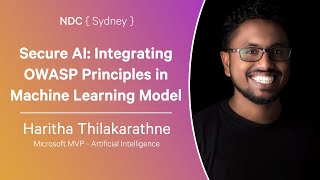
Secure AI: Integrating OWASP Principles in Machine Learning Model Development
Explore integrating OWASP principles into machine learning model development to address vulnerabilities, ensure data privacy, and safeguard AI systems from potential threats, ensuring robustness and confidentiality.

Creating PowerPoint Presentations with ChatGPT
Discover how to leverage ChatGPT for creating dynamic PowerPoint presentations, from generating content to automating tasks with VBA coding, enhancing your slideshow creation process.

Machine Learning and Symbolic Reasoning - Integrating AI Technologies
Explore the synergy of Machine Learning and Symbolic AI, combining data-driven insights with human-readable rules for transparent, explainable, and powerful AI applications.