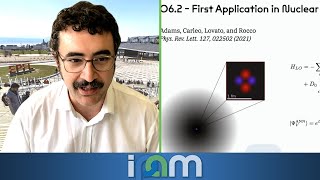
Fermionic Neural-Network Quantum States - IPAM at UCLA
Explore fermionic neural-network quantum states, their efficient representations, and applications in quantum mechanics with Giuseppe Carleo's insightful presentation at IPAM's workshop.
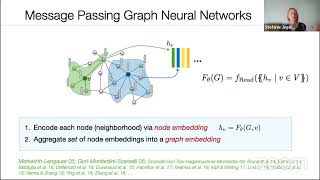
Theory of Graph Neural Networks: Representation and Learning
Explore the theory behind Graph Neural Networks, covering approximation, learning properties, and connections to graph isomorphism, equivariant functions, and dynamic programming.
AI in the Exam Room - Ethical Concerns of DNA Collection and Usage
Explore the ethical implications of AI and biometric data in healthcare and beyond. Discover who has access to your genetic information and why it matters for privacy and security.
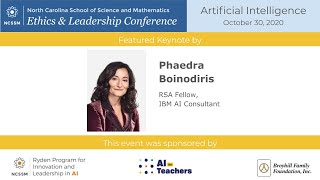
Ethics and Leadership in AI: Addressing Bias and Shaping the Future - 2020 NCSSM Conference Keynote
Explore AI ethics, bias, and societal impact with tech leader Phaedra Boinodiris. Gain insights on data privacy, future skills, and the role of education in shaping ethical AI development and implementation.
Autoformalization with Large Language Models - IPAM at UCLA
Explore autoformalization using large language models for translating natural language math to formal proofs, advancing formal verification and AI in mathematics.
Interpretable Machine Learning via Program Synthesis - IPAM at UCLA
Explore interpretable machine learning through program synthesis, focusing on control policies and RNA splice prediction. Learn novel approaches for creating custom, problem-specific model families.
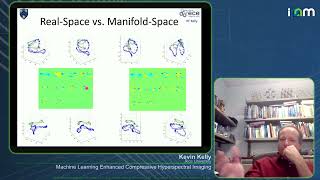
Machine Learning Enhanced Compressive Hyperspectral Imaging - IPAM at UCLA
Explore machine learning-enhanced compressive hyperspectral imaging techniques, combining optical systems and neural networks for efficient data acquisition and processing in various applications.
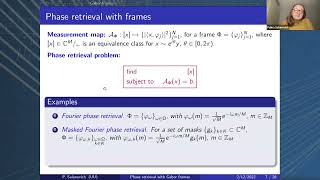
STFT Phase Retrieval - Robustness and Generative Priors - IPAM at UCLA
Explore STFT phase retrieval, focusing on robustness and generative priors. Learn about stable reconstruction techniques, application of generative models, and reducing required measurements in imaging and acoustics applications.
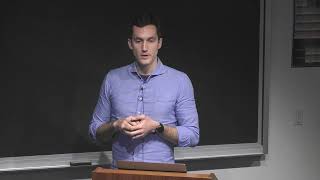
The Role of Data and Models for Deep-Learning Based Image Reconstruction
Explores deep learning in image reconstruction, focusing on model scaling, data requirements, and robustness. Discusses performance under distribution shifts and strategies for improvement.
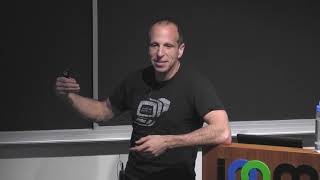
Splitting the Difference Between Deep and Shallow Solutions of Inverse Problems
Explores balancing compressed sensing and deep learning in computational imaging, showcasing Plenoxels for efficient photorealistic view synthesis without neural networks.
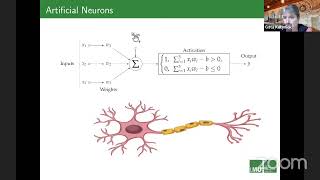
The Mathematics of Artificial Intelligence
Explore the mathematical foundations of AI, its impact on problem-solving in mathematics, and the challenges in developing reliable AI systems. Gain insights into generalization, explainability, and AI applications in inverse problems and PDEs.
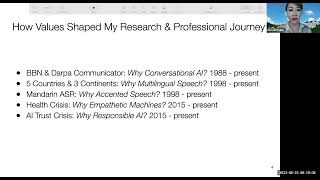
Who Is Responsible for Responsible AI?
Explore ethical considerations and accountability in AI development with Prof. Pascale Fung, addressing crucial questions about responsibility in the field of artificial intelligence.
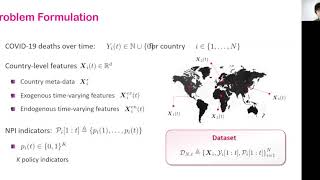
A Nationally-Implemented AI Solution for COVID-19
Explore a groundbreaking AI solution for COVID-19 implemented nationwide, presented by Mihaela van der Schaar at the 2020 IEEE International Conference on Multimedia and Expo.
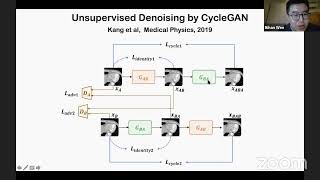
Computational Imaging - Deep Learning Approaches
Explore advanced computational imaging techniques with Jong Chul Ye from KAIST, covering innovative approaches in signal processing and image reconstruction.

GI Motility of the Small Intestine
Explore small intestine motility, including segmentation, peristalsis, and the ileocecal valve. Learn about crucial digestive processes and their impact on nutrient absorption and waste elimination.

Understanding, Interpreting and Designing Neural Network Models Through Tensor Representations
Explore tensor representations for neural networks, enhancing interpretability, expressive power, generalization, and robustness in deep learning models through spectral methods and innovative architecture design.
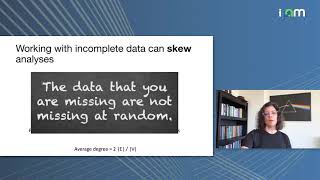
Task-Driven Network Discovery via Deep Reinforcement Learning on Embedded Spaces
Explore task-driven network discovery using deep reinforcement learning on embedded spaces. Learn about improving network observability and optimizing data collection for accurate analysis.
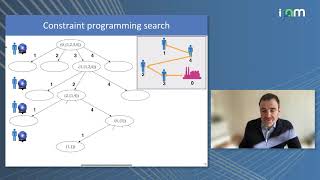
Combining Reinforcement Learning and Constraint Programming for Combinatorial Optimization
Explore a hybrid approach combining reinforcement learning and constraint programming for solving complex combinatorial optimization problems, with applications in various fields.
Machine Learning for Quantum Simulation - IPAM at UCLA
Explore machine learning applications in quantum simulation, focusing on neural networks for phase recognition and insights into complex quantum systems.
Natasha Jaques - Social Reinforcement Learning - IPAM at UCLA
Explore social reinforcement learning, multi-agent RL, and environment generation for AI assistants. Discover techniques for generalization, transfer, and web navigation in intelligent systems.
Learning and Persuading with Anecdotes - IPAM at UCLA
Explore learning and communication dynamics using anecdotal evidence, examining strategic behaviors, biases, and implications for opinion formation and collective intelligence.