Neural Networks and Spurious Correlations
Explore neural networks' vulnerability to spurious correlations and strategies to enhance robustness, including reweighting, subsampling, and overcoming simplicity bias in machine learning models.
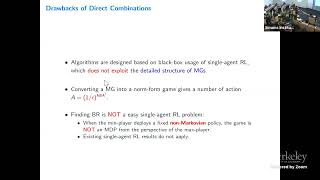
Multi-Agent Reinforcement Learning - Part I
Explore multi-agent reinforcement learning, covering game theory, interaction protocols, and Nash equilibrium. Gain insights into challenges and formulations in this emerging field.

Optimal Transport and PDE - Gradient Flows in the Wasserstein Metric
Explore gradient flows in Wasserstein metric, continuity equations, and aggregation dynamics. Learn about two-layer neural networks and chi-squared divergence in optimization and sampling.

Formal Languages and Automata for Reward Function Specification and Efficient Reinforcement Learning
Explore formal languages and automata for specifying reward functions in reinforcement learning, focusing on Linear Temporal Logic and Reward Machines to address real-world RL challenges.
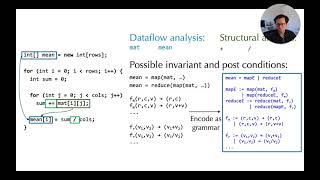
Using Program Synthesis to Build Compilers
Explore program synthesis techniques for building efficient compilers, focusing on syntax-driven compilation, verification, and evaluation methods.
Quantum Machine Learning- Prospects and Challenges
Explore prospects and challenges in quantum machine learning, covering classification techniques, dimensionality reduction, data loading, and benchmarking for both optimistic and cautious perspectives.
Mind Over Data - The One Thing You Know and Machines Don't
Explore the intersection of human intuition and machine learning in causal reasoning, examining Bayesian networks, confounding factors, and real-world applications in AI and data analysis.

Backpropagation and Deep Learning in the Brain
Explore deep learning in the brain, backpropagation, and credit assignment algorithms. Discover neuroscience evidence and new models of neurons in this computational brain theory talk.
Explaining Landscape Connectivity of Low-Cost Solutions for Multilayer Nets
Explore landscape connectivity in multilayer networks, focusing on low-cost solutions, equivalent local minima, overparameterization, and dropout stability. Gain insights into non-convex optimization and deep neural networks.
Generative Models
Explore generative models in deep learning, covering theoretical perspectives, hacker models, information flow, and provable algorithms for learning classifiers and phylogenetic reconstruction.
Recent Developments in Over-parametrized Neural Networks, Part I
Explore recent developments in over-parametrized neural networks, focusing on optimization challenges, theoretical problems, and strategies for achieving optimal results in deep learning.
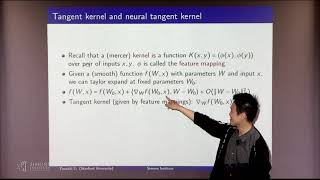
Learning and Generalization in Over-parametrized Neural Networks - Going Beyond Kernels
Explore neural network learning and generalization beyond kernel methods, examining tangent kernels, learning algorithms, and complexity in over-parametrized networks.
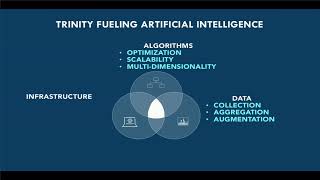
The AI Trinity - Data + Algorithms + Infrastructure
Explore the AI trinity: data, algorithms, and infrastructure. Learn about named entity recognition, active learning, crowdsourcing, data augmentation, and neural rendering models.

How Hard Is It to Train Variational Quantum Circuits?
Explores challenges in training variational quantum circuits, comparing them to classical neural networks and examining quantum generative models, with a focus on robust training methods and circuit compression.
Studying Generalization in Deep Learning via PAC-Bayes
Explore PAC-Bayes theory's application to deep learning generalization, focusing on risk bounds, optimal priors, and SGD prediction for neural networks.
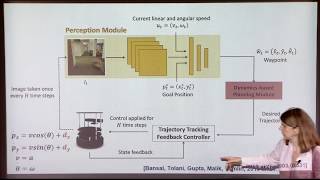
Using Deep Learning for Perception in Autonomous Systems - A Perspective from Control Theory
Explore deep learning for perception in autonomous systems, focusing on efficient navigation using monocular RGB cameras in unknown environments. Control theory insights and practical lessons included.
Computation in Very Wide Neural Networks
Explore infinite-width neural networks, their correspondence to Gaussian processes, and implications for deep learning performance and dynamics in parameter space.

Representation Learning of Grounded Language and Knowledge - With and Without End-to-End Learning
Explore representation learning for grounded language and knowledge, covering end-to-end learning, procedural language challenges, and applications in cooking instructions and dialogue generation.
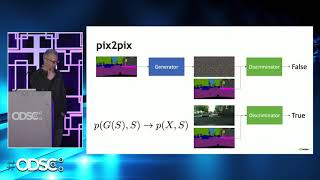
Generative Adversarial Networks for Image Synthesis and Translation - Dr. Jan Kautz
Explore recent GAN advancements for image synthesis and translation, including conditional GANs, supervised vs unsupervised methods, and multimodal approaches. Learn to design, modify, and understand GAN architectures.
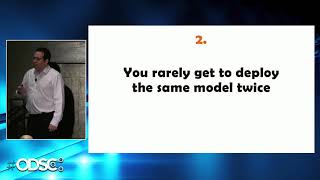
What to Expect When You Are Putting AI in Production - Dr. David Talby
Real-world case studies on AI failures in production, covering concept drift, A/B testing pitfalls, and systems that learn in production. Best practices for executives and technical leaders to ensure success.
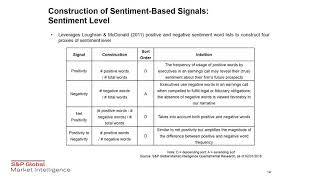
Natural Language Processing - Deciphering the Message Within the Message Stock Selection
Explore NLP techniques for stock selection using earnings call transcripts, focusing on sentiment and behavioral signals that have shown historical effectiveness in the U.S. market.