
AI, Deep Learning, and Machine Learning - A Primer
Comprehensive overview of AI's evolution, current state, and future potential, exploring neural networks, deep learning applications, and their impact on various industries and human capabilities.
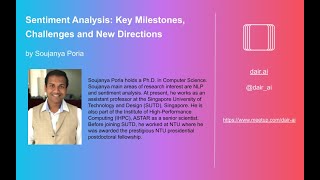
Sentiment Analysis - Key Milestones, Challenges and New Directions
Explore key milestones, challenges, and new directions in sentiment analysis, covering topics from polarity detection to multimodal analysis and sentiment reasoning.
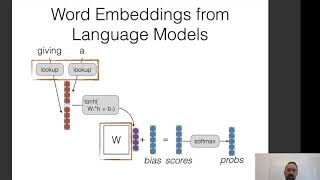
Neural Nets for NLP 2021 - Distributional Semantics and Word Vectors
Explore distributional semantics and word vectors in NLP, covering techniques like skip-grams, CBOW, and advanced methods. Learn to evaluate, visualize, and apply word embeddings effectively.
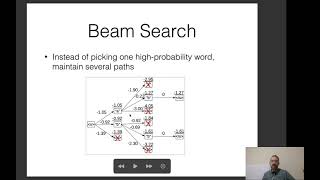
Neural Nets for NLP 2021 - Conditioned Generation
Explore encoder-decoder models, conditional generation, search techniques, ensembling, evaluation methods, and various data types for conditioning in neural network-based natural language processing.
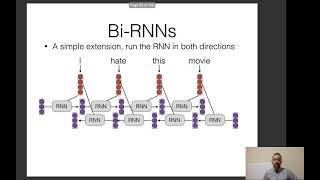
Neural Nets for NLP 2021 - Recurrent Neural Networks
Explore recurrent neural networks, bidirectional RNNs, LSTMs, and their applications in NLP. Learn about vanishing gradients, sentence modeling, and pre-training techniques for improved language processing.
Neural Nets for NLP - Efficiency Tricks for Neural Nets
Explore efficiency techniques for neural networks in NLP, including GPU optimization, parallel training, and softmax approximations for large vocabularies.
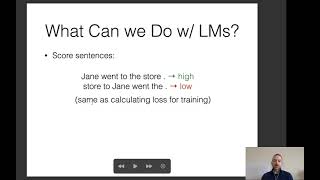
Neural Nets for NLP 2021 - Language Modeling, Efficiency/Training Tricks
Explore neural language models, optimization techniques, and evaluation methods for NLP. Learn about preventing overfitting, mini-batching, and measuring model performance.
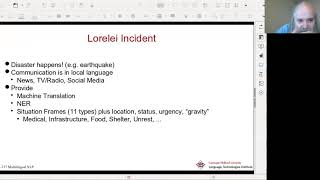
CMU Multilingual NLP - Information Extraction
Explore information extraction for low-resource languages and its application in disaster response through LORELEI project, with insights on methods, results, and practical implications.

CMU Multilingual NLP: Active Learning
Explore active learning in NLP, covering token and sequence-level techniques, uncertainty measures, and human effort considerations for efficient data annotation.
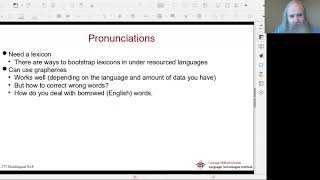
CMU Multilingual NLP 2020 - Text to Speech
Explore text-to-speech systems for low-resource languages, covering analysis, pronunciation, prosody, waveform generation, and cross-lingual models. Learn efficient TTS building and multilingual challenges.
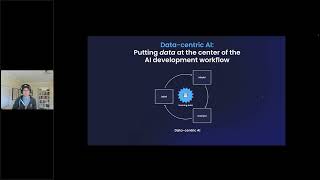
Operationalizing Organizational Knowledge with Data-Centric AI
Explore data-centric AI with Alex Ratner: operationalizing knowledge, managing training data, and leveraging foundational models for real-world applications in machine learning and responsible AI.

Sentencepiece Tokenizer With Offsets for T5, ALBERT, XLM-RoBERTa and Many More
Implementación práctica del tokenizador Sentencepiece con offsets para modelos de transformers, enfocado en sistemas de preguntas y respuestas utilizando ALBERT.
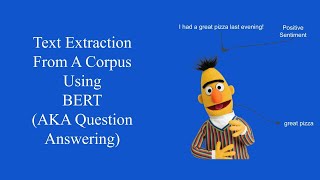
Text Extraction From a Corpus Using BERT - Question Answering
Learn to extract text from tweets using BERT for sentiment analysis. Hands-on tutorial covers data preparation, model implementation, and evaluation for Kaggle competition.
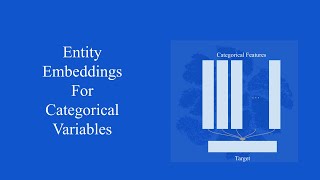
Entity Embeddings for Categorical Variables
Learn to implement entity embeddings for categorical variables using TensorFlow/Keras, with a focus on converting the model to PyTorch. Practical application using Kaggle competition data.

Training Sentiment Model Using BERT and Serving It With Flask API
Learn to build and deploy a high-accuracy sentiment analysis model using BERT and Flask API, covering data preparation, model training, and serving the model for real-world applications.
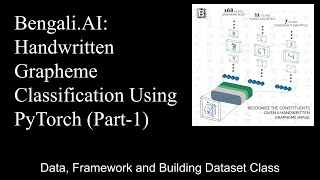
Bengali.AI- Handwritten Grapheme Classification Using PyTorch
Learn to approach Kaggle's Bengali.AI grapheme classification challenge using PyTorch, covering data exploration, framework setup, and dataset creation for multi-label image classification.
Exploring the ChatGPT API with Python - Multiple Completions, Max Tokens, Temperature
Learn to use ChatGPT API with Python: create requests, manage conversations, explore multiple completions, adjust temperature, and count tokens using tiktoken. Perfect for beginners and those looking to expand their skills.
AI Security
Explore AI's current state, future potential, and ethical concerns. Delve into self-improving programs, machine empathy, and thought experiments like the Chinese Room.
Fast Homomorphic Evaluation of Deep Discretized Neural Networks
Explore fast homomorphic evaluation techniques for deep discretized neural networks, focusing on digit recognition and addressing challenges in activation and dynamic message space.
From Idea to Impact, the Crypto Story - What's Next?
Explore the intersection of cryptography and machine learning, examining challenges, impacts, and future directions in digital privacy, adversarial learning, and quantum resilience.
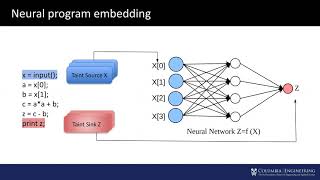
Neutaint- Efficient Dynamic Taint Analysis with Neural Networks
Explore efficient dynamic taint analysis using neural networks, overcoming limitations of traditional methods and improving performance in exploit analysis and fuzzing.