Improving Autonomous Driving Platforms with Zenoh-Flow Data Flow System
Discover how Zenoh-Flow structures complex applications into computing units, demonstrated through an Autonomous Driving platform implementation with focus on deployment automation and business logic development.
Using AI Computer Vision in OSINT Data Analysis
Discover how to leverage AI computer vision tools in Azure and AWS to accelerate OSINT data analysis, perform object detection, facial recognition, and chronolocation analysis for forensic investigations.
Human Dignity in AI and Tech Policy
Explore the critical intersection of human dignity, AI, and tech policy, examining how data-driven technologies impact individual rights and societal freedoms while discussing protective measures and solutions.
Developing a Low-Cost Raspberry Pi Device for ADS-B Spoofing Detection
Discover how to build Fly Catcher, a Raspberry Pi-based device using neural networks to detect spoofed aircraft signals through ADS-B monitoring and analysis in real-time.
Mirror, Mirror: LLMs and the Illusion of Humanity
Explore the fascinating phenomenon of anthropomorphizing LLMs, examining why we attribute human traits to AI and how understanding these misconceptions leads to better practical applications.
Lessons Learned Building a GenAI-Powered Interactive Trivia Quiz App
Explore real-world challenges and solutions in building an interactive trivia quiz app powered by GenAI, featuring practical insights, live demonstrations, and cloud implementation strategies.
Understanding AI Recommendation Engines - From Collaborative Filtering to Personalization
Discover how recommendation engines use machine learning to power personalized experiences, from collaborative filtering to content-based approaches that shape our online interactions.
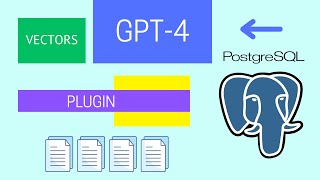
Visualizing Data Integration Between ChatGPT and Enterprise Systems
Discover how to integrate enterprise data with ChatGPT through OpenAI plugins, vector stores, and semantic search capabilities, focusing on GPT-4's dynamic data flow and PostgreSQL integration.
From Documents to Vectors: Understanding ChatGPT's Technical Architecture with OpenAI Plugins
Dive into the technical architecture of ChatGPT plugins, exploring vector databases, API endpoints, and real-time data retrieval methods for enhanced AI capabilities.
Prompt Engineering: Implementing Tree of Thoughts with GPT-4 - AI Education Case Study
Explore the implementation of Tree of Thoughts (ToT) framework in GPT-4, examining its application for AI education planning and demonstrating advanced prompt engineering techniques for complex problem-solving.

Chain of Thought and Instruction Fine-Tuning for Enhanced Language Model Performance
Explore how Chain of Thought and instruction fine-tuning techniques enhance language models' performance, from basic reasoning tasks to simulating human behavior and decision-making processes.
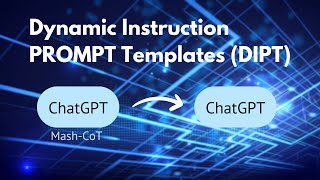
Connecting Multiple ChatGPT Sessions with Dynamic Instruction Prompt Templates
Master advanced prompt design techniques to connect and optimize multiple ChatGPT sessions using Dynamic Instruction Prompt Templates (DIPT), enabling continuous learning and improved effectiveness across conversations.

Instruction Fine-Tuning and In-Context Learning of Large Language Models with Symbols
Delve into advanced concepts of LLM instruction fine-tuning and in-context learning, exploring symbol tuning, FLAN-PaLM models, and cutting-edge research developments.
Multi-Modal Transformer Agents Controlled by StarCoder - Building AI Systems Without LangChain
Explore how StarCoder orchestrates multi-modal transformer agents on HuggingFace Hub, enabling seamless connections between audio, visual, and text transformers for advanced AI applications.
The Inner Workings of Large Language Models - Visualizing Self-Attention Mechanisms
Dive into the mechanics of Large Language Models, exploring self-attention mechanisms, architectural designs, and performance optimization through clear visualizations and practical examples.

AI and Vision Technology in Webb Telescope Planet Discovery
Explore how AI analyzes vast astronomical data from Webb, Hubble, and other telescopes to uncover the mysteries of planetary formation around young stars.
AI in Political Science and Social Psychology - Predicting Public Opinion with Language Models
Explore how AI language models predict public opinion, analyze media effects on society, and revolutionize political science research through cutting-edge BERT systems and transformer architectures.

Building a Multi-AI System: Upgrading Vector Databases with BERT and GPT-4
Master building a cost-effective multi-AI system by integrating GPT-4 and BERT, transforming vector databases into interactive AI components with or without LangChain framework.

AutoGPT and BabyAGI - Understanding Autonomous AI Agents for Large Language Models
Explore autonomous AI agents AutoGPT and BabyAGI, understanding their capabilities, risks, and integration with GPT-4 and LangChain for automated resource management and task execution.

LangChain - Integrating External Documents and SQL with GPT-4
Dive into LangChain's capabilities for integrating external documents and SQL with GPT-4, learning to chain multiple data sources and leverage advanced language models effectively.
The ALPACA Code: Self-Instruct Fine-Tuning of Large Language Models
Dive into the technical implementation of self-instruct fine-tuning for Large Language Models using ALPACA, covering synthetic dataset generation and parallel task optimization.