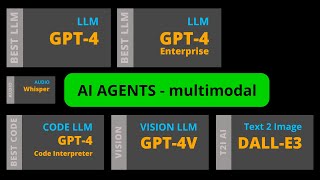
The Future of AI: From Language Models to Multimodal Agents and Video Processing
Explore the cutting-edge developments in AI technology, from multimodal agents to GPT-4's video capabilities, and discover how AI systems are evolving to handle diverse data types and tasks.

AI Agent Self-Improvement and Self-Fine-Tuning Through Reinforcement Learning
Discover how AI agents can autonomously update and fine-tune themselves through reinforcement learning, focusing on overnight self-improvement and mobile deployment optimization.
Mamba AI: Understanding Selective State Space Models as Transformer Alternatives
Explore the groundbreaking MAMBA architecture and its potential to revolutionize AI through selective state space models, offering a compelling alternative to traditional transformers.

Integrating AI with Real-time Data and RAG - Part 2
Dive into practical methods for integrating fine-tuned AI systems with external data sources, focusing on Retrieval Augmented Generation (RAG) and real-time data connectivity for enhanced AI applications.

How to Start with AI: A Business Guide to Generative AI Implementation
Gain insights into AI entrepreneurship, market dynamics, and profitable business strategies while exploring implementation challenges, infrastructure needs, and practical solutions for AI integration.
Mixture of Experts (MoE) in Large Language Models - A Simple Guide
Delve into the architecture and functionality of Mixture of Experts (MoE) systems in language models through clear examples and technical insights about token routing, gating networks, and computational efficiency.
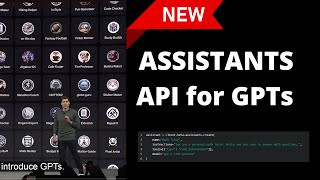
Creating GPTs with OpenAI's Assistants API - A Practical Guide
Discover how to leverage OpenAI's Assistants API to build custom GPTs with code interpretation, function calling, and knowledge augmentation through RAG and retrieval capabilities.
Multi-Agent AI Systems with AutoGen - Complete Code Tutorial
Dive into Microsoft's AutoGen framework, exploring multi-agent AI systems through practical code examples, communication protocols, and agent control mechanisms for advanced LLM applications.
Mistral 7B: Architecture, Performance and Implementation Guide
Dive into Mistral 7B's implementation, exploring grouped-query attention, efficient GPU usage, and hands-on demonstrations for running advanced language models on local hardware.
How to Code Long-Context LLMs - LongLoRA Implementation with Llama 2 100K
Dive into fine-tuning techniques for extending LLM context lengths using LongLoRA, featuring practical implementation on Llama 2 and Flash Attention 2 optimization for handling extensive sequences.
Stable Diffusion XL Theory and Code with Shape-Shifting ControlNet
Dive into the advanced mechanics of SDXL and ControlNet, exploring text-to-image diffusion models and shape-shifting techniques for synthetic image manipulation.
WizardCoder 34B: Understanding Complex Fine-Tuning for Code Generation
Delve into the advanced fine-tuning techniques behind WizardCoder-34B, exploring its performance improvements through complex instruction cascading and evolutionary approaches.
LLM-augmented Autonomous Agents - Achieving Goals with One Prompt Without LangChain
Discover how to orchestrate multiple AI agents using advanced prompt engineering, enabling complex task resolution through collaborative interactions and digital twin simulations - no LangChain required.
Reinforcement Learning: From Policy Optimization to Multi-Agent Systems
Explore reinforcement learning fundamentals, from reward systems and policy optimization to transformer architectures in robotics and multi-agent systems, with practical implementation insights.
Robotics Transformer 2 (RT-2) - Vision-Language Models for Advanced Robotics
Explore how RT-2 combines Vision-Language Models with robotics, enabling advanced control systems and improved generalization through web-scale pre-training and specialized datasets.
Introduction to KERAS 3 Core for PyTorch and JAX
Explore KERAS 3's framework-agnostic capabilities for building neural networks and transformers across TensorFlow, PyTorch, and JAX platforms with advanced customization options.
How to Chat with LaTeX Documents Using GPT-4 Code Interpreter
Discover how to effectively communicate mathematical formulas with GPT-4 Code Interpreter by leveraging LaTeX documents for seamless AI interactions and improved formula comprehension.
ChatGPT vs GPT-4 - A Direct Comparison and Analysis
Explore a side-by-side analysis of GPT-3.5 and GPT-4 through 10 diverse challenges, revealing key differences in reasoning, creativity, and problem-solving capabilities.
Multi AI-Agents Reasoning with LLMs - Python Code Examples
Master the creation and implementation of multi-agent LLM systems in Python, from basic agent coding to complex hierarchical reasoning structures using GPT-4, including practical examples and real-world applications.
Data Science with GPT-4 Code Interpreter: From Problem to Visualization - A Complete Project Demo
Explore how GPT-4's Code Interpreter automates data science workflows, from cleaning 5000+ EU project descriptions to implementing clustering algorithms and 3D visualizations.
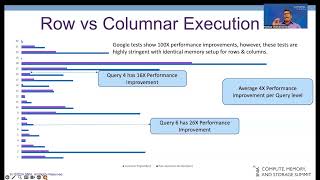
Generative AI - Data Architecture with Google AlloyDB and AI
Discover how Google AlloyDB Omni revolutionizes database management with AI-powered analytics acceleration, PostgreSQL compatibility, and advanced RAG capabilities for optimized OLTP and real-time data processing.