
Beyond Greenwashing - Embracing Impact-Based Innovations for Climate Action
Legal Technologist explores impact-based innovations to combat climate crisis, emphasizing legal frameworks, technology, and sustainable practices for genuine environmental sustainability.
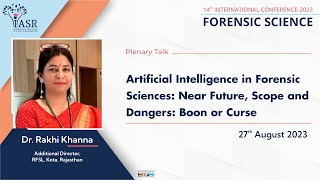
Artificial Intelligence in Forensic Sciences - Boon or Curse
Exploring AI's impact on forensic sciences: opportunities, challenges, and ethical considerations. Discusses potential benefits, risks, and the need for responsible development and implementation.
What Do We Want to Know and How Will a Connectome Help Us Know It?
Explore the potential of connectome analysis in neuroscience with Gwyneth Card, discussing its applications, limitations, and future directions in understanding brain function and behavior.
How to Simulate a Connectome - Predicting Neural Activity from Connectivity
Exploring how connectivity measurements of neural networks can predict neural activity and inform understanding of neural computation, with experimentally testable predictions across multiple studies.
From Connectome to Dynamic Representations
Explore dynamic representations in connectome analysis, bridging neuroscience and mathematics to uncover brain network functionality and information processing mechanisms.
Visual Processing During Navigation
Explore visual processing mechanisms in navigation, focusing on neural pathways and computational models for spatial orientation and movement through environments.
Beyond Greenwashing - Embracing Impact-Based Innovations for Climate Action
Legal Technologist explores impact-based innovations to combat climate crisis, emphasizing legal frameworks, technology, and sustainable practices for genuine environmental sustainability.
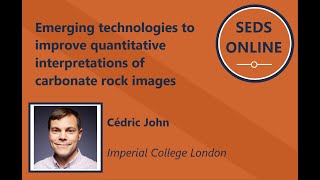
Emerging Technologies for Quantitative Interpretation of Carbonate Rock Images
Explore machine learning applications for automatic identification of carbonate facies using core images, improving accuracy and consistency in geological classifications.
The Need for Responsible Neurotechnology
Explore the ethical implications of brain-computer interfaces and their potential to revolutionize mental health management, as discussed by legal scholar Dr. Jan Christoph Bublitz.
Enhancing Brain Health and Mental Acuity
Explore brain mechanisms behind cognition and memory with Dr. D'Esposito. Learn about neural networks, memory types, dopamine's role, and brain disorders. Discover practical tools to enhance cognitive function and memory.
Open-Source Critical Asset Management for Climate Resilience
Explore open-source critical asset management for climate resilience, focusing on the development of CAMS for Dominica's disaster preparation and risk mitigation using knowledge graph technology.
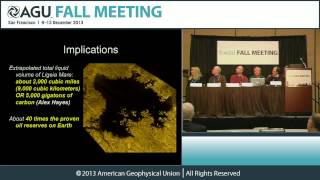
Titan as You've Never Seen It Before - New Results from the Cassini Mission to Saturn
Explore Saturn's moon Titan through Cassini mission's latest findings, including new radar mapping techniques and 3D views of its unique hydrocarbon lakes and seas, offering insights into this Earth-like celestial body.
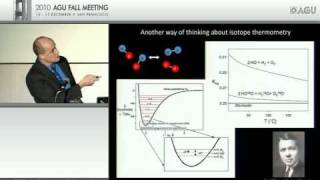
Isotope Geochemistry and Habitability Studies for Extraterrestrial Life - Sagan Lecture
Explore isotope geochemistry's role in studying habitability and potential life on other planets, focusing on Mars, Europa, and Titan. Learn about key indicators and future research directions.
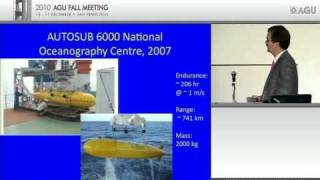
The Autonomous Revolution - Transforming Ocean Observation with Mobile Platforms
Explore cutting-edge autonomous mobile platforms revolutionizing ocean observation, enhancing our understanding of marine ecosystems and climate change impacts.
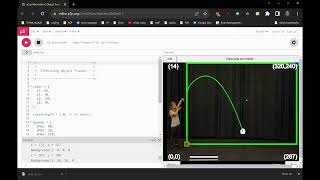
Trying Out the STEMCoding Object Tracker - Episode 1
Explore a user-friendly object tracking app for physics analysis, featuring hands-on demonstrations and practical applications in STEM education.
Tracking Multiple Objects - Tracker for Beginners Part 3
Learn to analyze multiple objects' motion and their center of mass using Tracker software, gaining insights into interesting physics concepts through video analysis techniques.
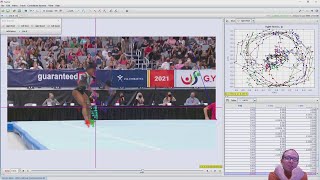
Motion Tracking Simone Biles' Gymnastics Move - Olympics 2021
Analyze Simone Biles' signature gymnastics move using motion tracking software, revealing the intricate dynamics of her hands and feet during Olympic-level performance.

How Does the Brain Beget the Mind? - Bridging Neuroscience and Cognition
Exploring the neural basis of cognition and intelligence through the Assembly Calculus, a computational system bridging the gap between brain activity and higher-level cognitive functions.
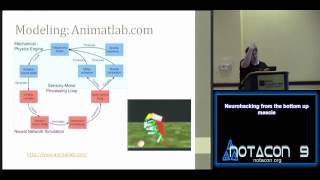
Neurohacking from the Bottom Up
Explore neurohacking fundamentals, from cell biology to neural networks. Learn about action potentials, EEG monitoring, and non-invasive techniques to understand and potentially modify brain function.
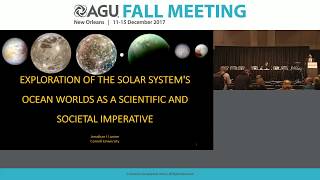
Sagan Lecture: The Cosmic Connection and Solar System Exploration - 2017 Fall Meeting
Explore the cosmic connection, solar system exploration, and potential for life beyond Earth in this captivating lecture by Jonathan I Lunine, covering Viking experiments, Voyager missions, and future opportunities.
Fluid Mechanics-Informed Machine Learning - Successes and Failures
Explore machine learning approaches for fluid mechanics simulations, including physics-based features and CNNs, with insights on successes and challenges in speeding up predictions.