
Security and Real-Time Linux in a Shifting Automotive World
Explore security challenges and real-time Linux solutions for software-defined vehicles in the evolving automotive industry. Learn IT approaches bridging traditional and modern practices.
From Data Crimes to Self-Supervised Reconstruction: Advancing AI-based MRI
Explore AI-based MRI advancements, from data crime prevention to self-supervised reconstruction techniques, with insights from UC Berkeley's EECS expert.
Latest Developments at chipshub and nanoHUB
Explore new AI, data, and EDA tools on nanoHUB and chipshub, plus Birck Nanotechnology Center's experimental data visualization and modeling resources.
Ultra-low-field MRI for Healthcare - A Future Powered by Computing?
Explore the potential of ultra-low-field MRI in healthcare, focusing on computational advancements and future applications in medical imaging.
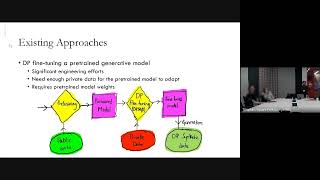
Differentially Private Synthetic Data Generation via Foundation Model APIs
Explore generating high-quality differentially private synthetic data using foundation model APIs, overcoming challenges and achieving state-of-the-art results without accessing model weights.

Pulling Pictures Out of an Undocumented File Format - Let Me at My Data!
Uncover the process of extracting data from an undocumented file format, following a developer's journey to transform real-world exploration data into wall art through reverse engineering and problem-solving.
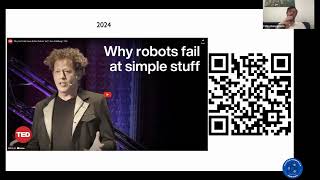
Towards Physical AI - Bridging the Gap Between Artificial and Natural Intelligence
Explore the future of AI and robotics, comparing artificial agents to natural intelligence and discussing potential paradigm shifts for more adaptive and efficient systems.
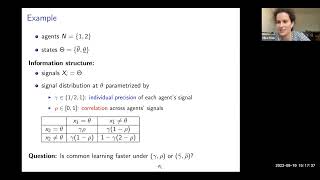
Learning Efficiency of Multi-Agent Information Structures
Explore multi-agent information structures and their learning efficiency in game theory, presented by Mira Frick at the One-World Mathematical Game Theory Seminar.
Building a Better World with AI - Automating Quality Control in Architectural Drawings
Explore AI-powered quality control for architectural drawings. Learn how advanced computer vision and NLP technologies automate error detection, saving time and money in construction projects.
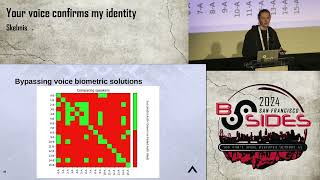
Your Voice Confirms My Identity - Exploring Voice Authentication Security in the Age of AI
Explore AI voice cloning and its impact on voice authentication systems. Learn voice cloning techniques and discuss trends in voice security.
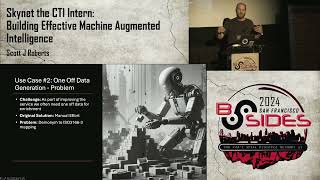
Skynet the CTI Intern: Building Effective Machine Augmented Intelligence
Explore integrating LLMs in cybersecurity intelligence, enhancing analyst efficiency while recognizing AI limitations. Learn to create a symbiotic human-AI relationship for proactive defense.
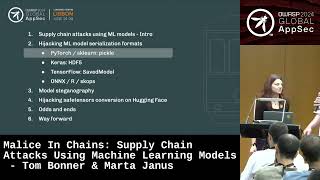
Malice in Chains - Supply Chain Attacks Using Machine Learning Models
Explore potential supply chain vulnerabilities in machine learning models and learn strategies to mitigate risks in AI-driven systems.
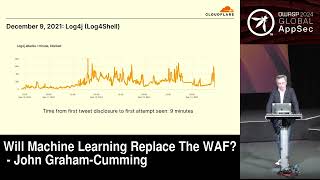
Will Machine Learning Replace the WAF?
Explore the potential of machine learning to revolutionize web application firewalls, examining its capabilities, limitations, and impact on cybersecurity.
AI Package Hallucination - Spreading Malicious Packages Using Generative AI
Explore how generative AI can be exploited to create and spread malicious software packages, highlighting potential cybersecurity risks and defense strategies.
Stochastic Games with Neural Perception Mechanisms
Explore strategic reasoning in multi-agent systems using partially-observable stochastic games and neural perception mechanisms for optimal strategy synthesis in complex environments.
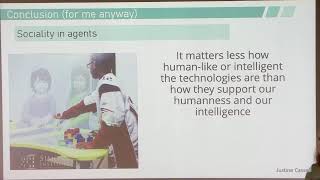
The Development of Sociality in Language and Thought
Explore the interplay between sociality, language, and cognition, examining how social interactions shape our linguistic and cognitive development.

Educability - Understanding Higher-Level Intelligence
Exploring human educability: synthesizing learning from experience, others, and chaining knowledge. Proposes a computational approach to understanding and replicating broader human capabilities beyond example-based learning.
Cultural Evolution - Understanding Higher-Level Intelligence
Explore higher-level intelligence through AI, psychology, and neuroscience perspectives, focusing on cultural evolution and its impact on human cognition.
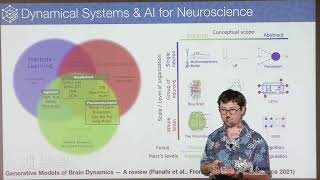
Emerging Interactions in Humans and Machines: From Social Physiology to Social Neuro-AI
Explore social cognition through multi-brain neuroscience and neuro-inspired AI, bridging intra-personal mechanisms and inter-personal dynamics to understand higher-level intelligence in humans and machines.
Bridging the Data Gap Between LLMs and Children - Understanding Higher-Level Intelligence
Explores the disparity in data requirements between AI models and human learning, examining potential explanations and presenting new insights on multimodal input and evaluation methods.
Modern Application Security vs. GenAI Applications: Is Your AppSec Ready?
Explore the intersection of modern application security and generative AI, assessing readiness for emerging challenges in the evolving tech landscape.