
Project Innovation through Design Thinking
Accelerate innovation using design thinking: learn key challenges, opportunities, and practical techniques for project managers to lead teams in creating new products and services.
From Flat to Phantasmal: Enhancing User Experiences Through Spatial Computing Advancements
Exploring spatial computing advancements to enhance user experiences, focusing on streamlined creation tools, personalized accessibility, and integration of adjacent technologies for immersive mixed-reality applications.
The Human Factors of Formal Methods - Stanford Seminar
Exploring human-centered approaches to improve formal methods' usability in software development, addressing cognitive challenges and misconceptions to enhance adoption by non-experts.
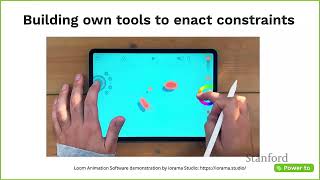
Rethinking Power Dynamics in Software Tools for Artists
Explore how software tools empower and limit artists, examining power dynamics in creative technology and proposing ways to support unpredictable, emergent artistic practices through thoughtful design.
Emerging Trends in Building Decarbonization
Explore strategies for reducing carbon emissions in buildings with expert Peter Rumsey. Learn about embodied and operational decarbonization techniques for sustainable design and construction.
Designing to Support Sense of Agency for Time Spent on Digital Interfaces
Exploring how digital interfaces can enhance user agency and meaningful experiences, focusing on redesigning features of popular apps to improve digital wellbeing beyond screen time metrics.
Rethinking Design for Accessibility
Explores innovative approaches to accessibility in technology design, emphasizing collaborative, situated, and enacted perspectives. Presents case studies that challenge traditional views and highlight social and political dimensions.
The Evolution of the Symphony and Orchestra - Lecture 20
Explore the evolution of symphonies and orchestras from Mozart to Mahler, examining historical changes in instruments, orchestral size, and concert venues, with musical examples from renowned composers.
Romantic Opera: Verdi's La Traviata and Vocal Performance - Lecture 19
Explore Verdi's La Traviata and the evolution of operatic voices, from Romantic era to modern times. Analyze vocal performances and discover iconic singers who shaped the art form.
Review of Musical Style - Lecture 23
Learn to identify musical styles from different periods of Western music history through guided listening exercises and analysis of key characteristics.
Gregorian Chant and Music in the Sistine Chapel - Lecture 15
Explore medieval music's evolution from Gregorian chants to polyphony, examining religious influences, analyzing Hildegard's work, and discovering the Sistine Chapel's a cappella traditions.

Piano Music of Mozart and Beethoven - Evolution of the Instrument - Lecture 18
Explore the evolution of piano music from Mozart to Beethoven, tracing the instrument's development and its impact on composition, with live performances on historical pianos.
Form in Classical Music - Rondo, Sonata-Allegro, and Theme and Variations - Lecture 11
Explore musical forms like rondo and theme and variations through works by Mozart, Brahms, and Beethoven. Analyze classical pieces and discover how these forms appear in contemporary music.
Preparing for a Concert Review - Guest Conductor and Orchestra Insights - Lecture 12
Explore orchestral conducting, concert review writing, and instrument demonstrations with insights from a guest conductor and musicians preparing for a Saybrook Orchestra performance.
Bass Patterns in Blues and Rock - Lecture 8
Explore bass patterns and chord progressions in popular and classical music, learning to identify harmonic structures across genres from Mozart to Justin Timberlake.
Sonata-Allegro Form and Theme and Variations - Lecture 10
Explore sonata-allegro form and theme and variations through in-depth analysis, examples from Beethoven and Mozart, and a live performance of Corelli's La Folia, enhancing musical understanding.
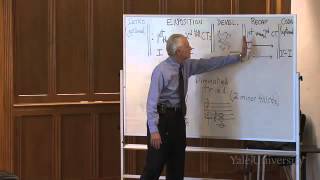
Sonata-Allegro Form in Mozart and Beethoven - Lecture 9
Explore musical forms from pop to classical, focusing on ternary and sonata-allegro structures. Analyze examples from 'N Sync, Mozart, and Beethoven to understand harmonic relationships and compositional techniques.
Harmony: Chords and How to Build Them - Lecture 7
Explore harmony in Western music: chord formation, progressions, and modulation. Develop listening skills to identify harmonic changes across diverse musical styles.

Rhythm in Jazz, Pop, and Classical Music - Lecture 4
Explore musical acoustics, rhythm, texture, and dictation, culminating in an analysis of Mozart's Requiem. Gain insights into complex musical concepts and their practical applications.

Introduction to Instruments and Musical Genres - Lecture 2
Explore classical music terminology, instruments, and acoustics. Learn about motives, themes, and genres while experiencing live demonstrations of French horn, bassoon, and viola.
Introduction to Listening to Music - Lecture 1
Explore the elements of Western classical music to enhance your listening skills and appreciate human greatness through diverse musical genres.