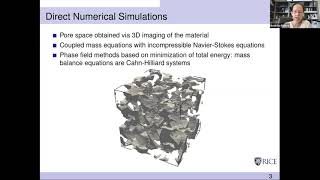
Bound-Preserving Numerical Solutions of Variable Density Two-Phase Flows
Explore efficient numerical methods for solving phase-field models in pore-scale flows, focusing on bound-preserving solutions and applications in energy and environmental sciences.

Machine Learning - Dynamical, Statistical, and Economic Perspectives
Explore machine learning's decision-making aspects, focusing on statistical and economic challenges in multiple decision-making, scarcity, and competition through dynamical systems perspectives.
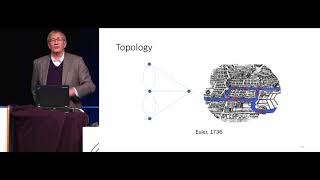
Topological Modeling of Complex Data
Explore topological modeling for complex data analysis, covering hierarchical clustering, network building, and applications in diabetes, cancer research, and finance.

Quantifying Aversion to Costly Typing Errors in Expert Mobile Text Entry
Explores how expert mobile typists adjust speed to minimize costly errors, presenting a model to estimate risk aversion effects on typing speed and its impact on maximum errorless typing speed predictions.
Abzu's Pioneering Technology, the QLattice, Introduces a New Standard of Interpretability to Artificial Intelligence
Explore Abzu's QLattice, an explainable AI technology inspired by Feynman's path integrals. Learn how it predicts and explains outcomes using simple mathematical equations, demonstrated through a heart failure case study.
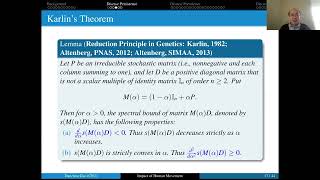
Impact of Population Dispersal on Disease Prevalence
Explore how population movement affects disease spread, analyzing mathematical models to understand and predict epidemic patterns in interconnected regions.
Malware Development as the Evolution of Parasites - Adam Hogan
Explore malware development through the lens of parasitic evolution, drawing parallels to improve cybersecurity strategies and predict future threats.
Free Energy Minimisation for Perception as Inference
Explores predictive processing theory and free energy principle in perception, comparing Helmholtz machine and message passing approaches to neural inference and consciousness.
How to Model Consciousness Processes in Categorical Process Theory
Explore modeling consciousness using ZXW calculus, a graphical language for quantum computing, to understand interactions between perceiving and perceived divisions in cognitive processes.
C++ in Space Plasma Model Development
Explore space plasma modeling using C++11, covering numerical methods, advanced algorithms, and concurrency for efficient simulations in astrophysics and space weather.
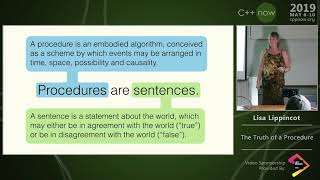
The Truth of a Procedure in Programming
Explore the mathematical logic behind programming procedures, treating them as statements about event arrangements and bridging programming with formal languages and truth concepts.
Is the News Media Polarized? Or Are We Being Conditioned to Think It Is?
Explore the intersection of computer science and media bias analysis, examining perceived polarization in news through neural networks and SVMs, with surprising insights on mainstream media's impact.
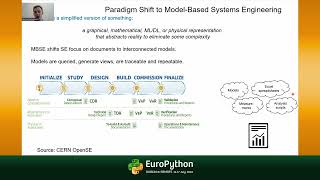
When Models Query Models
Explore a framework for large-scale engineering systems using notebook-encapsulated models, Docker containers, and REST APIs. Learn about model querying and dependency management for efficient design optimization.
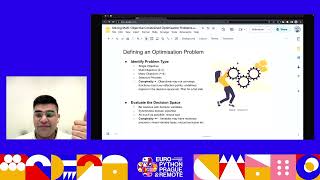
Solving Multi-Objective Constrained Optimisation Problems Using Pymoo
Explore Pymoo, an open-source Python framework for solving complex optimization problems with multiple objectives and constraints, featuring state-of-the-art algorithms and post-performance analysis tools.

Science in the Browser - Orchestrating and Visualising Neural Simulations
Explore real-time 3D visualizations of brain cell electrical activity using JavaScript, cloud resources, and browser technology to make neuroscience research more accessible and collaborative.
Topology, Geometry and Life in Three Dimensions
Explore hyperbolic geometry's role in mapping complex 3D spaces and its influence on digital art. Learn about mathematical approaches to describing and investigating intricate maze-like structures.
A Model for Perceptual States
Mathematical model for 3D perception from 2D data, exploring geometric spectra and eigenstates. Proposes a framework for understanding consciousness through higher-order universality and information processing.
KPZ Universality and Iterates of Random Monotone Maps
Explore KPZ universality and random monotone map iterations with insights from Konstantin Khanin's mathematical research.
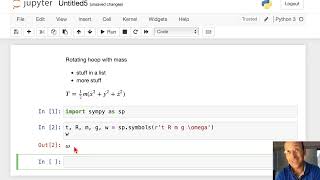
Using Python and SymPy to Solve a Mass on a Rotating Hoop Problem
Utilize Python and Sympy to solve complex physics problems, focusing on a mass rotating on a hoop using Lagrangian mechanics and differential equations.
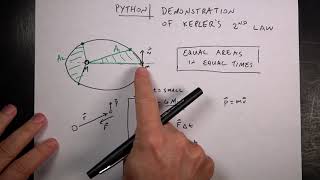
Verifying Kepler's Second Law with Python and Physics
Model planetary orbits and verify Kepler's 2nd Law using Python, demonstrating equal area sectors in equal time periods through orbital motion simulations and sector area calculations.
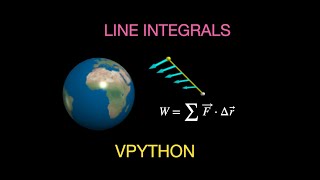
Python Physics: Numerical Line Integrals with Python
Explore numerical line integral calculations in Python for classical mechanics, breaking paths into short steps and comparing with analytical methods.