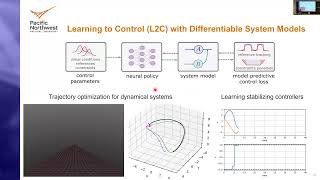
Differentiable Programming for Data-driven Modeling, Optimization, and Control
Explore data-driven modeling, optimization, and control through differentiable programming techniques in this symposium talk by Jan Drgona from Pacific Northwest National Laboratory.
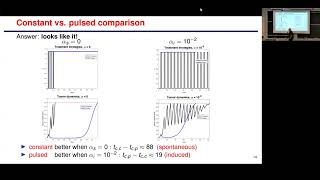
Understanding Chemotherapeutic Tolerance Through a Mathematical Model of Drug-Induced Resistance
Explore a mathematical model of drug-induced resistance in cancer treatment, examining chemotherapeutic tolerance and its implications for oncology.
Emerging Interactions in Humans and Machines: From Social Physiology to Social Neuro-AI
Explore social cognition through multi-brain neuroscience and neuro-inspired AI, bridging intra-personal mechanisms and inter-personal dynamics to understand higher-level intelligence in humans and machines.
Personalized Cancer Treatment: Integrating Digital Twins and Quantitative Systems Pharmacology
Explore innovative approaches to personalized cancer treatment using digital twins and quantitative systems pharmacology for improved patient outcomes.
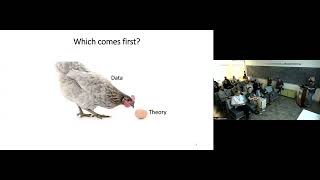
A Machine Learning Approach to Biology: Applying Data-Driven Model Discovery Methods
Explore machine learning biology and data-driven model discovery methods in mathematical oncology, focusing on CAR T-cell immunotherapy and glioblastoma research.
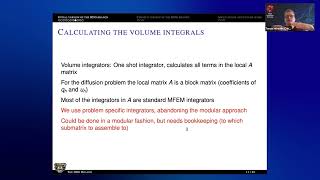
Implementation of Hybridizable Discontinuous Galerkin Methods - MFEM Workshop 2023
Explore advancements in hybridizable discontinuous Galerkin methods for high-order finite element calculations, featuring flexible implementations for diverse PDEs and applications.
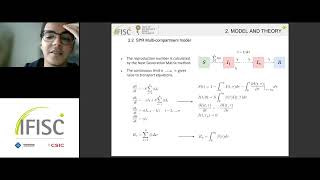
Age of Infection Disease Modeling: From Kermack and McKendrick to Multi-Compartment Models
Explore the evolution of infectious disease modeling, from early Kermack-McKendrick theories to modern multi-compartment approaches, enhancing understanding of epidemiological dynamics.
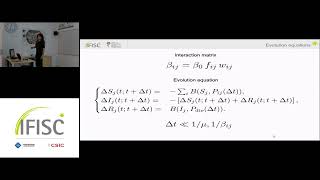
Epidemiological Approach to Tau Propagation in Alzheimer's Disease
Explore an epidemiological perspective on tau protein propagation in Alzheimer's, uncovering insights into disease progression and potential interventions.
Epidemics on Large Networks - Phase Transitions and Survival Time
Explore epidemic models on large networks, focusing on phase transitions in survival time for deterministic and random graphs. Recent progress and open questions discussed.
Data Assimilation - Kalman Filter - Lecture 7
Explore Kalman Filter in data assimilation for weather and climate models. Learn theoretical foundations and practical applications of this crucial mathematical approach.

ME3255 - FEA Solutions and Visualizing Results
Explore finite element analysis solutions and result visualization techniques for engineering applications. Enhance problem-solving skills in structural mechanics and design optimization.

ME3255 - Data Science and Monte Carlo - Homework 02
Explore data science and Monte Carlo methods in engineering applications. Learn practical techniques for analyzing complex systems and making data-driven decisions.
Non-Asymptotic Analysis of a Classical System Identification Algorithm - 2019 ADSI Summer Workshop
Explore non-asymptotic analysis of classical system identification with Necmiye Ozay, delving into advanced algorithmic foundations for learning and control in this insightful conference presentation.
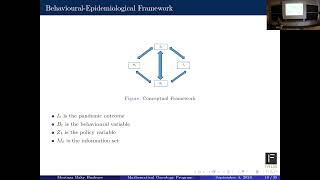
Understanding Pandemic Dynamics Through the Lens of Human Behavior
Explore how human behavior influences pandemic dynamics, integrating mathematical modeling with behavioral insights for more effective public health strategies and disease control.
MRI-Based Mathematical Modeling to Predict Breast Cancer Patient Response to Neoadjuvant Therapy
Explore mathematical modeling using MRI data to predict breast cancer treatment responses, enhancing personalized therapy approaches and improving patient outcomes.
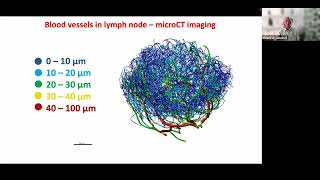
Lymphatic System Transport and Vaccine Design
Exploring lymphatic transport's role in vaccine efficacy, combining mathematical models and experiments to understand fluid dynamics in immune response and optimize vaccine delivery.
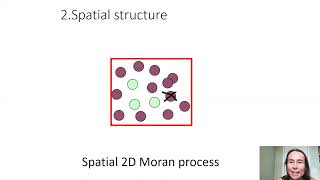
Evolutionary Modeling of Cancer
Explore mathematical methods for studying cancer evolution, including selection, mutation, and drift. Gain insights into loss-of-function and gain-of-function mutations in carcinogenesis.
What Mathematical Models Can and Cannot Tell Us About the Spread of Infectious Diseases
Explore mathematical modeling's capabilities and limitations in understanding disease spread, focusing on key insights and practical applications in epidemiology.
Models to Understand Drivers of Pathogen Prevalence
Explore mathematical models to analyze factors influencing pathogen prevalence in populations, enhancing understanding of disease dynamics and ecological impacts.
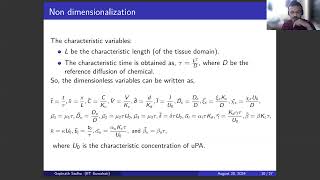
Exploring the Effects of Heat Therapy-Driven Inosine Generation on Tumor Recurrence
Investigates heat therapy's impact on inosine production and its potential influence on tumor recurrence, offering insights into innovative cancer treatment approaches.
Convergent Evolving Surface Finite Element Algorithms for Geometric Evolution Equations
Explore convergent evolving surface finite element algorithms for geometric evolution equations, presented by Prof. Christian Lubich from University of Tübingen.