Robert Pinsky Poetry Reading - Selected Poems and New Works
Former U.S. poet laureate Robert Pinsky shares selected and new poems, offering insights into his creative process and exploring themes of culture, language, and human experience.
Light in August by William Faulkner - Analysis of Characters and Themes - Lecture 23
Análisis profundo de "Light in August" de Faulkner, explorando temas de hospitalidad sureña, teología política, resentimiento histórico y la pasividad de los personajes principales en el contexto del sur de EE.UU.
Fitzgerald's Tender is the Night - Film Techniques and Character Analysis - Lecture 21
Explore Fitzgerald's "Tender is the Night" through cinematic techniques, character analysis, and historical context. Gain insights into narrative structure and the author's portrayal of social dynamics.
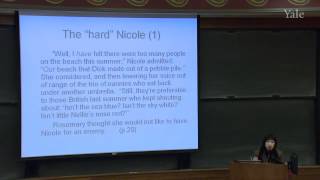
F. Scott Fitzgerald's Tender Is the Night: Cinematic Techniques and Narrative Structure
Explore Fitzgerald's "Tender Is the Night" through cinematic techniques, examining how Hollywood influenced narrative structure and the interplay between love and war in the novel.
Hemingway's For Whom the Bell Tolls - Dispossession and Redemption - Lecture 19
Explore Hemingway's "For Whom the Bell Tolls" through themes of dispossession and redemption, analyzing character dynamics and narrative techniques in this Yale lecture on American literature.
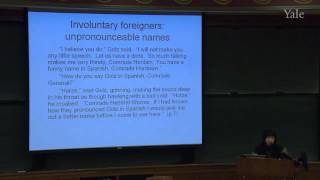
Hemingway's For Whom the Bell Tolls - Historical Context and Themes - Lecture 16
Explore Hemingway's "For Whom the Bell Tolls" through the lens of the Spanish Civil War, examining themes of foreignness, literacy, and technology's impact on characters' futures.

As I Lay Dying by William Faulkner - Analysis of Narrative Techniques and Social Context
Explore Faulkner's "As I Lay Dying" through social dialects, narrative techniques, and historical context. Uncover hidden secrets and examine the portrayal of poor whites in the Depression-era South.

Faulkner's As I Lay Dying - Epic Conventions and Character Analysis - Part 2
Explore Faulkner's epic techniques in "As I Lay Dying," examining human-animal connections and resurrection themes through character analysis and literary comparisons.
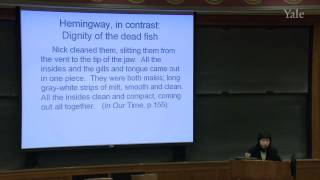
As I Lay Dying - Genre Analysis and American Literary Tradition - Lecture 15
Explore Faulkner's "As I Lay Dying" through genre analysis, character perspectives, and family dynamics. Gain insights into the novel's place in American literature and its balance of comic and tragic elements.
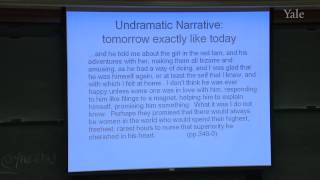
F. Scott Fitzgerald's Short Stories: Social Types and Dramatic Tension - Lecture 12
Explore Fitzgerald's short stories through the lens of social types, examining how characters conform to or deviate from idealized identities in American society.
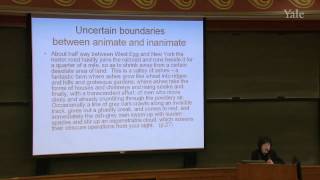
The Great Gatsby - Experimental Counter-Realism and Animated Objects
Explore Fitzgerald's experimental counter-realism in The Great Gatsby, examining the animation of inanimate objects and their human-like qualities, as well as themes of race and technology.

Faulkner's The Sound and the Fury - Quentin's Narrative and Themes - Lecture 7
Explore Faulkner's narrative techniques, character relationships, and themes of race and sexuality in The Sound and the Fury through an in-depth analysis of Quentin's and Benjy's perspectives.
Hemingway, Fitzgerald, Faulkner - American Modernism and World War I - Lecture 1
Explore Hemingway, Fitzgerald, and Faulkner's works through global geopolitics, experimental narration, and sensory detail, examining their shared preoccupation with World War I's impact on narrative irony.
Hemingway's In Our Time - Analysis of Pain and Violence in Vignettes
Explore Hemingway's "In Our Time" through critical analysis of vignettes, examining themes of pain, violence, and ethnic tensions in the American Midwest using various theoretical perspectives.
Robert Frost - Modern Poetry and Poetic Techniques
Explore Robert Frost's poetry, examining his unique style, poetic project, and use of vernacular language. Analyze "Mowing" and "Out, Out--" to understand Frost's approach to form and sound.
Robert Frost's Poetry: Meter, Rural Themes, and Imagination - Lecture 2
Explore Robert Frost's poetry, focusing on his use of meter, rural themes, and the power of imagination. Analyze "Birches," "Home Burial," and "Directive" in this insightful lecture.
Langston Hughes and African-American Experience in Modern Poetry - Lecture 15
Explore Langston Hughes' poetry as a representation of African-American experience, examining his innovative use of musical forms and his place within the modernist canon.
William Carlos Williams - Modernist Poetry and Visual Representation
Explore William Carlos Williams' innovative poetry, analyzing his use of enjambment, Imagist qualities, and visual techniques in modernist verse. Gain insights into his creative process and artistic influences.
Marianne Moore's Poetry: Quotation, Restraint, and Modernist Relationships - Lecture 18
Explore Marianne Moore's innovative poetry, focusing on her use of quotation, reticence, and restraint. Analyze key poems and examine Moore's relationships with other modernist poets.
Wallace Stevens's Late Poetry Analysis - Lecture 21
Explore Wallace Stevens's late poetry, analyzing his views on the poet as reader, natural cycles, and ceaseless change through in-depth examinations of five key poems.
Modern Poetry - Elizabeth Bishop and Modernist Perspectives - Lecture 25
Explore modernist poetry's role in addressing alienation and fostering community through Bishop's works and connections to other poets. Gain insights into poetry's power to renew human connection.