
Retreat from Reconstruction - The Grant Era and Paths to Southern Redemption
Explore the complexities of post-Civil War Reconstruction, debunking myths, examining African-American rights progress, and analyzing the rise of white political terrorism in the South.

The Kansas-Nebraska Act and the Birth of the Republican Party, 1854-55
Explore pivotal 1850s political crises: Compromise of 1850, Fugitive Slave Act opposition, Uncle Tom's Cabin impact, Kansas-Nebraska Act, and Republican Party formation. Gain insights into pre-Civil War tensions.
Wartime Reconstruction - Imagining the Aftermath and a Second American Republic
Explore Lincoln's re-election, the Civil War's end, and the challenges of Reconstruction in this insightful lecture on a pivotal period in American history.

The End of Reconstruction - Disputed Election of 1876 and the Compromise of 1877
Explore the violent end of Reconstruction, examining key events like the Colfax Massacre, Supreme Court decisions, economic panic, and political scandals that led to the retreat from radical reforms.

A Southern World View: The Old South and Proslavery Ideology - Lecture 3
Explore the complex history of southern slavery, including the internal slave trade and various pro-slavery arguments, from biblical to economic perspectives.
Expansion and Slavery: Legacies of the Mexican War and the Compromise of 1850
Explore conflicts and compromises leading to the Civil War, including Douglass's speech, Mexican War impacts, and the Compromise of 1850, highlighting slavery's expansion and its political consequences.
Dred Scott, Bleeding Kansas, and the Impending Crisis of the Union, 1855-58 - The Civil War and Reconstruction
Explore key events of 1855-58: Kansas conflict, Sumner's caning, Republican Party's rise, Fremont's campaign, and the Dred Scott decision's impact on pre-Civil War America.

The Election of 1860 and the Secession Crisis - Civil War and Reconstruction
Explore the 1860 election, John Brown's impact, and Southern secession in this Yale lecture on the Civil War's origins, examining key events and rationales behind the conflict.

Homefronts and Battlefronts - The Social Impact of the Civil War
Explore the Civil War's profound impact on society, economics, and government, examining personal experiences and broader changes in both Union and Confederate territories.
Legacies of the Civil War - Lecture 27
Explore the enduring impact of the Civil War through three memory strains: reconciliationist, white supremacist, and emancipationist. Examine how historical interpretations and control of war memories have evolved over time.
The Sumter Crisis and the Outbreak of the Civil War - 1861
Explore the pivotal Fort Sumter crisis, its impact on secession, and the motivations driving Americans to war in this in-depth examination of the Civil War's outbreak.
The End of the Civil War and Its Aftermath - To Appomattox and Beyond
Explore the final stages of the Civil War, including Grant's strategies, Lee's resistance, Sherman's March, and the war's profound impact on American society and memory.
Southern Society: Slavery, King Cotton, and Antebellum America's Peculiar Region - Lecture 2
Explore the unique aspects of antebellum Southern society, including its anti-modernism, emphasis on honor, and slave-based cotton economy, shaping the region's distinctiveness from the North.
Hemingway's For Whom the Bell Tolls - Distant Homes and On-Site Environments - Lecture 17
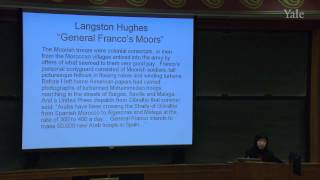
Explore Hemingway's "For Whom the Bell Tolls" through contrasts of distant homes and war environments, examining racial conflicts and the American Civil War's influence on the Spanish Civil War narrative.

Is the American Republic on the Eve of Destruction or Renewal? - Class 3
Exploring slavery's impact on American institutions and examining the future of democracy, pluralism, and constitutional rule in the face of historical and contemporary challenges.

Does Memory Matter? Why Universities Are Studying Slavery and Their Pasts - Class 2
Explore the impact of slavery on American institutions and Yale's history, examining its enduring legacies and the importance of collective memory in shaping society's future.

Why Does the Civil War and Reconstruction Have a Hold on American Historical Imagination? - Class 1
Exploring the enduring impact of the Civil War and Reconstruction on American society, examining slavery's legacy, and analyzing how this era shapes current political and social divisions.
Antebellum Yale and the Coming of the Civil War - Class 7
Explore Yale's role in antebellum America and its connection to the Civil War. Examine slavery's impact on institutions and the challenges to democracy, pluralism, and constitutional rule.
Yale, the Early Republic, and the 1831 Black College
Explore Yale's early history, focusing on its connections to slavery and the 1831 Black College proposal. Gain insights into the complex racial dynamics of the Early Republic era.
The Civil War and its Legacies at Yale - Class 8
Explore the Civil War's impact on American institutions and Yale's connections to slavery, examining enduring legacies and their influence on modern society and governance.
Ideologies and Economies: Southern World Views vs Northern World Views - Class 9
Explore ideologies and economies shaping Southern and Northern worldviews, examining slavery's impact on American institutions and the enduring legacies of racial inequality.