Discovering Black-Box Optimizers via Evolutionary Meta-Learning
Delve into evolutionary meta-learning techniques for discovering black-box optimizers, exploring advanced concepts in evolution strategies and genetic algorithms through self-attention architectures.
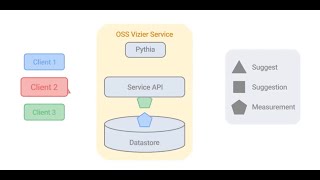
Open Source Vizier: Distributed Infrastructure for Blackbox Optimization and Hyperparameter Tuning
Explore Google's Vizier system for blackbox optimization and hyperparameter tuning, covering its distributed infrastructure, Python implementation, and integration with AutoML ecosystem.
Graph SAGE - Inductive Representation Learning on Large Graphs - GNN Paper Explained
Deep dive into Graph SAGE, exploring its innovative approach to large-scale graph learning. Covers key concepts, training methods, aggregator functions, and comparisons with other graph neural networks.
AlphaTensor by DeepMind Explained
Explore DeepMind's AlphaTensor, a revolutionary AI system that discovers efficient matrix multiplication algorithms, outperforming human-designed methods and advancing computational efficiency across various fields.
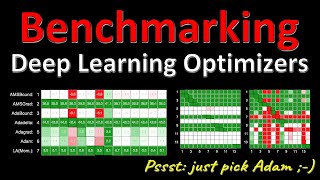
Descending Through a Crowded Valley - Benchmarking Deep Learning Optimizers
Comprehensive analysis of popular deep learning optimizers, comparing performance across tasks and providing evidence-based recommendations for algorithm selection and parameter tuning.
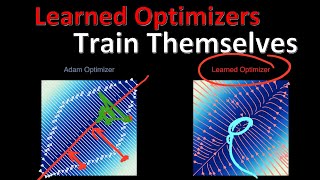
Training More Effective Learned Optimizers, and Using Them to Train Themselves - Paper Explained
Explores a novel approach to machine learning optimization using neural networks, discussing its architecture, training process, and potential to revolutionize model training through self-improvement and generalization.

Improving Intrinsic Exploration with Language Abstractions - Machine Learning Paper Explained
Explores using natural language to improve reinforcement learning agents' exploration in sparse-reward environments, demonstrating significant performance gains across challenging tasks in MiniGrid and MiniHack.
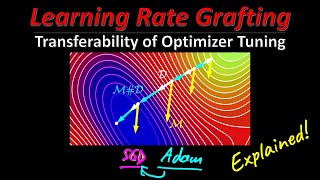
Learning Rate Grafting: Transferability of Optimizer Tuning - Machine Learning Research Paper Review
Explore grafting technique for transferring learning rate schedules between optimizers, improving deep learning model performance and reducing computational costs in hyperparameter tuning.
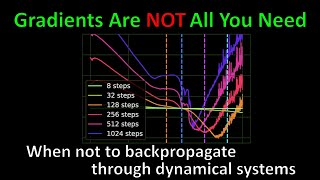
Gradients Are Not All You Need - Machine Learning Research Paper Explained
Explores limitations of differentiable programming in machine learning, focusing on chaos-based failures in various systems. Discusses alternatives to backpropagation for gradient estimation in complex, stochastic environments.
Reinforced Active Learning for Image Segmentation
Explore advanced techniques for image segmentation using reinforced active learning, covering challenges, algorithms, and experimental results.

A Brief Introduction to Algorithms, Game Theory and Risk-Averse Decision Making
Explore algorithms, game theory, and risk-averse decision making, covering shortest paths, NP-Complete problems, equilibria, and various risk frameworks for real-world applications.

Oral History - Russell Impagliazzo in Conversation with Dick Karp
Explore key developments in theoretical computer science through an engaging conversation between Russell Impagliazzo and Dick Karp, covering topics from NP-completeness to computational biology.

Algorithmic Decision Making and the Cost of Fairness
Explore algorithmic decision-making in pre-trial settings, examining bias identification, fairness concerns, and the trade-offs between accuracy and equity in automated systems.
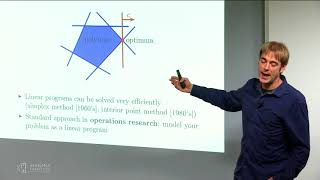
Lower Bounds on the Size of Linear Programs
Explore computational complexity, linear programming, and extended formulations in this lecture on lower bounds for linear program sizes, featuring geometric views and advanced topics.

Faster Algorithms and New Iterative Methods for Computing the Stationary Distribution
Explore advanced algorithms and iterative methods for computing stationary distributions, with applications in optimization and graph theory.

Power of Active Sampling for Unsupervised Learning
Explore active sampling techniques for unsupervised learning, focusing on matrix completion, graphical models, and clustering. Learn about statistical tradeoffs and computational complexity.

Stochastic Variance Reduction Methods for Policy Evaluation
Explore stochastic variance reduction methods for policy evaluation in reinforcement learning, covering MSPBE, SVRG, and SAGA algorithms with experimental results.

Beyond Worst-Case Analysis - Panel Discussion
Experts discuss advanced algorithmic analysis, exploring beyond worst-case scenarios to improve efficiency and understanding in computer science and machine learning applications.
Continuous Algorithms - Sampling and Optimization in High Dimension
Explore high-dimensional sampling and optimization techniques, including cutting plane methods, interior-point algorithms, and Riemannian Hamiltonian Monte Carlo, with insights on complexity and open problems.

The Arrow of Time in Causal Networks
Explore the macroscopic arrow of time, causal networks, and their relation to fundamental physics. Delve into entropy, complexity, and the nature of causality in our universe.
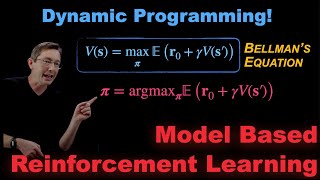
Model Based Reinforcement Learning - Policy Iteration, Value Iteration, and Dynamic Programming
Explore dynamic programming in model-based reinforcement learning, covering policy iteration, value iteration, and Q-learning for effective decision-making strategies.