
Creating an Orthographic Camera - Game Engine Series
Learn to implement an orthographic camera in game engine development, enhancing your skills in 3D graphics and game programming.
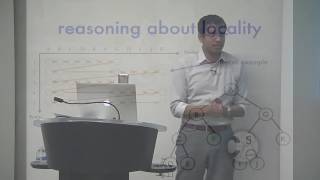
Regularizing the Irregular: Analyses and Transformations for Recursive, Irregular Applications
Explores techniques for optimizing irregular programs operating on trees, using vector-based abstractions to enhance locality and enable vectorization in compiler research.

Learn Rust Programming - Standard Library, Enums, Traits, Arrays, Vectors, and HashMaps
Comprehensive introduction to Rust programming, covering standard library, enums, traits, arrays, vectors, and HashMaps. Includes hands-on coding examples and game development concepts.
CUTLASS: A CUDA C++ Template Library for Accelerating Deep Learning Computations
Explore CUTLASS, an open-source CUDA C++ template library for optimizing deep learning computations on NVIDIA GPUs. Learn to develop high-performance custom kernels using Tensor Core programming.
Two Dimensional Arrays - C Programming
Learn to work with 2D arrays in C, including initialization, subscripts, and printing. Master tabular data representation for applications like student marks and matrix operations.

Introduction to Text Analytics with R - Overview
Explore text analytics with R: tokenization, feature engineering, classification models. Learn data cleaning, analysis, and visualization using a spam dataset. Practical introduction for aspiring data scientists.
C++ List Tutorial - Real Examples, Sorting, and When to Use
Learn C++ lists with practical examples, from basics to advanced usage in game matchmaking systems. Covers creation, manipulation, sorting, and comparison with vectors.

Learn R Programming in 7 Hours - Statistical Programming and Data Analysis
Comprehensive R programming tutorial covering installation, environment, data types, structures, functions, loops, and advanced topics for statistical analysis and data manipulation.
Exploit Parallelism for AI Workloads with WASM and OpenMP
Explore optimizing AI workloads using WebAssembly and OpenMP for multithreaded, shared memory, and vectorized operations, focusing on challenges and benefits in cloud computing environments.
Mathematical Problems in Machine Learning - Part 1 of 4
Dive into mathematical probability fundamentals for machine learning through Stanford expert Andrea Montanari's comprehensive exploration of key theoretical concepts and applications.
Mathematical Problems in Machine Learning - Lecture 3
Delve into advanced mathematical probability concepts and their applications in machine learning through Stanford expert Andrea Montanari's comprehensive theoretical exploration.
Mathematical Problems in Machine Learning - Lecture 2
Delve into mathematical probability fundamentals and their applications in machine learning through advanced theoretical concepts and problem-solving approaches from Stanford expertise.
Mathematical Problems in Machine Learning - Lecture 4
Delve into advanced mathematical probability concepts applied to machine learning through Stanford expert Andrea Montanari's comprehensive theoretical exploration and analysis.

Kolmogorov-Arnold Networks: Understanding KAN Architecture and Comparison with MLPs
Dive into Kolmogorov-Arnold Networks (KAN), a groundbreaking alternative to Multi-Layer Perceptrons, exploring its architecture, implementation, and potential advantages in neural network development.

Matrix Long Short-Term Memory (mLSTM) - A New Alternative to Transformer LLMs
Explore the innovative xLSTM architecture and its matrix-based approach to neural networks, comparing its potential advantages over traditional transformer models in language processing.
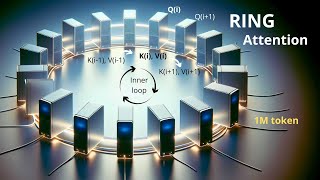
Ring Attention and Blockwise Transformers for Extended Context Length in Language Models
Dive into the technical mechanics of Ring Attention, exploring how it achieves million-token context lengths in large language models through blockwise parallel transformers and efficient implementation.
Parameter Efficient Fine-Tuning with Multiple LoRA Adapters for Large Language Models
Dive into parameter efficient fine-tuning with LoRA adapters, exploring matrix factorization, SVD, and advanced configurations for optimizing large language models.

Mamba AI: Understanding Selective State Space Models as Transformer Alternatives
Explore the groundbreaking MAMBA architecture and its potential to revolutionize AI through selective state space models, offering a compelling alternative to traditional transformers.
The Art of Text to Vector Transformation - A Comprehensive Look at AI and NLP Transformers
Dive into the fundamentals of converting text to mathematical vectors, understanding tokenization methods like BERT and BPE for NLP applications and AI transformer models.

Eigenpath Traversal by Poisson-Distributed Phase Randomisation
Explore quantum computation through Poisson-distributed phase randomization, examining how dephasing operations enable eigenspace tracking and optimize quantum algorithms like Grover search.
A Shortcut to a Near-Optimal Quantum Linear System Solver
Discover a simplified approach to quantum linear system solving that achieves near-optimal performance through kernel reflection, offering improved efficiency for practical applications in quantum computing.