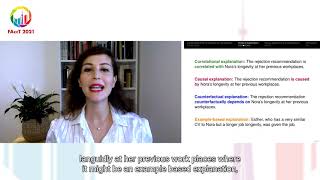
Reasons, Values, Stakeholders - A Philosophical Framework for Explainable AI
Explore a philosophical framework for explainable AI, examining the interplay between reasons, values, and stakeholders to enhance transparency and ethical considerations in artificial intelligence systems.
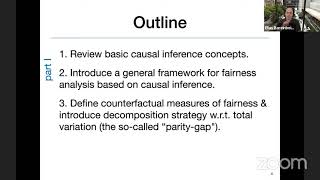
Translation Tutorial - Causal Fairness Analysis
Explore causal fairness analysis in AI, covering structural causal models, causal diagrams, and demographic disparities. Learn why causality matters and how to address fairness challenges in artificial intelligence.

You Can't Sit With Us - Exclusionary Pedagogy in AI Ethics Education
Explores exclusionary practices in AI ethics education, highlighting methodological dogmatism, lack of co-creation, and siloed citations. Proposes ideas for more collaborative and inclusive pedagogical approaches.

What Does Fairness Mean in Data Protection Law
Explore legal concepts of fairness in data protection, examining justice, equality, and AI ethics through practical scenarios and GDPR implications.

The What, Why & How of Responsible AI
Explore practical strategies for implementing ethical AI systems, addressing bias, and promoting fairness in algorithmic decision-making across various sectors of society.
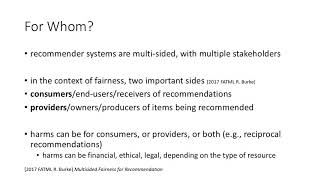
Building User Trust in Recommendations via Fairness and Explanations
Explore techniques to enhance user trust in recommender systems through fairness and explanations, addressing ethical concerns and promoting transparency in AI-driven decision-making.

Developing Policies for the Responsible Use of AI Technologies
Explore AI governance with experts discussing responsible adoption, risk management, and building trust in AI technologies across industry, academia, government, and law enforcement.
Just-So Stories for AI - Explaining Black-Box Predictions
Explore state-of-the-art strategies for explaining black-box AI predictions, discussing interpretability challenges and insights into human decision-making and ethical implications.

Dancing With Shadows
Exploring AI biases and their potential dangers, this talk emphasizes the need for responsible AI development to safeguard humanity's future and offers insights on changing our trajectory.

Is Chat-GPT Trustworthy?
Explore AI safety, Chat-GPT's workings, and the importance of technical alignment and governance in this insightful talk by computer scientist Blaine Rogers.
Participatory AI
Explore cutting-edge research on participatory AI, examining how humans and machines can collaborate effectively in various domains and applications.

How to Right Algorithmic Wrongs
Explore AI ethics limitations and the need for a robust algorithmic accountability framework to address harmful impacts and create a human-centered AI world with lawyer and ethicist Josephine Yam.

Teaching and Learning Cybersecurity and AI Ethics in High School
Explore strategies for integrating cybersecurity and AI ethics into high school curricula, addressing technical depth and interdisciplinary approaches for effective student engagement.

Regenerative Imagination and Climate Repair
Explore motivating climate action through understanding barriers, building engagement, and daily contributions. Learn about adaptive leadership and sustainable communities for a positive future.
Fight AI Bias With Bias
Explore techniques to de-bias datasets and build fair, equitable AI systems. Learn how to address biases, increase trust, and promote responsible AI practices for improved adoption and safety.

Being a Global Citizen in the 21st Century
Explore the complex relationship between AI, identities, and gender perspectives. Discover the importance of diverse dialogue in shaping unbiased, equitable AI systems for a global society.

On the Importance of Explainability
Explores the critical need for AI explainability, especially in fields like medicine and law. Discusses challenges, regulations, and the importance of understanding AI decision-making processes beyond performance metrics.

Dodging AI Dystopia - You Can't Save the World Alone
Explore strategies to prevent AI dystopia in EU systems. Learn about legal and ethical frameworks to guide responsible AI development and implementation in critical sectors.
Stand up for Ethical AI! How to Detect and Mitigate AI Bias Using Kubeflow
Explore techniques for detecting and mitigating AI bias using Kubeflow Pipelines and KFServing, ensuring fairness and transparency in machine learning systems across various domains.
Life is Not Fair, but Your ML Pipeline Can Be
Explore techniques to evaluate and enhance fairness in multi-cloud Kubeflow workflows, covering responsible AI, fairness aspects, and open-source tools for fair model learning and hyperparameter tuning.
What Exactly Is Generative AI?
Explore the reality behind generative AI hype with insights from Cohere's engineering fellow at Snorkel AI's 2023 summit.