Interactive C++ - Meet Jupyter - Cling
Explore interactive C++ using Jupyter and Cling. Learn prototyping techniques, interface guidance, and powerful combinations for data science and exploratory programming.
Fighting Git Workflows
Honest case study on transitioning from SVN to Git in a medium-sized team. Explores workflows, challenges, and DevOps considerations for CI/CD pipelines, offering practical insights and workarounds.
Going Multiplatform with Kotlin
Explore Kotlin's multiplatform capabilities for code reuse across Android and iOS. Learn about Kotlin/Native, coroutines, and efficient architecture for shared core components.

The Cell as a Computer - Turing Complete and Massively Parallel
Explore biological computing: cells as Turing-complete devices, biocomputers, and parallels between cellular processes and computer components. Gain insights into nature's 4-billion-year-old computing paradigm.

Here's My Number; Call Me, Maybe - Callbacks in a Multithreaded World
Explore techniques for managing callbacks in multithreaded applications, focusing on clarity, object lifetime management, and preventing dangling references in C++ programming.
Programming with Contracts in C++20
Explore C++20 contracts: enhancing interface clarity, guiding design, and pinpointing bugs. Learn implementation techniques, pitfalls, and best practices for effective contract formulation in programming.

Optimising a Small Real-World C++ Application
Hands-on demonstration of optimizing a real-world C++ application using measurement tools to find hotspots, avoid common pitfalls, and improve performance through different algorithms and libraries.

Monitoring - Turning Noise into Signal
Techniques for effective system monitoring, turning unstructured logs into actionable insights. Learn to separate signal from noise, improve diagnostics, and create self-healing systems for better operational understanding.

What Do We Mean When We Say Nothing At All
Explore the significance of omissions in C++ code, from const to virtual, and learn how deliberate silence can convey crucial information about design decisions and intent.

Anchored Metadata
Explore anchoring techniques for associating metadata with code, separate from source files. Learn about spor, a tool implementing this approach, and its applications in mutation testing.

An Adventure in Race Conditions
Explore high-level abstractions for concurrent programming, avoiding common traps with locks and atomics. Learn strategies to prevent and detect race conditions in C++ development.
C++ Ecosystem - For Better, For Worse
Explores C++ ecosystem trends, adoption of newer standards, and challenges faced by developers. Analyzes survey data to understand usage patterns and discusses potential improvements in language features and tooling.
Go Get Better - Go Programming Language
Comprehensive introduction to Go programming, covering basics, concurrency, Docker integration, and common pitfalls. Ideal for beginners and intermediate developers seeking to enhance their Go skills.

Navigating the Development and Evolution of a Library
Comprehensive guide on library development, covering code quality, testing, documentation, release management, and user engagement. Insights from Boost and libc++ experiences.
What Are Hash Trees and Why You Should Care
Explore hash trees and their applications in building efficient authenticated data structures. Learn about one-way hash functions and how hash trees enable data integrity verification.
Nim - First Natively Compiled Language with Hot Code-Reloading at Runtime
Explore Nim's powerful metaprogramming and runtime hot code-reloading capabilities. Learn about its native compilation, REPL support, and potential applications in systems programming and scientific computing.

Higher-Order Functions and Function_Ref
Explore higher-order functions in C++, including lambda expressions and function_ref, to enhance code flexibility, safety, and reduce repetition. Learn practical applications and optimization techniques.

Elsewhere Memory - C++20 Abstract Machine and Virtual Memory
Explores C++20 object and memory model limitations, discussing challenges with external memory allocation and proposing solutions for future hardware compatibility and improved language design.
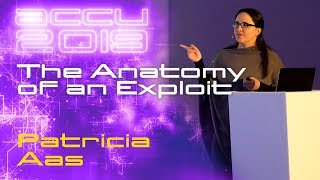
The Anatomy of an Exploit
Explore exploit development through C and x86_64 assembly, gaining insights into security vulnerabilities and the attacker's perspective for more secure coding practices.

Assume Worst Intent - Designing for the Abusive Ex
Explore designing apps with consideration for vulnerable users, focusing on potential misuse by stalkers or abusive individuals. Learn threat models and strategies to enhance user safety.
Ranges for Distributed and Asynchronous Systems
Explore Functional Reactive Programming for asynchronous systems using range-inspired transformations. Learn to implement concurrent code with improved clarity and reduced shared state issues.