Description:
Save Big on Coursera Plus. 7,000+ courses at $160 off. Limited Time Only!
Grab it
Explore industry insights on designing low latency trading systems from scratch in this conference talk by David Gross, Auto-Trading Tech Lead at Optiver. Delve into the intricacies of translating CPU and hardware knowledge into C++ for high-speed trading. Learn strategies for utilizing multiple CPU cores, managing concurrency issues, and optimizing performance. Discover key concepts such as data modeling for performance, concurrent data handling in trading systems, and proper system tuning. Gain valuable knowledge on topics like C-state and P-state optimization, shared LLC optimization, and essential metrics for evaluating system performance. Understand why making a trading system "fast" must be a fundamental design consideration rather than an afterthought in this comprehensive exploration of low latency programming for high-stakes automated trading.
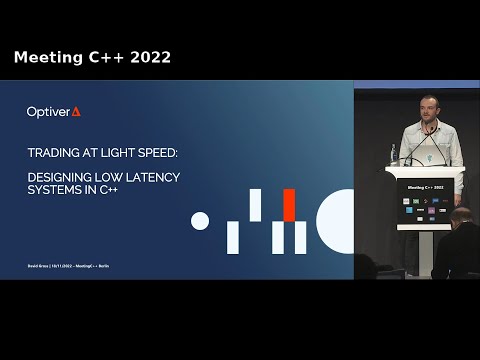
Trading at Light Speed: Designing Low Latency Systems in C++ - Lecture
Add to list
#Programming
#Programming Languages
#C++
#Databases
#Database Design
#Data Modeling
#Computer Science
#Concurrency
#Computer Architecture
#CPU Architecture