Description:
Explore the principles of resilient software design in this comprehensive conference talk. Delve into the challenges of maintaining high availability and responsiveness in complex, distributed, and interconnected application landscapes. Learn about a resilience pattern language organized around core principles, including isolation, statelessness, strict consistency, and idempotency. Discover practical techniques such as circuit breakers, fail-fast mechanisms, and bounded queues to enhance application robustness. Gain valuable insights into designing applications that can withstand unexpected failures and load situations, particularly in cloud-based and microservices environments. Equip yourself with essential knowledge to create software that remains reliable and performant in production, ultimately satisfying customers and protecting business interests.
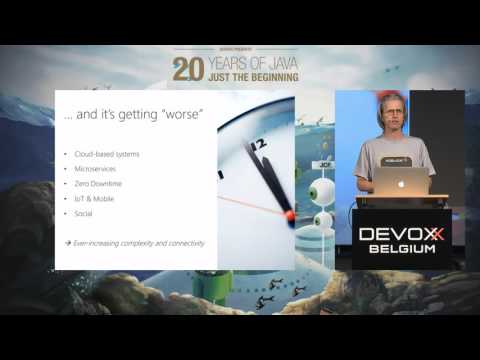
Patterns of Resilience - The Untold Stories of Robust Software Design
Add to list
#Conference Talks
#Devoxx
#Computer Science
#Distributed Systems
#Software Engineering
#Software Design
#Programming
#Web Development
#API Design
#Idempotency