Description:
Explore a thought-provoking lecture on the imperfections of human cognition and language. Delve into Gary Marcus's argument against the notion of humans as perfectly rational beings, challenging recent scholarly claims about the optimality of human cognition and language. Examine the concept of evolutionary inertia and its impact on the development of the human mind. Discover how Marcus proposes viewing the mind and language as a "kluge" - a clumsy yet effective solution - rather than a perfectly engineered system. Investigate various aspects of linguistic theory, Bayesian decision theory, confirmation bias, and the limitations of evolution in shaping human cognitive abilities. Analyze examples from syntax, memory, vision, and parsing to support the idea of the mind as a product of evolutionary compromises. Gain insights into the complex interplay between biology, cognition, and language, and consider the implications of this perspective for our understanding of human nature and the development of artificial intelligence.
Read more
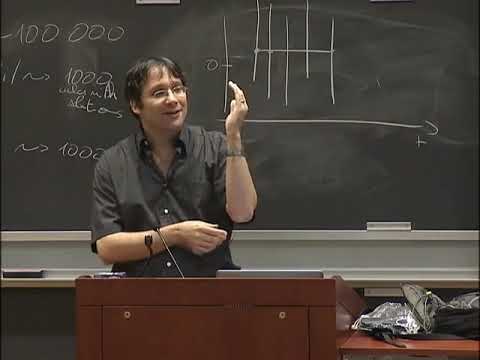
Language as Kluge: The Imperfect Evolution of Human Cognition - 2008
Add to list
#Humanities
#Linguistics
#Science
#Biology
#Evolution
#Natural Selection
#Social Sciences
#Psychology
#Cognitive Sciences