
The Sympathetic Response - Fight-Flight - Neurophysiology
Explore the sympathetic nervous system's fight-or-flight response, including its functions, the role of the adrenal medulla, and the effects of norepinephrine on the body.
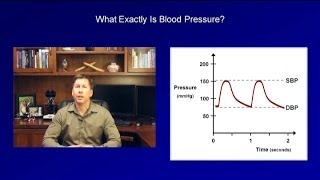
Hypertension - An Introduction to High Blood Pressure
Learn about hypertension's definition, risk factors, and physiological mechanisms. Explore primary and secondary hypertension, including the renin-angiotensin-aldosterone system and sympathetic nervous system's roles.

Adrenergic Drugs Part 2 - Pharmacology
Comprehensive exploration of adrenergic agonists, their mechanisms of action, and classification into direct, indirect, and mixed-acting agents. Detailed insights into sympathomimetic drugs and their effects on the nervous system.

Adrenergic Drugs - Part 1: Mechanisms and Sympathomimetics
Comprehensive exploration of adrenergic drugs, covering mechanisms, classifications, and effects on the sympathetic nervous system. Ideal for medical students and healthcare professionals.

Neurology - Sympathetic Nervous System
Explore the thoracolumbar outflow of the sympathetic nervous system, including preganglionic cell bodies, target organs, effects, and involved ganglia. Gain in-depth understanding of this crucial neurological component.

Renal - Autoregulation
Explore kidney autoregulation mechanisms, including tubuloglomerular feedback, myogenic response, and the Renin-Angiotensin-Aldosterone-ADH system. Learn how these processes maintain renal function and blood pressure.

Neurology - Adrenergic Receptors
Comprehensive exploration of adrenergic receptors, their types, and effects on various organs when stimulated by norepinephrine and epinephrine, building on concepts from the sympathetic nervous system.

Gastrointestinal - Salivation: Parotid, Submandibular, & Sublingual Glands
Comprehensive exploration of salivary glands, their stimulation, and nervous system involvement. Covers parotid, submandibular, and sublingual glands, with focus on saliva production and physiological functions.

Cardiovascular - Electrophysiology - Extrinsic Cardiac Conduction System
Explore the extrinsic cardiac conduction system, focusing on blood pressure regulation, sympathetic nervous system, and heart rate control mechanisms in this comprehensive electrophysiology lecture.

Gastric Motility and Receptive Relaxation - GI Physiology
Explore gastric motility, receptive relaxation, and the nervous system's role in stomach function. Learn about gastric emptying and hunger contractions in this comprehensive physiology lecture.
GI Innervation - Nerve Supply of the Gastrointestinal System - Enteric Nervous System
Explore the intricate nerve supply of the gastrointestinal system, including the enteric nervous system, sympathetic and parasympathetic innervation, and their roles in gut function.

Sympathetic vs Parasympathetic Nervous System - Physiology
Explore the differences between sympathetic and parasympathetic nervous systems, including receptor types, neurotransmitters, and physiological effects on the body.
Sympathetic Nervous System - Fight and Flight - Origin, Relay, and Response - Physiology
Explore the sympathetic nervous system's origin, relay, and response mechanisms in this comprehensive physiology overview of the fight-or-flight response.
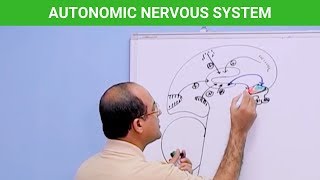
Autonomic Nervous System - Neuroanatomy
Comprehensive exploration of the autonomic nervous system's structure and function, covering key components, pathways, and physiological roles in regulating involuntary bodily processes.
Autonomic Nervous System - Neurology and Neuroanatomy - Part 2
Comprehensive exploration of autonomic nervous system functions, comparing sympathetic and parasympathetic effects on various organs and tissues, with detailed physiological mechanisms and clinical correlations.

Autonomic Nervous System - Neurology and Neuroanatomy - Part 1
Comprehensive exploration of the autonomic nervous system, focusing on sympathetic division's anatomy, function, and effects on various body systems.

Micturition Reflex - Nerve Supply to Bladder and Micturition Cycle
Comprehensive exploration of urinary bladder innervation and micturition cycle, covering sympathetic, parasympathetic, and somatic nervous system involvement in bladder function and control.
Renin Angiotensin Aldosterone System (RAAS) - Mechanisms and Functions
Comprehensive exploration of the Renin Angiotensin Aldosterone System, covering its mechanisms, components, and physiological effects in regulating blood pressure and fluid balance.
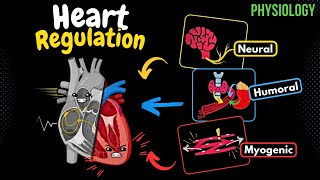
Regulation of the Heartbeat - The Visual Guide
Explore comprehensive cardiac regulation mechanisms, from myogenic and neural to humoral and ionic influences, enhancing understanding of heart physiology for medical education.

Sympathetic Nervous System - Structure and Innervation
Explore the sympathetic nervous system's structure and function, from ganglia to innervation patterns. Learn about neurotransmitters, preganglionic and postganglionic neurons, and autonomic plexuses.

Factors Affecting Cardiac Output and Venous Return Physiology
Explore factors influencing cardiac output, its regulation, and venous return physiology. Gain insights into stroke volume and cardiovascular system dynamics.