New Search Methods for Primitive and Intelligent Life Beyond Earth
Explore novel techniques for detecting primitive and intelligent life beyond Earth, from our solar system to distant stars, and discuss the implications for our cosmic understanding.
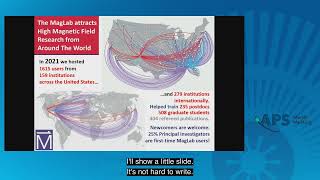
Large-scale Scientific Facilities and Diplomacy
Explore the intersection of scientific research and international relations, examining how large-scale facilities impact global diplomacy and collaboration.
An Overview of Asteroseismology - May Gade Pedersen
Explore stellar interiors through asteroseismology, examining pulsation modes, rotation rates, and internal mixing processes. Gain insights into stellar physics using observational data and theoretical models.

Unveiling the Cosmos - Key Inventions Behind the Modern Telescope
Explore the technological evolution of telescopes over 400 years, from simple stargazing tools to complex scientific instruments, and how they've revolutionized our understanding of the cosmos.

Initial Exoplanet Discoveries from TESS
Explore NASA's TESS mission, its exoplanet discoveries, and how it compares to Kepler. Learn about the observatory's design and data availability through MAST at the Space Telescope Science Institute.

Star Formation in Orion
Explore star formation in Orion through observations from space telescopes, uncovering the birth of stars and enhancing our understanding of stellar origins and evolution.
The Future of Cosmology - Space Telescopes and Cosmic Understanding
Nobel laureate Saul Perlmutter and Brian Greene explore revolutionary space telescopes and their potential impact on our understanding of the cosmos in this engaging scientific discussion.
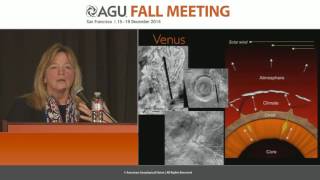
Searching for Earth-like Planets in Our Solar System and Beyond
Explore Earth-like planets in our solar system and beyond, comparing climates of Mars, Venus, and Titan to Earth's. Learn about exoplanet detection and future space missions.
Materials for the Lynx Space Telescope - Adaptive Optics and Piezoelectric Thin Films
Exploring piezoelectric thin films for adaptive optics in space telescopes, their potential to unravel cosmic mysteries, and applications in terrestrial optics and space technology.
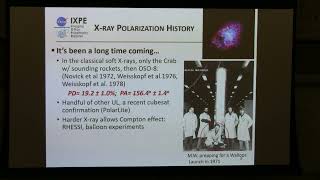
IXPE: Our First Look Around the X-ray Polarized Sky
Explore the Imaging X-ray Polarimetry Explorer mission's groundbreaking discoveries in neutron star and black hole X-ray polarization, revolutionizing our understanding of high-energy astrophysics.
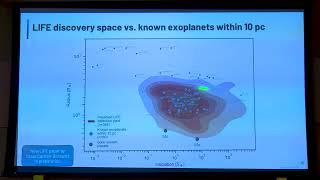
The LIFE Initiative - Science Prospects and Challenges
Explore the LIFE Initiative's scientific prospects and challenges in exoplanet research through mid-infrared interferometry and yield calculations.
Eyes in the Skies - Bringing the Universe Down to Earth
Explore space exploration achievements and future missions with leading astronomers. From Voyager to black hole imaging, discover how space probes expand our cosmic understanding.

Stellar Magnetic Activity with Kepler and TESS
Explore stellar magnetic activity through Kepler and TESS data, uncovering insights into stellar behavior and its impact on exoplanet detection and characterization.
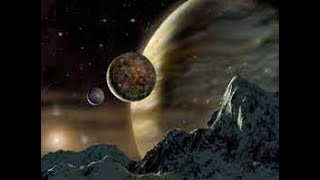
Detecting Exo-Earth Candidates with Next Generation Direct Imaging Space Telescopes
Explore cutting-edge techniques for identifying Earth-like exoplanets using advanced space telescopes in direct imaging missions.
Observe Exoplanets with Exoplanet Watch - A Citizen Science Project
Learn to observe exoplanets with NASA's Exoplanet Watch project. Explore data reduction techniques and contribute to efficient space telescope usage through this citizen science initiative.
Design and Development of the James Webb Space Telescope
Delve into the engineering marvel of the James Webb Space Telescope with NASA's Astrophysics Director, exploring its groundbreaking design, deployment challenges, and revolutionary impact on our understanding of the universe.

How Satellites Are Transforming the Night Sky | Dr Noelia Noël | TEDxSurreyUniversity
Satellites connect us across the globe and help us monitor our changing planet, but their growing numbers are flooding the night sky with artificial light. This scattered glow is erasing the stars and distorting the faint cosmic signals that help us understand our Universe. My talk explores how reth

Space Technology in your Living Room | Dr. Angaraj Duara | TEDxKahilipara
Spin Off Technology- Development of abrasion resistant plastic for astronaut visor led to the development of scratch free prescribed glasses that majority of people wear, Bacillus pumilus SAFR-032 is used to make sunscreen. *Dr. Angaraj Duara* , a space scientist, currently working on NASA's Habita