
History of Science - CrashCourse
In 46 episodes, Hank Green teaches you the history of science! This course is based on the 2nd and 3rd edition of Science & Technology in World History by McClellan & Dorn.

Philosophy of the Humanities
Explore key philosophical concepts and thinkers in humanities, from logic and scientific reasoning to historical interpretations, hermeneutics, structuralism, and postmodern critiques of truth and language.

The Logic of Science - Principles of Evolution, Ecology and Behavior
Explore the evolution of scientific thought, including falsifiability, revolutions, and creativity. Learn how philosophy influences modern scientific approaches and the boundaries of scientific knowledge.
Statistical Workflow and the Fractal Nature of Scientific Revolutions
Explore AI's role in statistical workflow, focusing on model building, checking, and revision. Discover how automated inference and best practices can enhance quantitative data analysis across various fields.
Blaise Pascal - La Mathématique au Cœur de l'Humanité
Explorez la vie fascinante de Blaise Pascal, génie polymathe du 17e siècle, et découvrez son impact durable sur les mathématiques, la philosophie et la technologie.
Changing Science by Asking Big Questions
Explore how curiosity-driven scientific inquiry and asking fundamental questions can revolutionize our understanding of time, consciousness, and the universe's deepest mysteries.
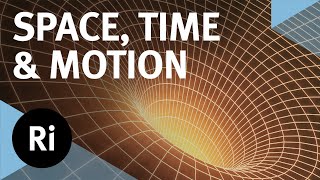
The Biggest Ideas in the Universe - Space, Time and Motion
Explore the cosmos with Sean Carroll as he delves into classical physics, from ancient Greek thinkers to Einstein, unveiling revolutionary ideas that shaped our understanding of the Universe.
The Birth of Quantum Physics - Exploring the Enigma of Quantised Properties
Explore the revolutionary concept of quantum physics with Carlo Rovelli and Conrad Shawcross, delving into its enigmatic nature and profound impact on our understanding of reality and the physical world.
Plate Tectonics - The Theory That Changed Earth Science
Explore the revolutionary theory of plate tectonics with scientist Xavier Le Pichon, who recounts his experiences during the discovery of mid-ocean ridges and the development of seafloor spreading concepts.

The 6 Killer Apps of Prosperity
Historian Niall Ferguson explores six key ideas from Western culture that have promoted prosperity, stability, and innovation, and discusses their potential for global adoption in the modern era.
Artificial Intelligence in the Modern Workplace
Explore AI's role in enhancing workplace productivity, enabling better insights, and improving business processes. Learn about integrating AI into existing tools for more intelligent and contextualized experiences.
Will AI Spark the Next Scientific Revolution?
Explore AI's potential to revolutionize scientific research across materials science, bioscience, and physics, with insights from Microsoft's Chief Scientific Officer and renowned physicist Brian Greene.
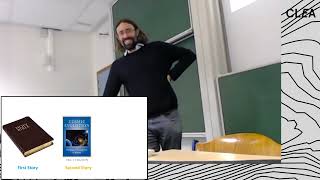
The Third Story of the Universe - From Religious Myths to Scientific Evolution and the Noosphere
Explore the evolution of human narratives from religious myths to scientific understanding, and discover how the emerging concept of Noosphere offers a unified vision for humanity's future.
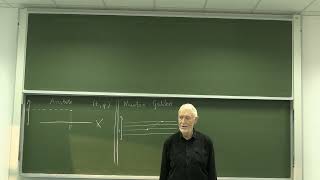
Aristotle versus Galilei-Newton - Different Visions of Space and Time
Explore contrasting perspectives on space and time from Aristotle and Galilei-Newton, delving into fundamental concepts of theoretical physics and relativity.