
Raspberry Pi Pico W: PIO State Machine Timing, Looping and Shifting - Lesson 90
Learn how to utilize PIO state machines on the Raspberry Pi Pico W with MicroPython in this comprehensive video tutorial. Explore advanced techniques for controlling timing, implementing loops, and performing shift operations. Discover how to use the in_…

Raspberry Pi Pico W - Creating a Four-Bit Binary Counter Using PIO State Machine - Lesson 91
Master PIO state machine programming on Raspberry Pi Pico W to create a four-bit binary counter, exploring in_, nop(), and invert instructions while learning timing control and simple multiplication techniques.

Raspberry Pi Pico W- WiFi Controlled Robot
Build a WiFi-controlled robot using Raspberry Pi Pico W, Pololu Zumo chassis, and L298N motor controller. Learn to create a web interface for remote operation and implement motor control code.

Galactic Guitar Hero Game Using Pimoroni Galactic Unicorn and MicroPython
Create a Galactic Guitar Hero game using Pimoroni Galactic Unicorn and MicroPython on Raspberry Pi Pico W. Learn gameplay mechanics, button controls, display rendering, and game loop implementation.

Raspberry Pi Pico W - Wireless Weather Station
Build a wireless weather station using Raspberry Pi Pico W and BME280 sensor. Learn to program with MicroPython, connect hardware, and transmit real-time temperature, pressure, and humidity data to a web browser.
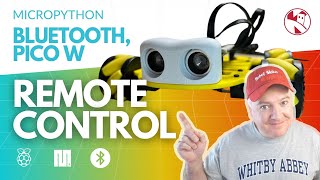
How to Make a Bluetooth Remote Using a Raspberry Pi Pico W and MicroPython
Learn to create a Bluetooth remote using Raspberry Pi Pico W and MicroPython. Covers Bluetooth basics, asynchronous coding, BLE services, and practical implementation with a robot demo.
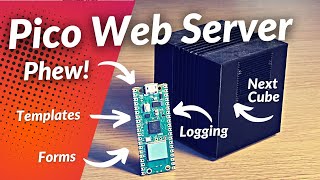
Build Your Own Web Server Using a Raspberry Pi Pico W Using Phew
Learn to create a web server on Raspberry Pi Pico W using Phew library. Covers installation, WiFi connection, logging, templates, Bootstrap, and forms for interactive project websites.

Raspberry Pi Pico W: Understanding PIO State Machine Push, Pull, Put and Get - Lesson 88
Explore PIO state machine data exchange on Raspberry Pi Pico W using push(), pull(), get(), and put() commands in MicroPython. Master efficient communication between PIO and main processor.

Creating and Using Timers in Raspberry Pi Pico W Projects - Lesson 80
Learn to create and use non-blocking timers in MicroPython for improved program timing and simultaneous LED blinking on Raspberry Pi Pico W, enhancing project efficiency and functionality.

Create an LED Binary Counter Using Only Timers - Raspberry Pi Pico W Lesson 82
Create a 4-bit LED binary counter using timers on Raspberry Pi Pico W. Step-by-step guide to implement the solution, extending concepts from previous lessons.
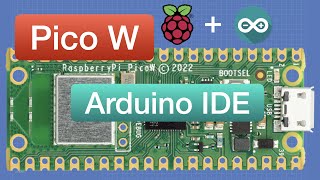
Pi Pico W with the Arduino IDE - Using WiFi
Learn to program the Raspberry Pi Pico W using Arduino IDE, including WiFi capabilities for web-based control of LEDs and servo motors. Covers installation, testing, and practical applications.

Mastering PIO State Machine Tx and Rx FIFO Operations on Raspberry Pi Pico W - Lesson 89
Master PIO state machine Tx and Rx FIFO operations on Raspberry Pi Pico W. Learn to use push(), pull(), get(), and put() commands for efficient data exchange between PIO and main processor.
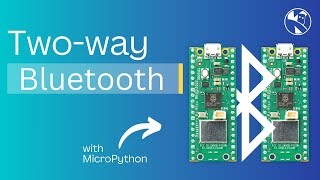
Two-way Bluetooth with Raspberry Pi Pico W and MicroPython
Learn to set up two-way Bluetooth communication using Raspberry Pi Pico W and MicroPython, enabling wireless connectivity for your projects.

Raspberry Pi Pico W - Using Interrupts in MicroPython - Lesson 83
Learn to implement hardware interrupts on Raspberry Pi Pico W using MicroPython, enabling efficient background handling of GPIO inputs like buttons and switches.

Debounce Pushbutton Switches Using Interrupts - Raspberry Pi Pico W Lesson 84
Learn to implement hardware interrupts on Raspberry Pi Pico W for debouncing pushbutton switches, enhancing responsiveness and reliability in micropython projects.

Raspberry Pi Pico W - Button Controlled Binary Counter Using Interrupts
Learn to create a hardware interrupt on Raspberry Pi Pico W using MicroPython. Implement a 4-bit LED binary counter controlled by a debounced pushbutton, ensuring accurate counting.

Raspberry Pi Pico W - Up Down Binary Counter Using Interrupts and Pushbuttons - Lesson 86
Learn to create a binary counter with pushbuttons on Raspberry Pi Pico W using MicroPython. Implement hardware interrupts, debouncing, and LED control for an interactive up/down counting system.

Raspberry Pi Pico W - Introduction to PIO and State Machines - Lesson 87
Learn to program and interact with PIO blocks and state machines on Raspberry Pi Pico W. Covers instantiation, assembly code writing, and Python integration for advanced microcontroller projects.

Binary Counter with Reset Using PIO State Machine on Raspberry Pi Pico W - Lesson 95
Master PIO state machines on Raspberry Pi Pico W by building a binary counter with reset functionality using LED displays and button inputs, all implemented through hardware-level programming.

Monitoring Two Buttons on the Raspberry Pi Pico W PIO State Machine - Lesson 94
Learn to monitor multiple GPIO pins and buttons using Raspberry Pi Pico's PIO State Machines, implementing efficient input reading and conditional branching in MicroPython.

Raspberry Pi Pico W Binary Counter Using PIO State Machine - Lesson 96
Master PIO state machine programming by building a binary up/down counter with dual-button control on Raspberry Pi Pico W, displaying real-time LED output without Python intervention.